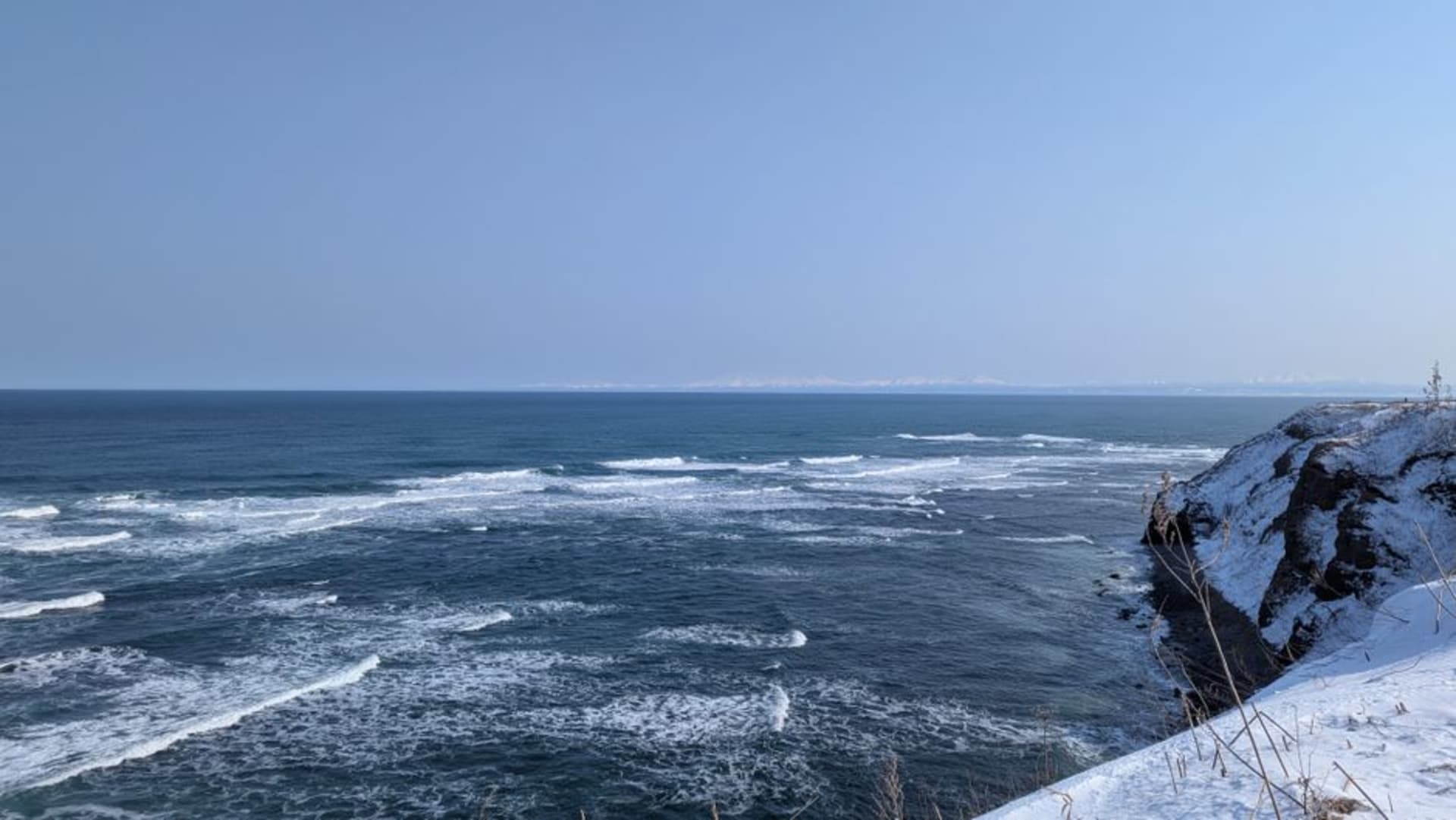
The wild eastern edge of the Shiretoko Peninsula, facing the Nemuro Strait and the disputed islands beyond. A fishing town where whales surface offshore, eagles crowd the winter ice, and the road simply stops because the mountains won't let it continue. This is as far as Japan goes before it turns to weather and sea.
We nearly didn’t come to Rausu. It’s a long way to the far side of Shiretoko, the peninsula that hangs off northeastern Hokkaido like a claw, and the guidebooks are vague about it in the way they’re vague about places that don’t fit neatly into an itinerary. But a fisherman at a Kushiro market had told us, unprompted, that if we wanted to see whales we should go to Rausu, and Lia doesn’t forget a tip like that. So we drove east until the road climbed over the Shiretoko Pass and dropped us into a grey fishing town pressed between steep green mountains and a cold, restless strait. On a clear hour you can see the disputed Kuril islands across the water. On most hours you see weather coming.
Whales off the Nemuro Strait
The Nemuro Strait is deep and rich, and in summer it fills with life. We booked a morning boat out of the little harbour, and within forty minutes the crew cut the engine and pointed. A sperm whale, they said — and then a long dark back rolled up out of the swell, unhurried, impossibly large, the blow hanging in the air before the fluke lifted and slid it under. Lia gripped my arm hard enough to bruise. Over the next two hours we saw more spouts, a pod of dolphins that raced the bow, and shearwaters skimming the chop in their thousands. The captain talked about orca in early summer, about the way the whole strait becomes a corridor for animals following the current. We left the harbour tourists and came back, briefly, believers.
Where the Road Runs Out
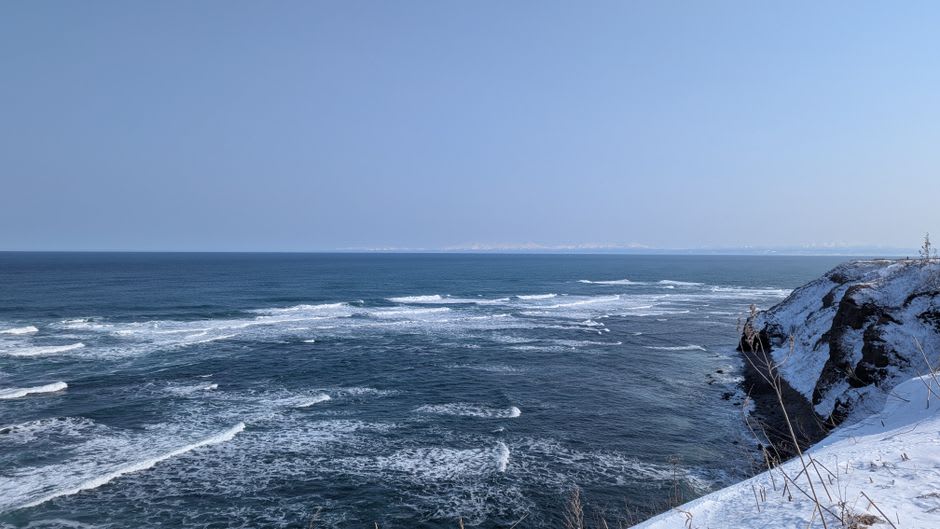
Rausu is defined as much by what isn’t there as what is. There is no road across the tip of Shiretoko — the mountains and the protected wilderness see to that — so the coast road simply gives up a little north of town, and beyond it lies country you can only reach on foot or by boat. We drove to the end of the pavement and walked a short way onto the pebbles, and the sense of edge was total: the peninsula’s volcanic ridge rising on one side, the open strait on the other, and nothing man-made ahead. On the way back we stopped at Kumagoe, one of the roadside hot springs where the water runs so hot it’s piped straight off the mountain, and soaked our feet while the wind came off the sea. Lia said it felt like the end of the map, and it more or less is.
Eagles, Ice, and the Winter Town
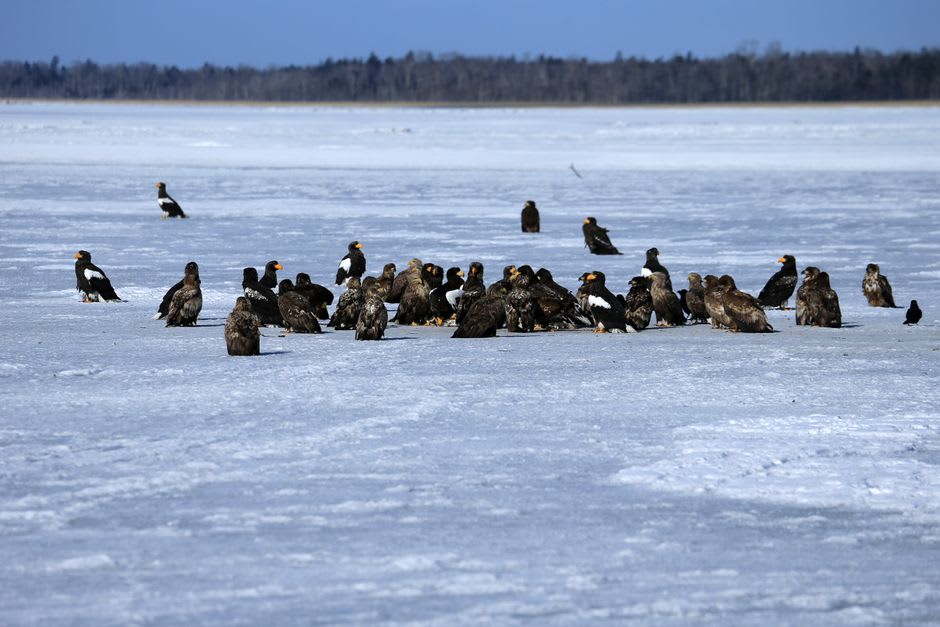
We came in summer, but everyone in Rausu talks about winter, and by the time we left I understood why. When the drift ice pushes down from the Sea of Okhotsk and jams into the strait, the town becomes one of the great wildlife gatherings on earth — Steller’s sea eagles and white-tailed eagles by the hundred, massive birds with wingspans wider than a man is tall, hauled up on the floes to feed. Photographers come from across the world for it. In the harbour café, over a bowl of the local salmon and kelp, an old woman showed us a phone full of eagle photos from February, gold eyes and enormous yellow beaks against blue ice, and made us promise to come back in the cold. We haven’t yet. We will.
Getting There
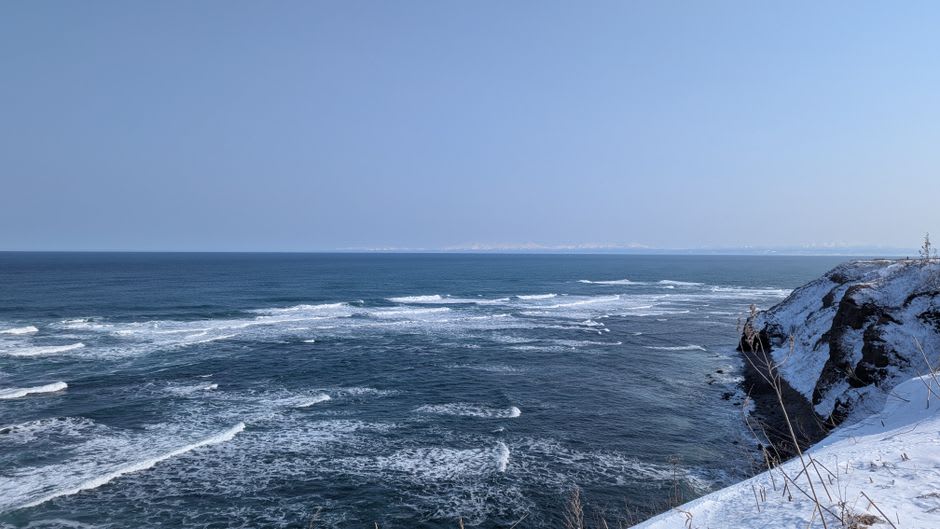
Rausu is genuinely remote, and reaching it is part of the experience. Most travellers drive — from the town of Shari and the western Shiretoko hub of Utoro, the Shiretoko Pass road climbs over the peninsula’s spine and down into Rausu in about an hour, though it’s closed by snow through the winter. Coming from the south, it’s roughly two hours by car from Nakashibetsu, whose small airport has flights from Sapporo, or a longer haul from Kushiro. Buses run but are sparse, so a rental car is close to essential. Whale-watching cruises operate in summer and eagle-and-ice tours in the depths of winter; book both ahead, and treat any single day’s schedule as a suggestion the sea is free to overrule.
Keep exploring
More of Hokkaidō