Hakodate
"From the mountain, the whole city looked like a lit bridge thrown across the dark water."
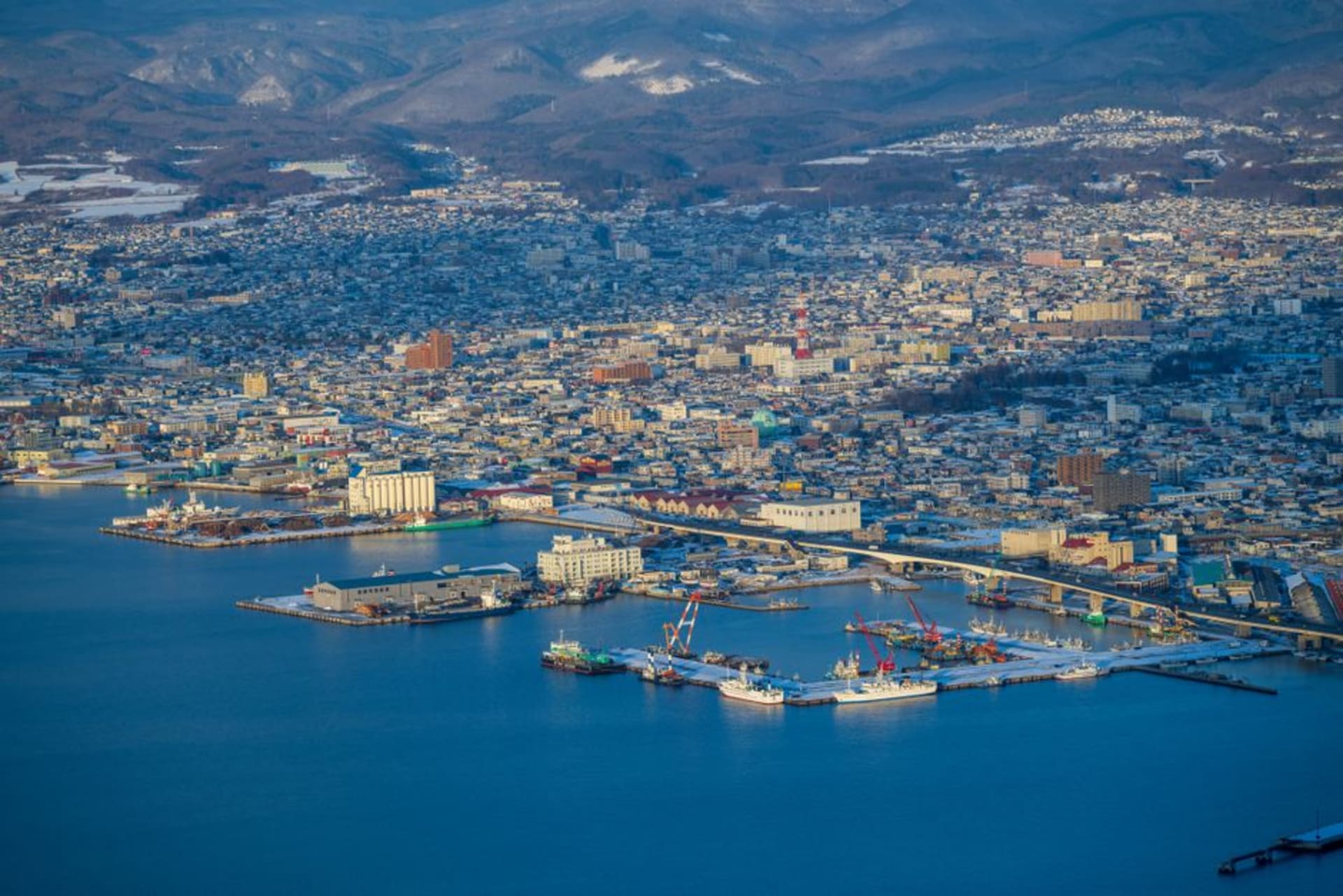
A Hokkaidō port city where the harbor light does the talking. A glittering night view from the mountain, red-brick warehouses along the bay, a morning market loud with squid and crab, and nineteenth-century Western streets climbing the hillside.
We saved Hakodate for the end of Hokkaidō, and I’m glad we did. It sits at the island’s southern tip, a city stretched across a narrow neck of land with sea on both sides, and it carries the particular melancholy of a port that was once one of the most important in Japan and is now content simply to be beautiful. Lia and I arrived in the late afternoon, dropped our bags, and went almost immediately up the mountain, because everyone we’d met on the trip had said the same three words about Hakodate — wait for dark. We waited. It was worth every minute of the cold.
The Night View from the Mountain
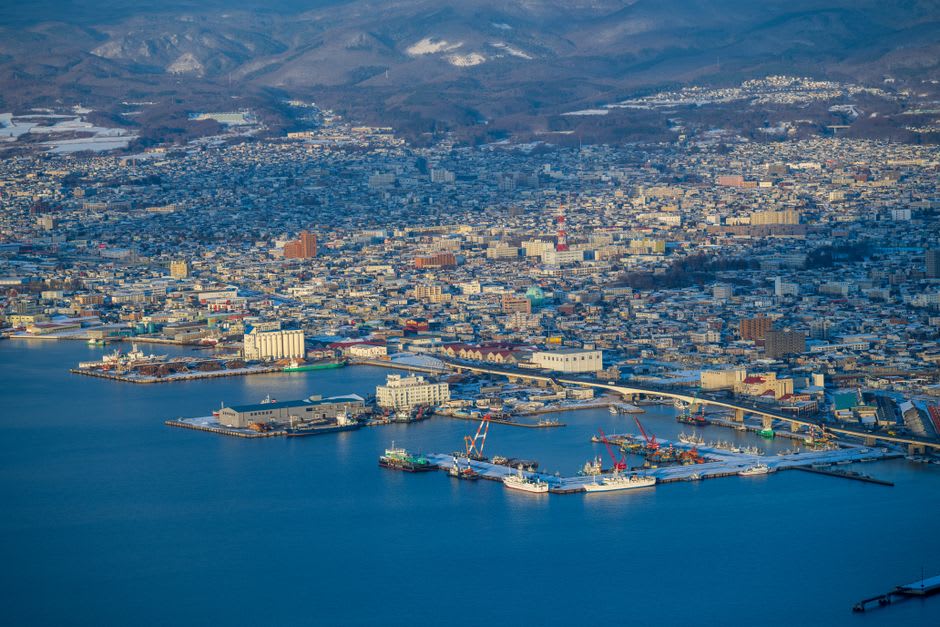
Mount Hakodate rises straight up from the western edge of the city, and the ropeway carries you to the summit in a few minutes. We arrived while there was still a wash of blue in the sky and staked out a spot at the railing, and then watched the light drain out of the day and the city switch itself on beneath us. Hakodate’s shape does the work — the land pinches to a thin waist between two black curves of sea, so the lights gather into a glowing hourglass, water pressing in on either side. It is genuinely one of the great night views anywhere, and photographs undersell it, because they can’t hold the cold air and the murmur of the crowd and the way the harbor lamps trembled on the water. Lia went quiet, which is how I always know she’s moved.
The Morning Market and the Bay
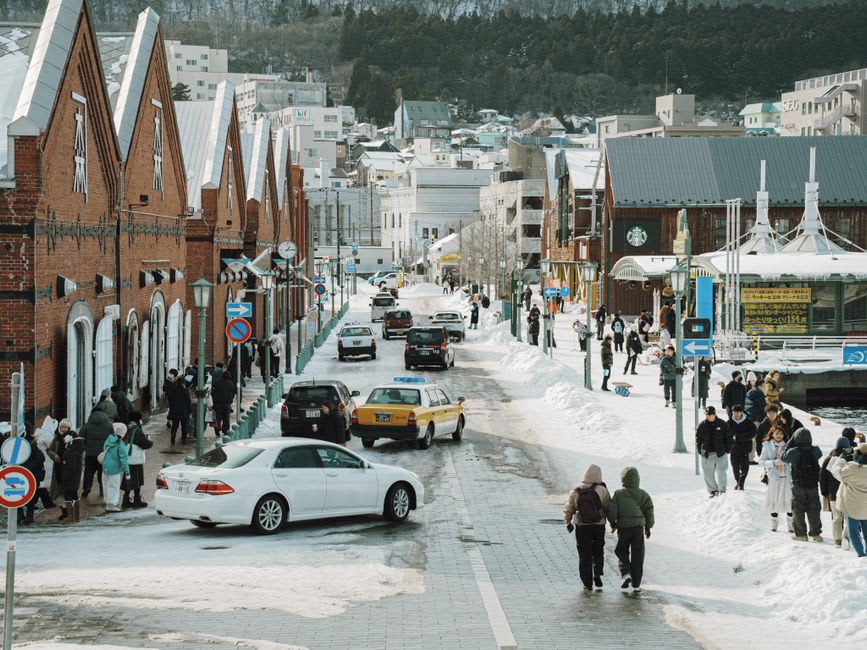
We were at the Hakodate Morning Market not long after dawn, and it was already full-throated — vendors calling out, tanks of live squid and hairy crab, buckets of scallops, trays of glistening salmon roe. In one hall you can fish for your own squid from a tank and eat it minutes later, translucent and still faintly moving, which I did once and found more moving than I’d expected, in both senses. Afterward we walked south to the bay, where the old red-brick Kanemori warehouses run along the waterfront — herring and trade wealth turned to shops and cafés, but handsome still, their brick reflected in the harbor. We drank coffee looking out at the water and the gulls and the fishing boats, and Hakodate felt like a city entirely at peace with its quieter present.
Motomachi’s Western Streets
Because Hakodate was one of the first Japanese ports opened to foreign trade in the 1850s, its hillside district of Motomachi is a jumble of nineteenth-century Western architecture — a pale-blue former public hall with a colonnaded balcony, an Orthodox church with green onion domes, consulates and churches strung along steep sloping streets. We spent an afternoon simply climbing and descending them. Every so often a lane would run straight down to the sea and frame a rectangle of blue at its foot, and we’d stop, and Lia would take the photograph she always takes of streets that end in water. The mix is strange and lovely — Japanese roofs beside gabled Western ones, all of it clinging to a hill above a harbor. It felt like a place that had spent a century looking outward and never quite stopped.
Getting There
Hakodate is the gateway to Hokkaidō by rail: the Hokkaido Shinkansen runs from Tokyo through the undersea Seikan Tunnel to Shin-Hakodate-Hokuto station, with a short local connection into the city center. From Sapporo, a limited express train takes around three and a half to four hours down through the island’s interior. There’s also an airport a short bus ride from town with domestic connections. In the city, the old-fashioned streetcars are the easiest way to reach the mountain ropeway, the bay, and Motomachi. Go up the mountain at dusk on a clear evening — check the forecast, since fog can swallow the view entirely — and eat at the morning market before it thins out around midday.
Keep exploring
More of Hokkaidō