A wide farm valley in the middle of Hokkaidō, given over in high summer to striped fields of lavender and rainbow rows of flowers. Rolling farmland, sweet melons ripening under the sun, and in winter a quiet ski town under deep snow.
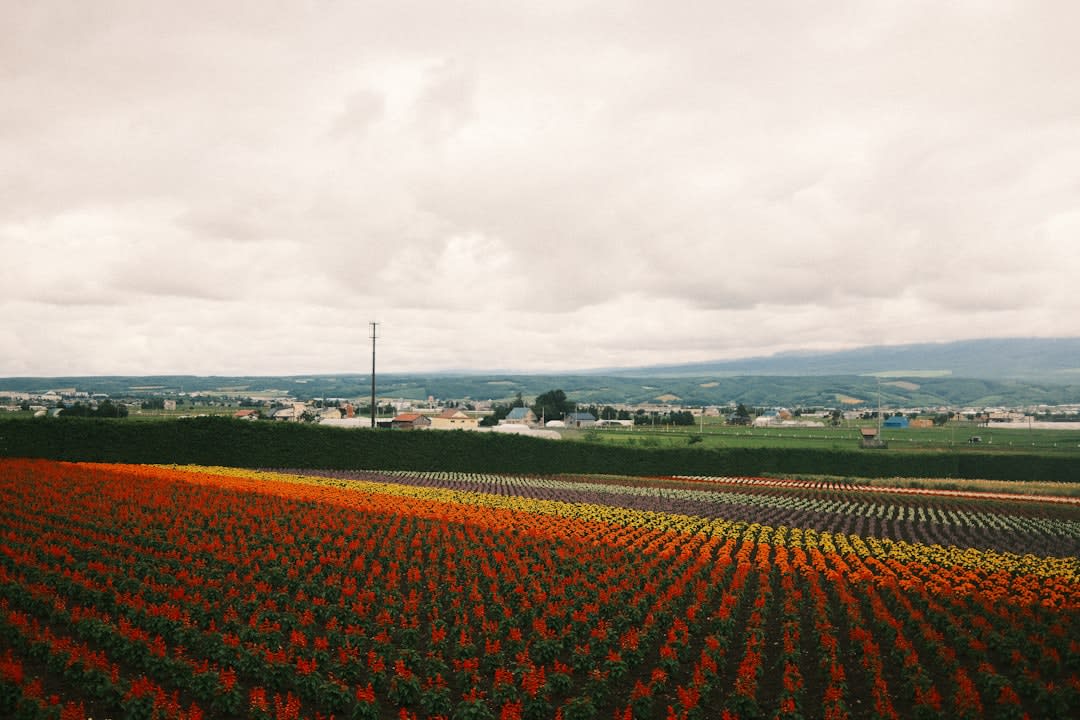
We drove into Furano on a July morning with the windows down, and Lia smelled it before we saw it — that clean, almost soapy sweetness carried across the fields on the warm air. Then we came over a rise and there it was: whole hillsides combed into stripes of purple, and beside them ribbons of red and orange and white running toward the mountains, so orderly it looked painted. We had spent the previous days in cities, in trains, in the press of people, and Furano opened up around us like a held breath let go. We pulled onto the verge before we even reached the farm, just to stand a moment in the middle of all that colour and space, saying nothing, letting the valley be as big as it was.
The Lavender at Farm Tomita
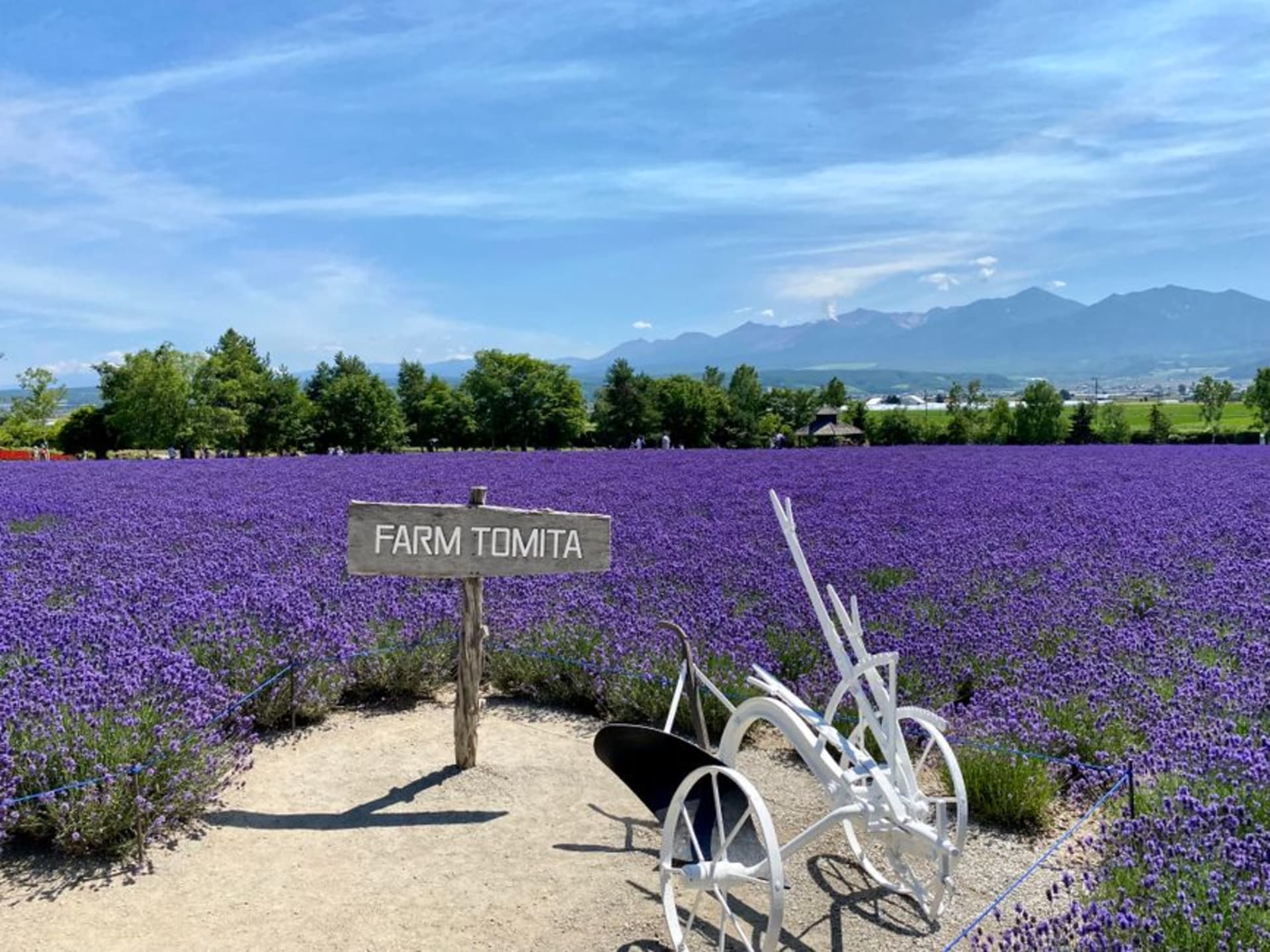
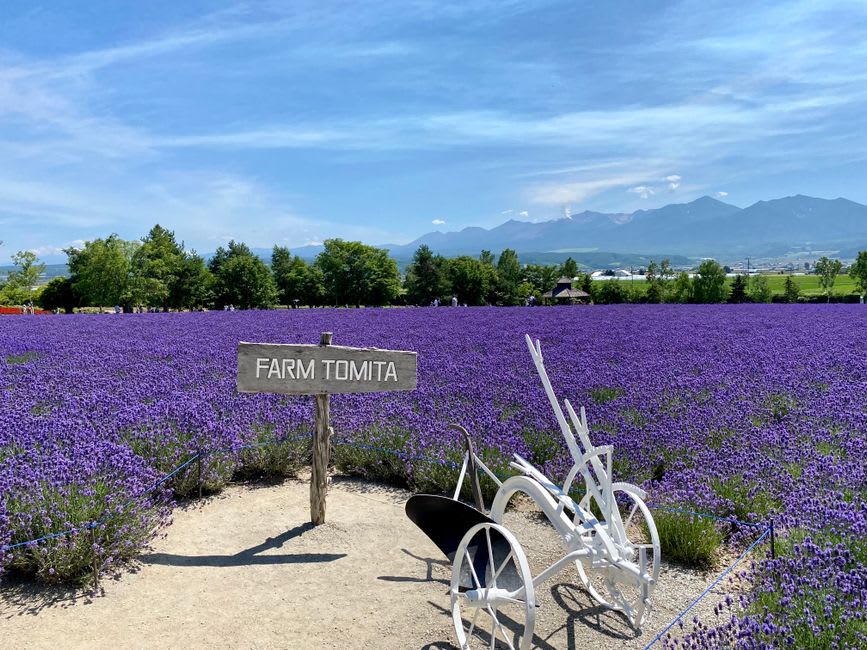
Farm Tomita is the reason most people come, and I understood why the moment we walked in. It is the oldest lavender farm in the region, kept going by the Tomita family through the years when the perfume industry moved on, and now in high summer its fields blaze in bands of colour across the slope. We arrived early, before the buses, and had the rows almost to ourselves — the bees already working, the mountains still soft with morning haze. Lia crouched among the lavender with her eyes closed, just breathing. We bought lavender ice cream, faintly floral and pale purple, and ate it walking between the fields, and later a small bottle of oil that still, opened at home, brings the whole valley back.
Rolling Farmland and Sweet Melons
Away from the flower farms, Furano is simply beautiful working country — a broad valley of potato and wheat and onion fields quilted across low hills, with the Tokachi mountains standing blue along the horizon. We rented bicycles and rode the back lanes with no real plan, past barns and greenhouses and a man selling corn grilled over coals at the roadside. Furano is melon country, and we stopped at a farm stand for a half of one, chilled and impossibly sweet, the orange flesh so juicy we had to lean over the table. The valley sits almost exactly at the geographic centre of Hokkaidō, and there is a marker for it in town, but the real centre, we decided, was wherever you happened to stop pedalling to look.
Winter Under Deep Snow
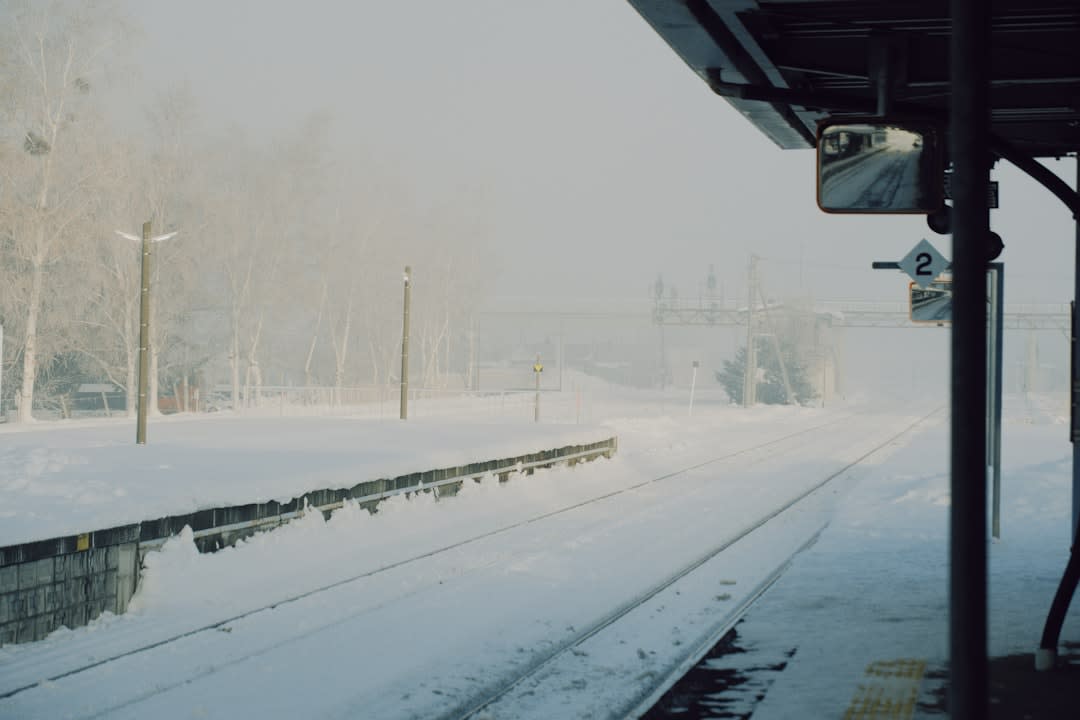
We came back to Furano once in winter, and it was a different world entirely — the flower fields gone under a metre of snow, the valley hushed and white, the whole town leaning into the cold. Furano is a serious ski resort in the cold months, its slopes catching the dry Hokkaidō powder that skiers cross oceans for, and we spent a day on the runs with the Tokachi range hard and bright against a blue sky. But my clearest memory is the evening: steam rising off a hot spring bath at the edge of the snow, the sky going pink, and the fields we had cycled through in summer now a single unbroken sheet of white, silent all the way to the mountains.
Getting There
Furano sits inland in central Hokkaidō, and the easiest approach is from Asahikawa, roughly an hour and a quarter by train down the branch line, or a little over two hours by train from Sapporo with a change. In summer a direct seasonal “Lavender Express” runs from Sapporo, and a small local train, the Norokko, trundles slowly past the flower fields with a temporary station right by Farm Tomita — worth timing your visit around. The farms and the wider valley are genuinely spread out, though, so if you can, rent a car: the freedom to stop on any rise and simply look is most of what makes Furano what it is. Come in July for the lavender at its peak; come in winter for the powder and the silence.
Keep exploring
More of Hokkaidō