Biei
"Every hill in Biei looked composed, as if someone had arranged the whole country to be seen."
A stretch of Hokkaidō countryside made of rolling patchwork hills, lone trees standing against the sky, and the impossible turquoise of the Blue Pond. Painterly, gentle land built for slow drives and long afternoons on a bicycle.
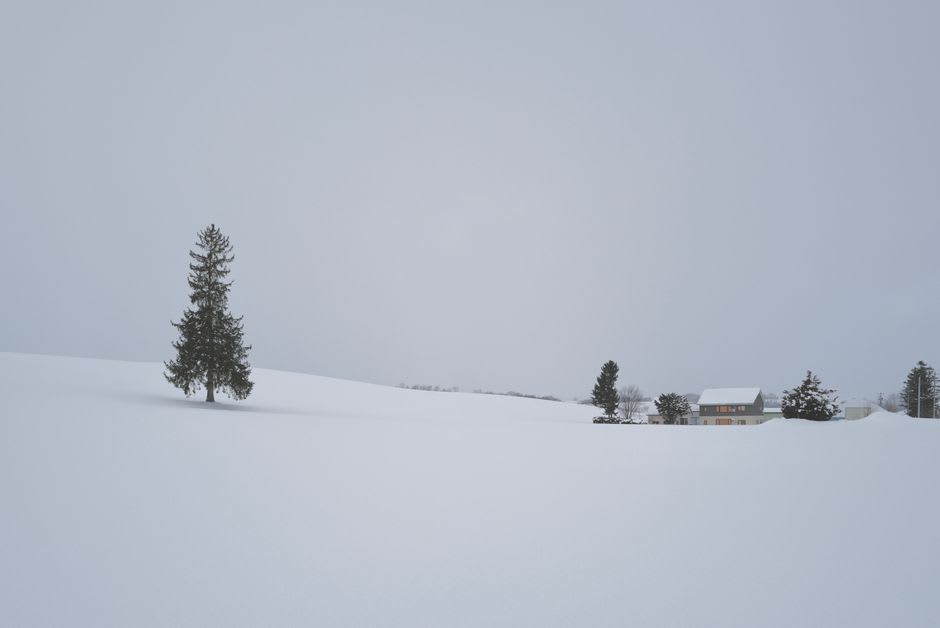
We nearly drove past the first tree without stopping, and then Lia said wait, go back. It stood alone on the crown of a green hill, a single tree against an enormous sky, and something about it made us pull over and just sit. That is Biei — a landscape so gently arranged it feels deliberate, hill folding into hill, each one striped a different colour by whatever crop the farmer had planted. We had no itinerary that day. We drove a while, stopped when a view asked us to, walked out into the edges of fields, and lay back on a grassy verge watching clouds move their shadows across the hills. I have rarely felt time slow down the way it did in Biei.
The Patchwork Hills
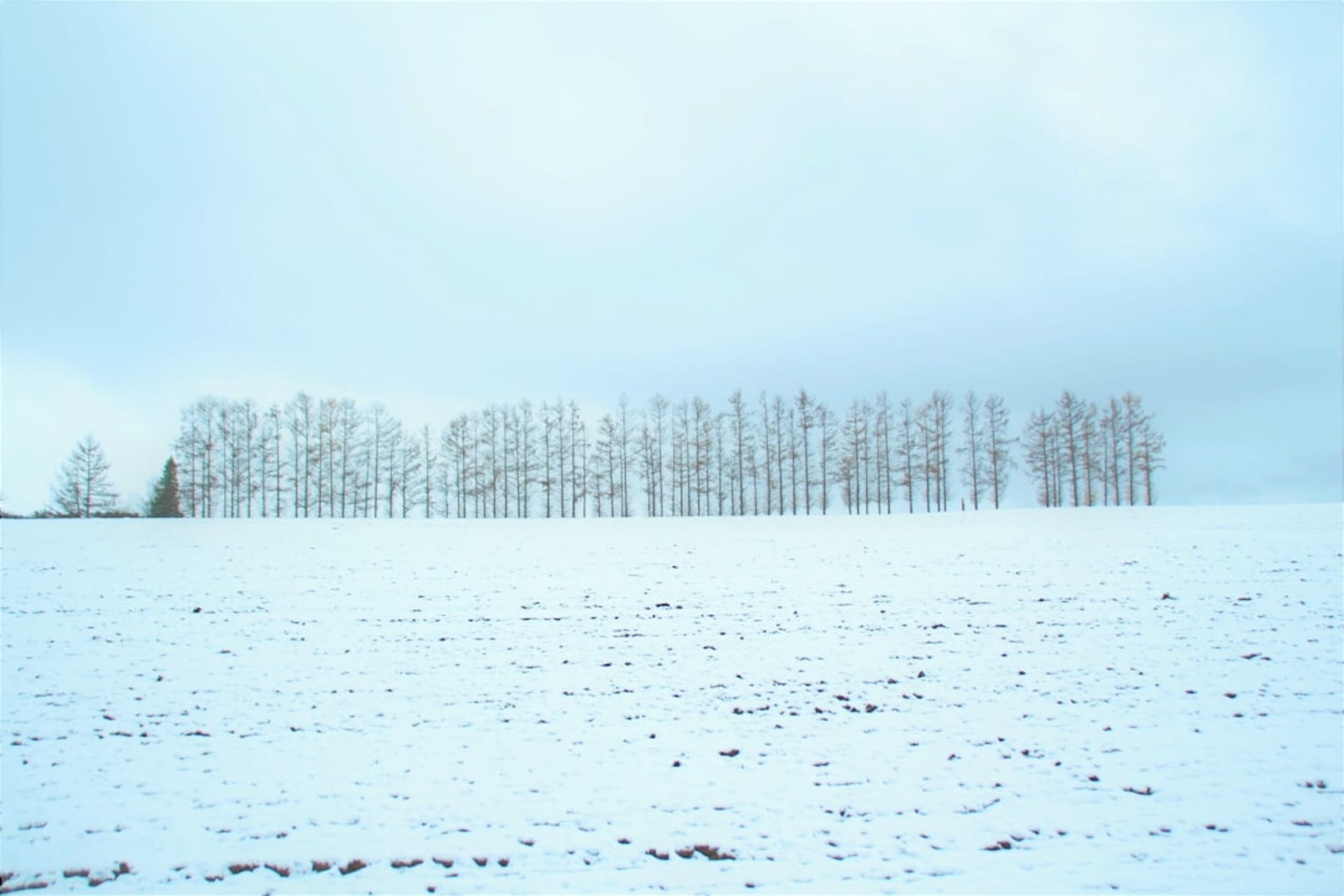
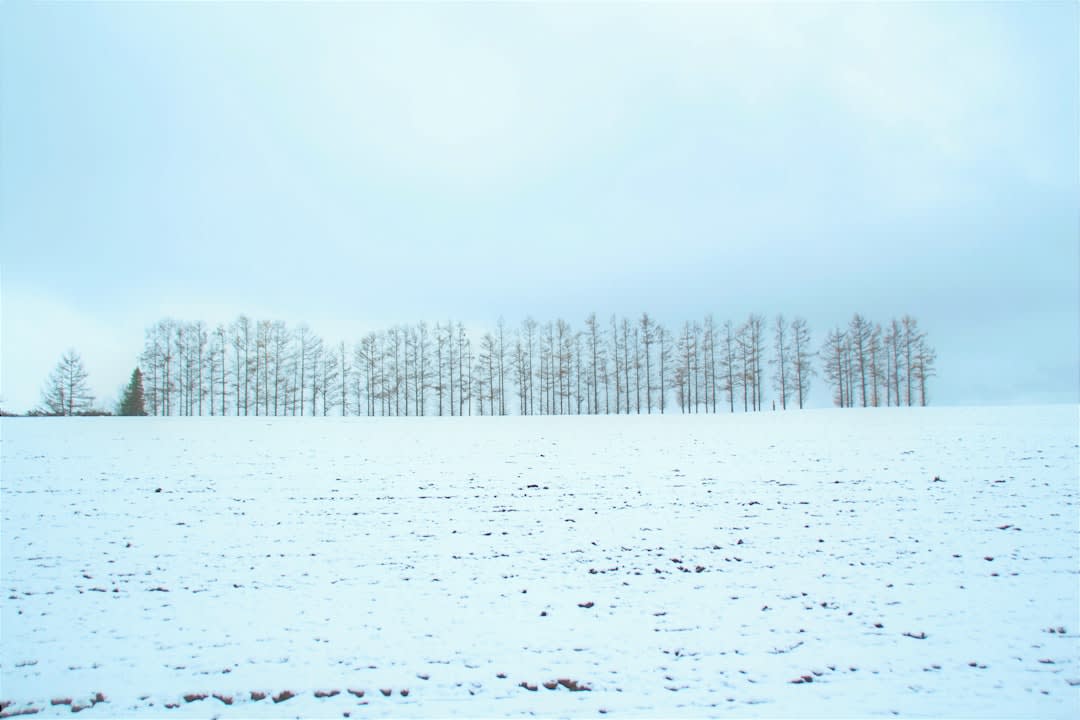
The countryside around Biei rolls in long, low waves, and because the farmers plant potato, wheat, beans, and buckwheat in neighbouring plots, the whole land is quilted in bands of green and gold and rust that shift as you drive. Certain trees here have become quietly famous — a lone poplar, a cluster of oaks, a stand of larch — because photographers came, and then everyone came, but even so the hills keep their calm. We followed the network of small roads north of town known as the Patchwork Road, stopping at rises with names, stopping more often at ones without. The best light came late in the afternoon, low and gold, when every fold of the land threw its own long shadow and the trees stood like punctuation on the hills.
The Blue Pond
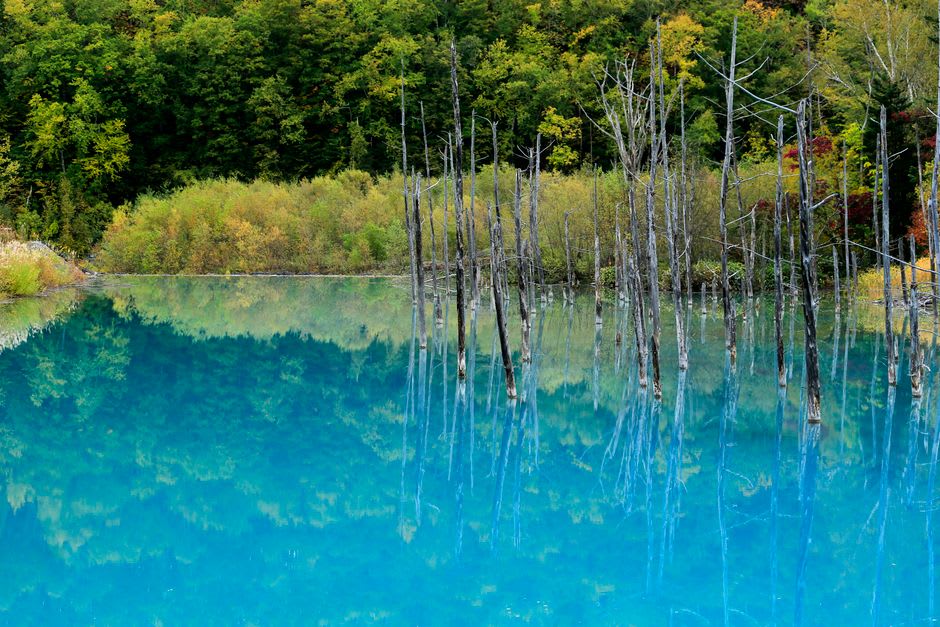
The Shirogane Blue Pond is one of those places you half expect to be disappointed by, and then you round the path and it stops you cold. The water is a milky, luminous turquoise, unreal, and out of it rise the pale bare trunks of dead larch and birch, reflected perfectly on still mornings. The colour comes from minerals — aluminium washing down from the hot springs upstream — and the pond itself is almost an accident, formed by works built to protect the town from mudflows off Mount Tokachi. None of that geology mattered when we stood at the railing. Lia kept saying it didn’t look like water, and it didn’t, quite. We went early to beat the crowds, and for ten minutes had it nearly to ourselves, the surface unbroken and glowing, the drowned trees standing in the blue.
Slow Drives and Cycling
Biei rewards the unhurried more than almost anywhere we went in Japan. There is no single sight you must tick off; the whole area is the sight, and the pleasure is in moving through it slowly. We rented bicycles one morning from a shop near the station, took the flatter southern loop — the hills can be genuinely punishing on a bike — and spent hours pedalling between fields, stopping to buy corn and a bottle of cold milk from a farm stand, resting under a tree we’d admired from the road an hour before. In the evenings we drove the higher roads for the sunset, then found a small café in town for a bowl of Biei’s rich local curry. It is a place that asks nothing of you but to look, and to keep looking.
Getting There
Biei lies just south of Asahikawa in central Hokkaidō, about half an hour by local train down the scenic Furano line — the same line, and the same rolling country, that carries on to Furano further south, so the two make a natural pair. From Sapporo it is around two hours by rail with a change at Asahikawa. That said, the hills and the Blue Pond are spread widely across the countryside and poorly served by public transport, so renting a car or, in summer, a bicycle is by far the best way to see it. Late spring through autumn is the season for the patchwork colours; the Blue Pond is worth seeing year-round, and in winter it is lit up in the evenings against the snow.
Keep exploring
More of Hokkaidō