
Tottori
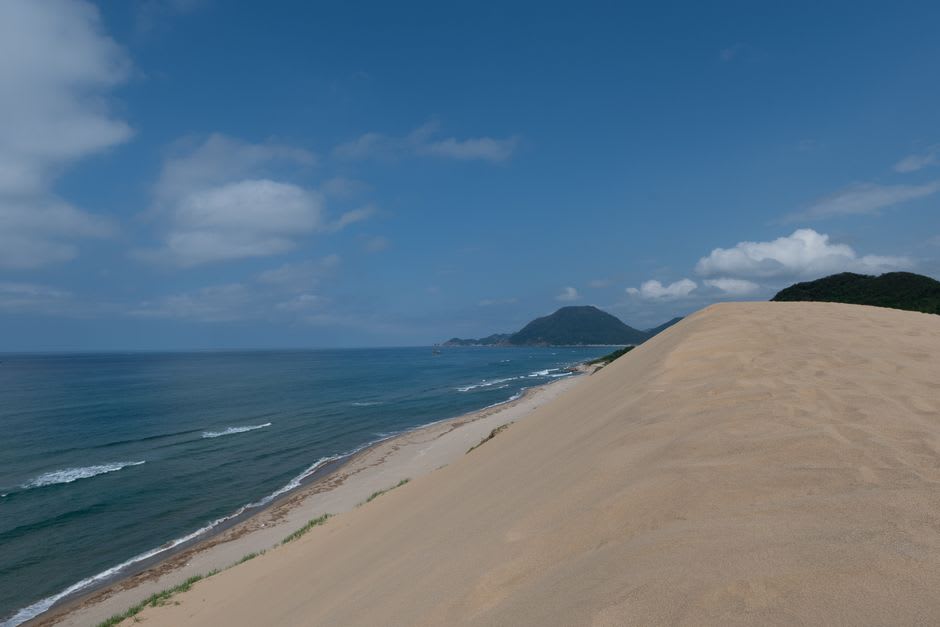
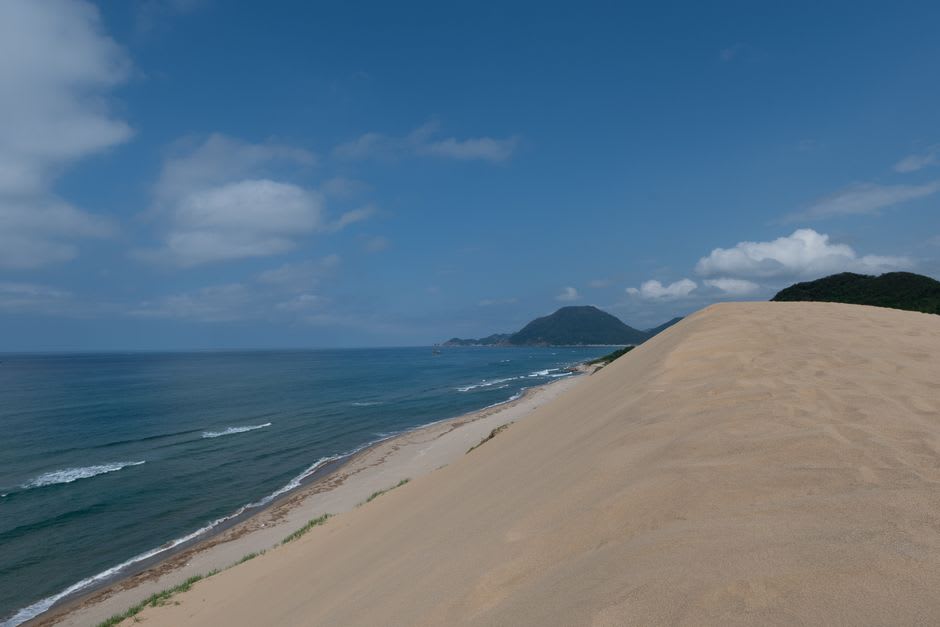
"We climbed the dune barefoot and the Sea of Japan opened flat and silver to the horizon."
The quiet capital of Japan's least-populous prefecture, sitting where the mountains meet the Sea of Japan and its great sand dunes. Castle ruins on a green hill, crab hauled in that morning, and a San-in-coast slowness that made us feel we'd stepped off the map. We were the only foreigners on the train, and we liked it that way.
Everyone we told about Tottori said the same thing: why? It is the least-populous prefecture in Japan, the sort of place even Tokyo friends have never visited, and that was most of the reason we went. Lia and I got off the train into a small, sun-warmed city where nobody was in a hurry and the taxi driver seemed genuinely pleased to have foreigners to talk to. He drove us out toward the coast with the windows down, gesturing at the pine hills, and dropped us at the edge of the dunes with a cheerful warning to drink water. Then we walked up a wall of sand with our shoes in our hands, and at the top the whole Sea of Japan lay out flat and silver, and I understood the why completely.
The Dunes and the Sea
The Tottori Sand Dunes are the only large dune field of their kind in Japan, a two-kilometre sweep of wind-sculpted sand rising to a ridge they call the “horse’s back.” It is a strange, elemental place — the wind combs the surface into ripples, the crest is genuinely steep, and from the top the drop to the beach and the sea beyond has a giddy, desert-at-the-ocean quality I’ve found nowhere else. Lia ran down it, of course, in great leaping strides, while I picked my way after her feeling every one of my years. Nearby, the Sand Museum houses vast, absurdly intricate sculptures carved entirely from this sand, which sounds like a gimmick and turns out to be quietly astonishing. We stayed on the ridge until the light went gold and the wind turned cold off the water.
The Castle Hill and the Old Town
Back in the city, Tottori’s castle is mostly gone — what remains is stonework and gates climbing Kyusho hill, the keep long vanished — but the ruin is all the better for it. We walked up through the trees to where the donjon once stood and found the whole compact city laid out below, the river, the roofs, the sea a blue line beyond. The stone ramparts here include a rare round bastion, a European touch that felt oddly familiar to me. Afterwards we drifted down into the streets below, past the handsome old Jinpukaku, a white Renaissance-style villa built for a visiting prince, and a cafe where a kind woman made us pour-over coffee and asked, sincerely, whether France was very far. It is. It felt, that afternoon, extremely far.
Crab, and the Culture Around It
You do not leave Tottori without eating crab. The port of the San-in coast lands some of Japan’s most prized matsuba-gani snow crab in the winter season, and the whole city seems organised around the reverence of it. We found a small place near the market where the owner steamed a whole crab for the two of us and showed us, patiently, how to work the legs, laughing at my clumsiness. The meat was sweet and cold-water clean, and we followed it with grilled fish and local sake and a bowl of rice, and I remember thinking that this unhurried, unfussy abundance was the real luxury — no tourist markup, no performance, just excellent seafood eaten slowly by people who take it for granted.
Getting There
Tottori is gloriously out of the way, which is the point. The Super Hakuto limited express runs from Osaka in around two and a half hours, threading through the mountains; from Okayama on the Sanyo side you can come up in roughly two hours. There is also a small airport with flights from Tokyo if you’re short on time. Once here you’ll want a bus or a rented car for the dunes, though the city centre and castle hill are easily walked. Come in winter for the crab, in warmer months for the dunes and the coast — but come with the pace already turned down, because Tottori will not speed up for you.
Keep exploring
More of Chūgoku