Tateyama Kurobe Alpine Route
"The snow walls rose twenty metres on either side of us, blue at their depths, and Lia whispered that we were driving through the inside of a glacier."
A spectacular high-mountain crossing linking Toyama and Nagano by cable car, bus and ropeway. Its wonders include the towering spring snow corridor, the great arc of the Kurobe Dam, and the wind-scoured Murodō plateau near the roof of Japan.
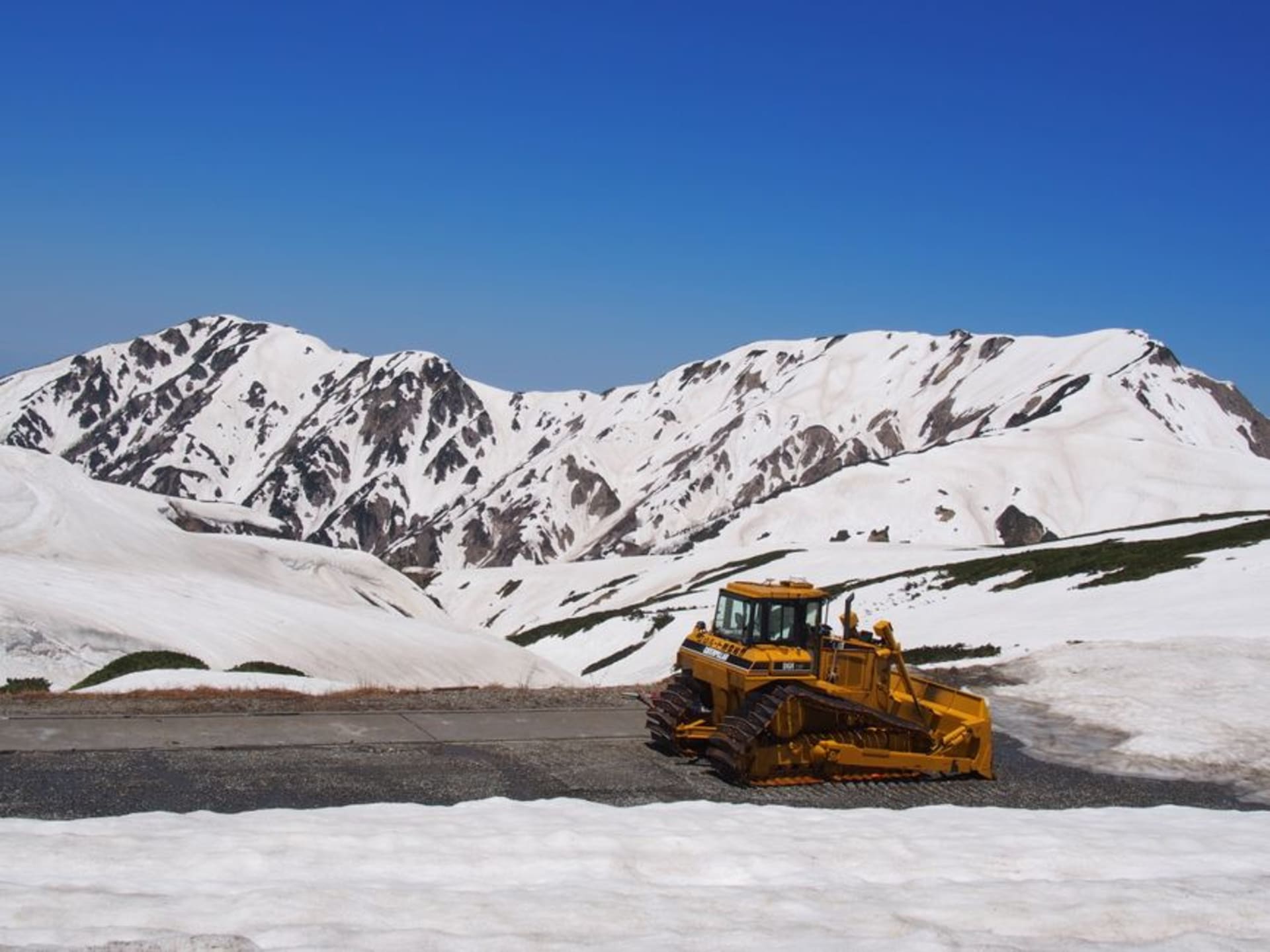
Nobody quite prepares you for the snow corridor. Lia and I had read about it, seen the photographs, thought we knew what was coming — and still, when our bus nosed up onto the high plateau at Murodō in late April and began to thread between two sheer walls of packed snow that climbed far higher than the roof of the bus, we both fell silent and then started laughing at the sheer absurd scale of it. The walls were twenty metres tall in places, sculpted flat by the ploughs, blue-white and glassy where the season’s snowfall had compressed into something nearer ice. We were crossing the spine of the Northern Alps not on a road we could see but through a canyon carved from a single winter’s snow, and it remains one of the strangest and most wonderful hours I have spent anywhere.
The snow corridor at Murodō
The Alpine Route is not a road you drive but a relay of mountain transport — cable cars, trolley buses, a ropeway, a highland bus — stitched together to carry you clean over the range from the Toyama side to Nagano. Its high point, in every sense, is Murodō, at around twenty-five hundred metres, and in spring the snow that buries this plateau is cut into the famous corridor, the Yuki-no-Ōtani. When the route first opens in mid-April the walls can stand nearly twenty metres high, and there are hours set aside when you can walk a section of it on foot, craning up at those blue cliffs of snow with the mountain wind funnelling between them. Lia trailed her mitten along the wall and it came away wet and cold and I remember thinking I would not forget the sound of that wind for a long time.
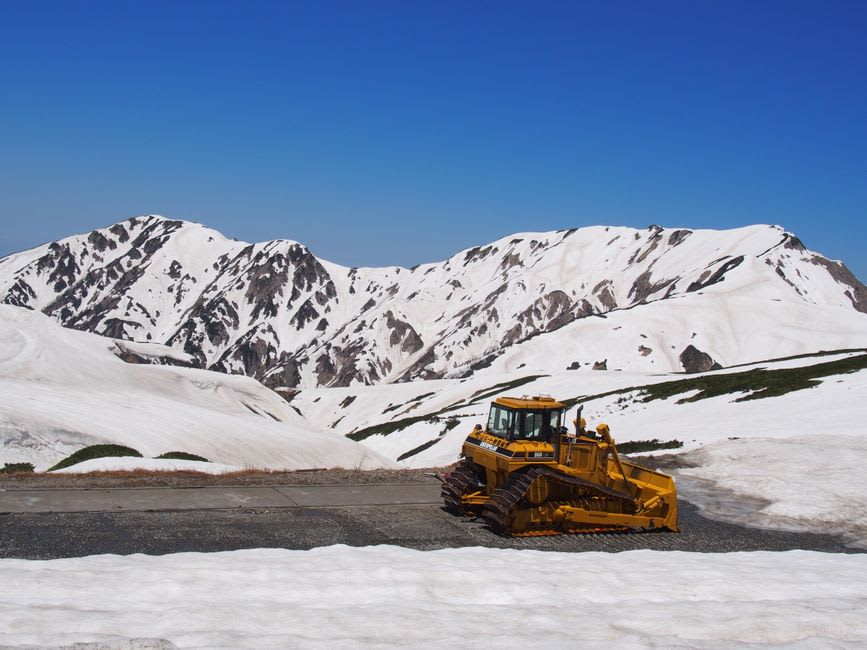
Murodō itself, when the snow relents, is a bleak and magnificent alpine world of ponds and old volcanic vents, a base for climbers heading up Tateyama, one of Japan’s three holy mountains. Even in spring the air is thin and the light merciless off the snow — we both burned our faces without noticing.
The great Kurobe Dam
Down the other side of the crossing, the route delivers you to the Kurobe Dam, and it is a proper spectacle in its own right — the tallest dam in Japan, a vast curved wall of concrete wedged into a gorge deep in the mountains, built through the 1950s at brutal human cost, a feat the Japanese still speak of with a kind of awe. You cross the top of it on foot, the reservoir spreading emerald-green on one side and the valley falling dizzyingly away on the other. From late June the dam releases water in a controlled discharge that thunders down in a white plume you can feel as much as hear, and on bright days a rainbow hangs permanently in the spray.
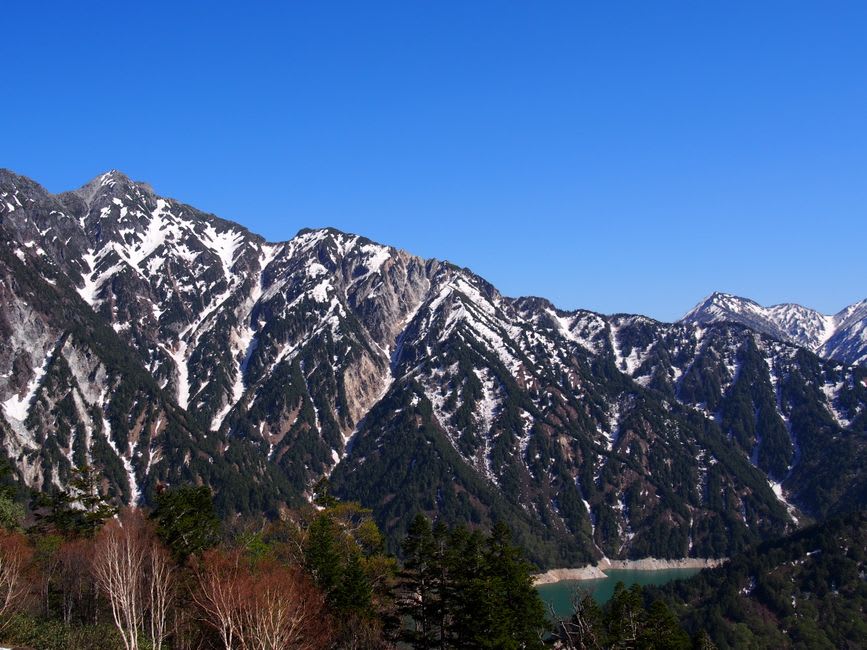
We rode the cable car up from the dam through a tunnel bored straight into the mountainside, an inclined railway climbing through solid rock, and I kept thinking of the men who had cut all this by hand.
A crossing through the seasons
The whole route lives on a calendar. It opens in mid-April, when the snow corridor is at its deepest, and closes again in late November as winter reseals the high passes. Come in spring for those snow walls; come in high summer for the alpine flowers on the Murodō marshes and the greenest of the valleys; come in October, they tell us, for the mountainsides turning red and gold below the first fresh snow on the peaks — the famous “three colours” of white summit, red slope and blue sky stacked one above the other. We crossed east to west in a single long, dazzling day, changing from cable car to bus to ropeway and back, and came down into Toyama at dusk exhausted and elated, having been, for a few hours, right up on the roof of the country.
Getting There
The Alpine Route runs between Toyama and the Nagano side near Ōmachi, and you can cross in either direction in a single day. From the west, take a train to Toyama, then the Toyama Chihō Railway to Tateyama station, where the first cable car begins the climb; from the east, reach Shinano-Ōmachi and bus in to the Ōgisawa portal near the Kurobe Dam. It is easiest to cross one way and continue out the far side rather than double back. The route is open only from mid-April to late November — book the snow-corridor season early, as it is deservedly popular.
Keep exploring
More of Chūbu