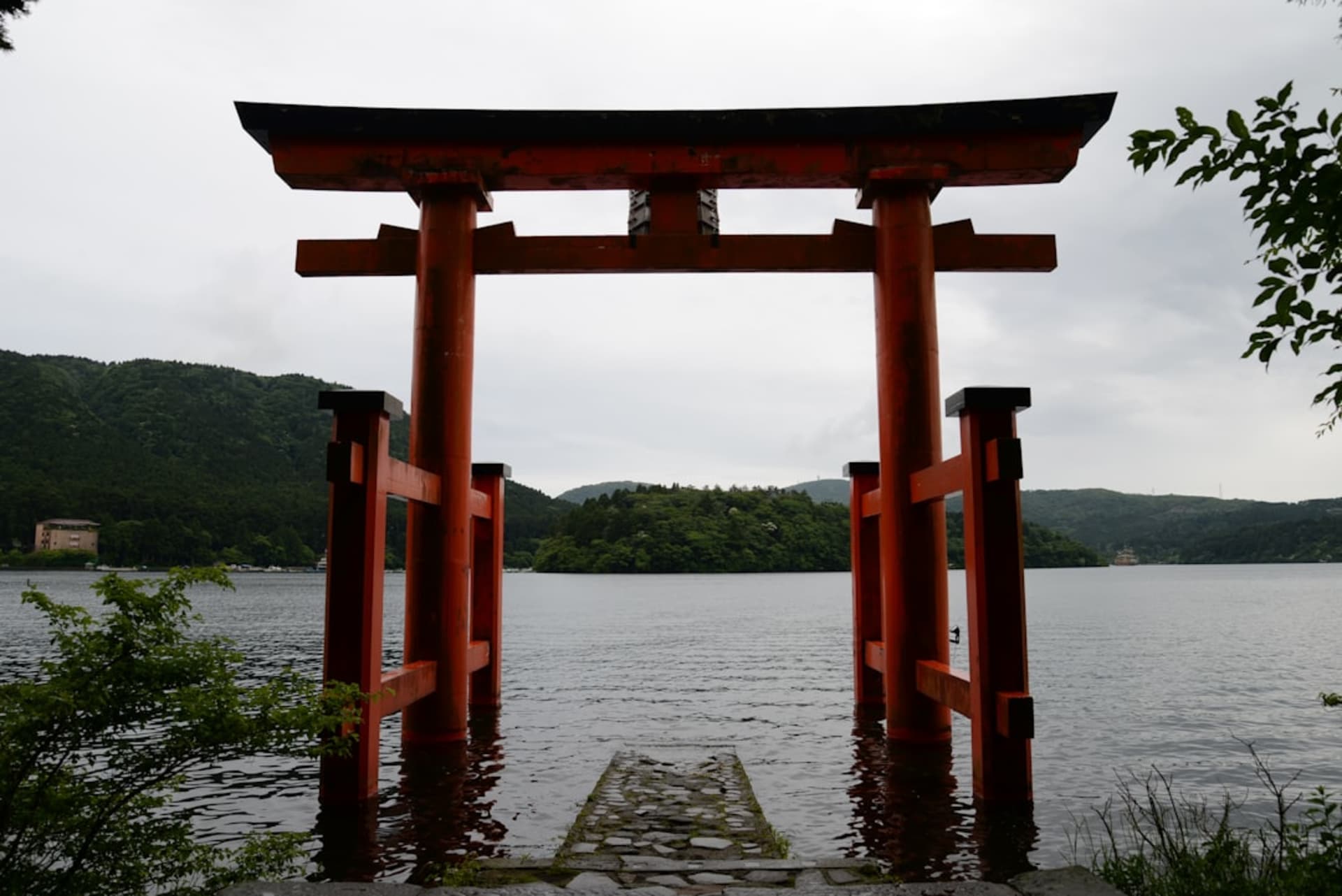
Suwa
"The old priest pointed at the frozen lake and said, plainly, that the gods walk across it, and I found I half believed him."
A lake ringed by the Nagano highlands, where one of Japan's oldest shrines guards the water, hot springs steam at its edge, and on the coldest winter nights the ice itself heaves up into a ridge the locals call the crossing of the gods.
We came up to Suwa in the depth of winter, chasing a story we weren’t sure we’d get to see. High in the Nagano mountains there is a broad lake that freezes solid, and on the hardest years the ice cracks and buckles and shoves itself up into a jagged ridge running clear across the surface, a thing the locals have called for centuries the omiwatari, the crossing of the gods. We knew the odds were against us. The lake doesn’t freeze like that every year anymore. But Lia and I have never been able to resist a place with a legend attached, so up the train climbed into the cold.
Suwa turned out to be far more than its winter miracle. It’s an old, layered place, wrapped around its lake, and even without the ice ridge it kept us happily busy for days.
Suwa Taisha and the log-riders
The Suwa Taisha is one of the oldest shrines in all of Japan, so old its origins vanish into myth, and it’s unusual in being spread across four separate precincts around the lake. We visited the Kamisha Honmiya, walking up through cedars to the halls, and stood in front of the great pillars that mark its corners, each an entire tree trunk stripped and raised on end.
Those pillars are the heart of the shrine’s astonishing festival, the Onbashira, held only once every six years. Enormous logs are cut in the mountains and dragged down to the shrines by teams of villagers, and at one point they ride the logs down a steep slope, men clinging on as the trunks slide and tumble. Our visit fell between festivals, so we saw only the pillars standing quiet in the snow, but the priest who spoke with us described the log-riding with a fierce pride, and you could feel how deep the thing runs here.
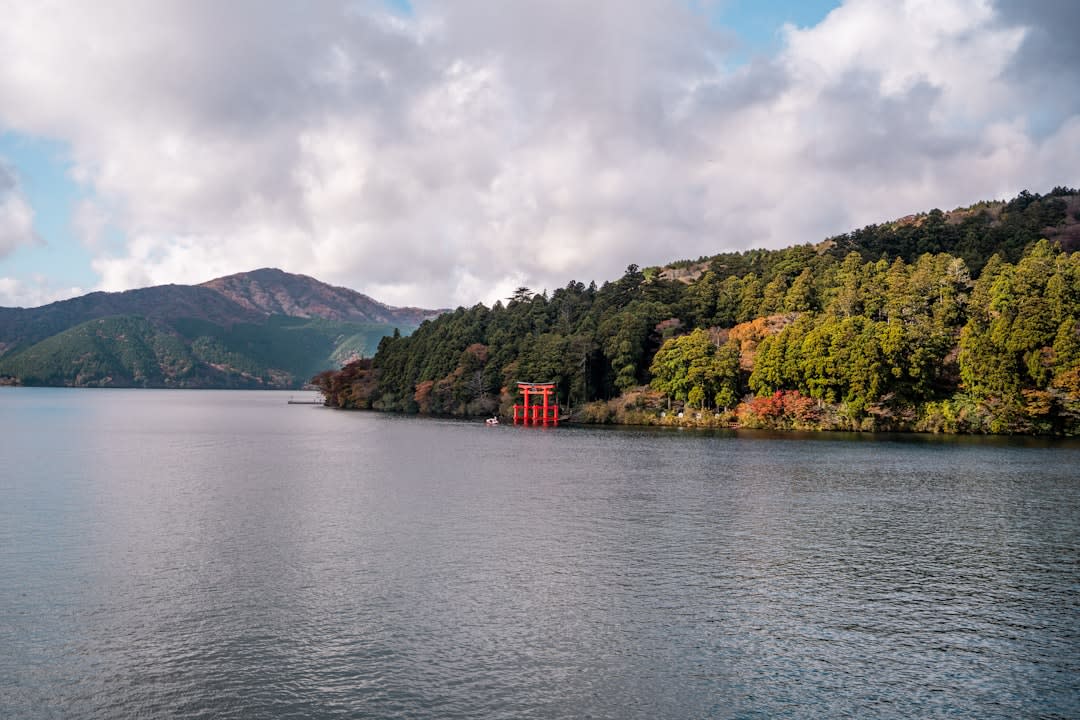
The lake and its hot springs
Lake Suwa is the town’s beating centre, and much of Suwa life bends toward it. The shore is dotted with hot springs, and there’s a spot on the lakeside where a public foot bath lets you sit and soak your feet while looking straight out over the water. We did exactly that on our coldest afternoon, trousers rolled up, steam rising around our shins, the mountains white on the far shore.
There’s a geyser near the shore too that spouts on a schedule, a reminder of the volcanic heat working away beneath everything. In the evening we walked the lakefront as the lights came on around the rim, the whole basin of mountains cupping the dark water. Suwa in summer is famous for an enormous fireworks festival over this same lake, but I was quietly glad to have it in winter, hushed and half-frozen and almost entirely ours.
Waiting for the gods to cross
We never did see the omiwatari properly. The winter we came, the lake froze only in patches, not the full hard sheet the ridge needs, and the old priest at a lakeside shrine told us plainly that some years now it doesn’t come at all, that the records his predecessors kept for centuries have grown thin. He said it without drama, but it landed heavily.
Still, on our last morning we walked out along the frozen margin where the ice was thick enough, the surface groaning and pinging faintly underfoot as the sun touched it, and I understood how people had come to believe something vast was moving beneath. He’d pointed across the white expanse and said, plainly, that the gods walk over it, and standing there in the ringing cold I found I half believed him. We left Suwa without our miracle and somehow not disappointed at all.
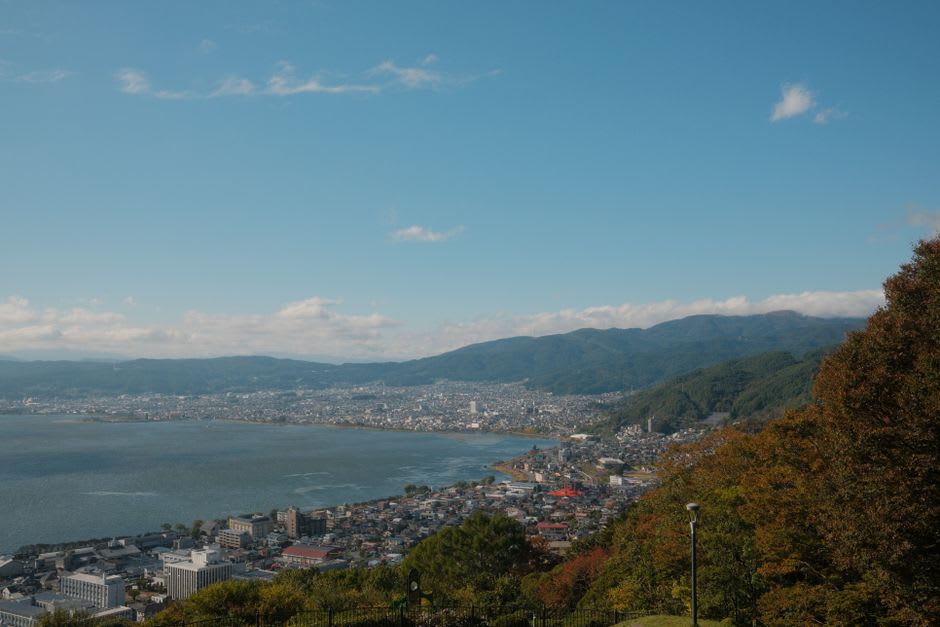
Getting There
Suwa lies in the central highlands of Nagano, ringed by mountains and reached most easily by rail. The JR Chuo line limited express from Shinjuku runs to Kami-Suwa and Chino stations in around two and a half hours, threading up through the hills; from Nagoya the same line climbs from the other side. Kami-Suwa station sits right by the lake and its foot baths, and buses circle the shore to reach the scattered precincts of Suwa Taisha. Winter is bitterly cold and the time to hope for the ice ridge, though it now forms only in the hardest years; summer brings the great lakeside fireworks. A car helps for visiting all four parts of the shrine, but the lakefront and the nearest precinct are perfectly walkable.
Keep exploring
More of Chūbu