Shirakawa-gō
"The roofs are built like praying hands, and in that valley the metaphor lands hard."
A remote valley of steep-thatched gasshō-zukuri farmhouses, folded into the mountains of Gifu and unchanged for generations. Green and loud with cicadas in summer, buried in snow in winter. A UNESCO village that still feels lived-in rather than looked-at.
The bus into Shirakawa-gō climbs and climbs and then, quite suddenly, the valley opens below you and there they are: the great thatched roofs, dozens of them, pitched so steeply they look less like houses than like something grown out of the ground. Lia pressed her forehead to the window. We had seen the photographs — everyone has — but the photographs flatten it. In person the roofs have mass, a heaviness that comes from the metre of thatch beneath them, and the whole hamlet sits in the palm of the mountains with a rice-green stillness that made both of us go quiet as the bus wound down toward it.
The Gasshō-zukuri Houses
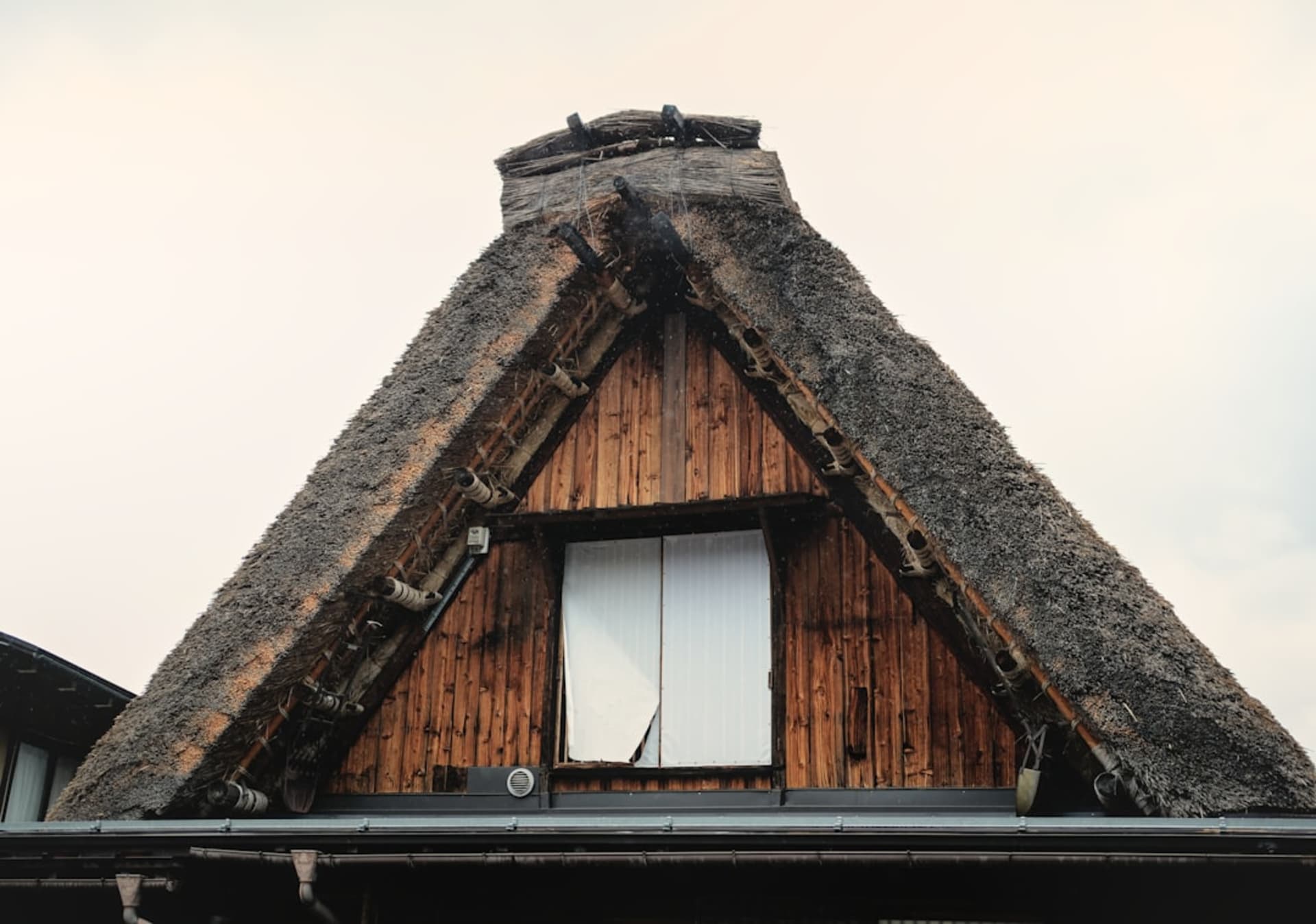
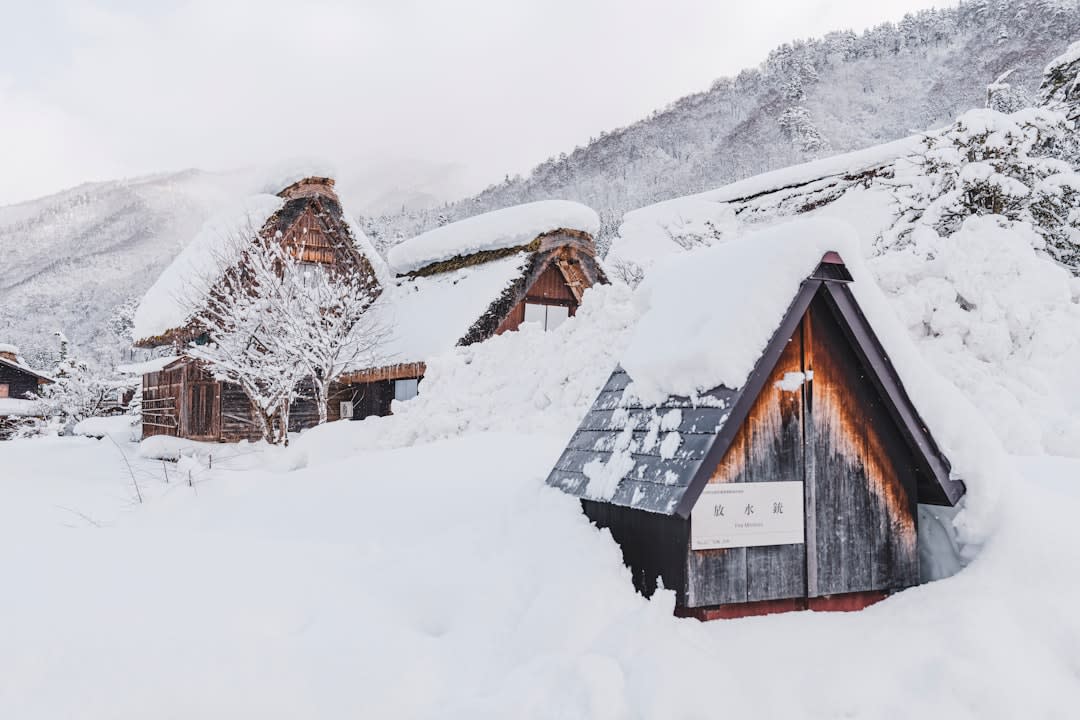
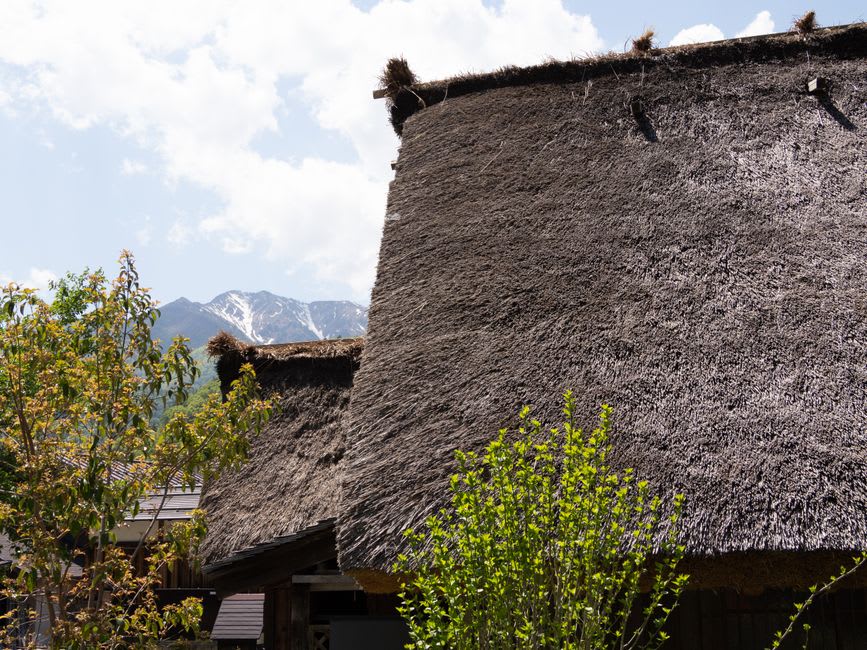
The farmhouses are built in the gasshō-zukuri style — the word means “hands joined in prayer,” and once you know that you cannot unsee it in the steep triangular roofs. They are pitched that sharply for a reason: this valley gets some of the heaviest snowfall in Japan, and a shallow roof would collapse under it. The thatch is bound without a single nail, held by rope and joinery and the accumulated knowledge of centuries, and every few decades the whole community turns out to re-thatch a roof in a single day. We went inside one of the larger houses, its upper floors once used for raising silkworms, and stood in the cathedral gloom under the beams looking up at the underside of all that thatch, black with woodsmoke.
An old man tending the irori hearth on the ground floor kept the fire smoking gently — that smoke, he explained through a laminated card in English, is what preserves the thatch and keeps the insects out. The house smelled of it, a smell I still associate with the whole valley.
The Viewpoint Above the Hamlet
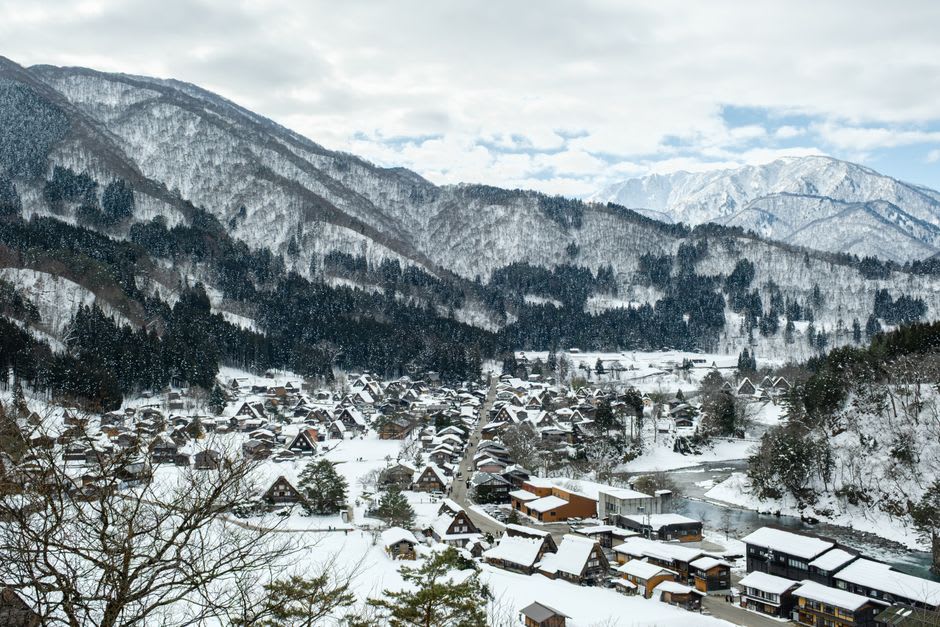
There is a hillside lookout — the Shiroyama viewpoint — above the village, reached by a short climb or a shuttle, and it is the vantage from which every famous image of Shirakawa-gō is taken. We walked up in the late afternoon. From there the whole hamlet lays itself out below you, the farmhouses scattered among the paddies, the river curling around the edge, the forested ridges rising behind. In summer it is impossibly green; in winter, buried and hushed under snow, it becomes the picture everyone knows.
We stayed until the light went amber and the tour buses pulled away, and for twenty minutes we more or less had the viewpoint to ourselves. Lia said it looked like a place from a story her grandmother might have told. I understood exactly what she meant and could not have said it better.
Staying After the Buses Leave
Most people come for two hours and go. The trick — and I’d urge anyone to do it — is to stay the night in one of the farmhouse minshuku, the family-run guesthouses inside the gasshō houses themselves. We did, and it changed the place entirely. After five o’clock the day-trippers vanish and the village returns to the fifty-odd families who actually live there, and the paddies fill with frog-song, and the lit windows of the old houses glow low and warm across the fields.
Our hosts served dinner around the irori — river fish grilled on skewers stood upright in the ash, mountain vegetables, a pot of miso — and we slept on futons under the great dark roof while rain came in over the mountains. In the morning mist hung in the valley and there was not a single other tourist in sight.
Getting There
Shirakawa-gō lies in the mountains of Gifu, between Takayama and Kanazawa, and the easiest approach is by bus. Nohi and Hokutetsu buses run from Takayama in about fifty minutes and from Kanazawa in around an hour and a quarter; reserve a seat in high season, as they fill. There is no train station in the valley. If you can, book a night in a farmhouse minshuku well in advance — they are few and go quickly, especially in the winter illumination season, when the snow-buried village is lit up on select evenings. Come for the day if you must, but the village only truly reveals itself once the last bus has gone.
Keep exploring
More of Chūbu