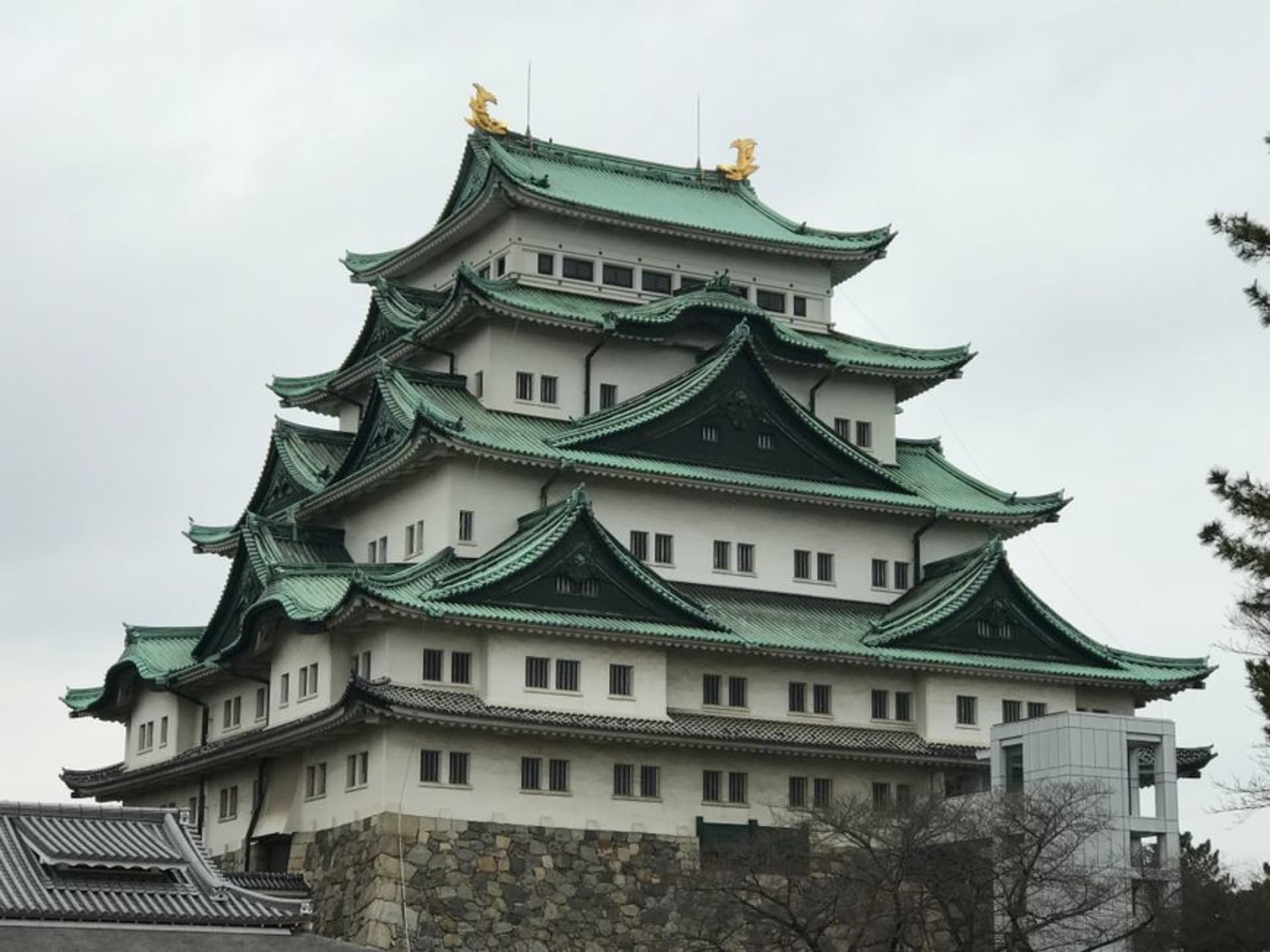
Japan's industrious fourth city, too often skipped between Tokyo and Kyoto. A golden-finned castle, an ancient forest shrine, and some of the heartiest food in the country.
Everyone told us to skip Nagoya. Change trains, they said, grab a bento, keep moving. It sits exactly halfway between Tokyo and Kyoto, a city people pass through rather than arrive in, and Lia and I very nearly did the same. But our timing was bad — a late connection stranded us for a night — and so we stepped out of the vast concourse of Nagoya Station into a city that felt refreshingly unbothered by tourists. No one was performing charm for us. It was a working place: wide boulevards, department-store basements, salarymen loosening ties over skewers. And it turned out to be exactly the kind of ordinary that I travel to find.
The Castle and Its Golden Fish
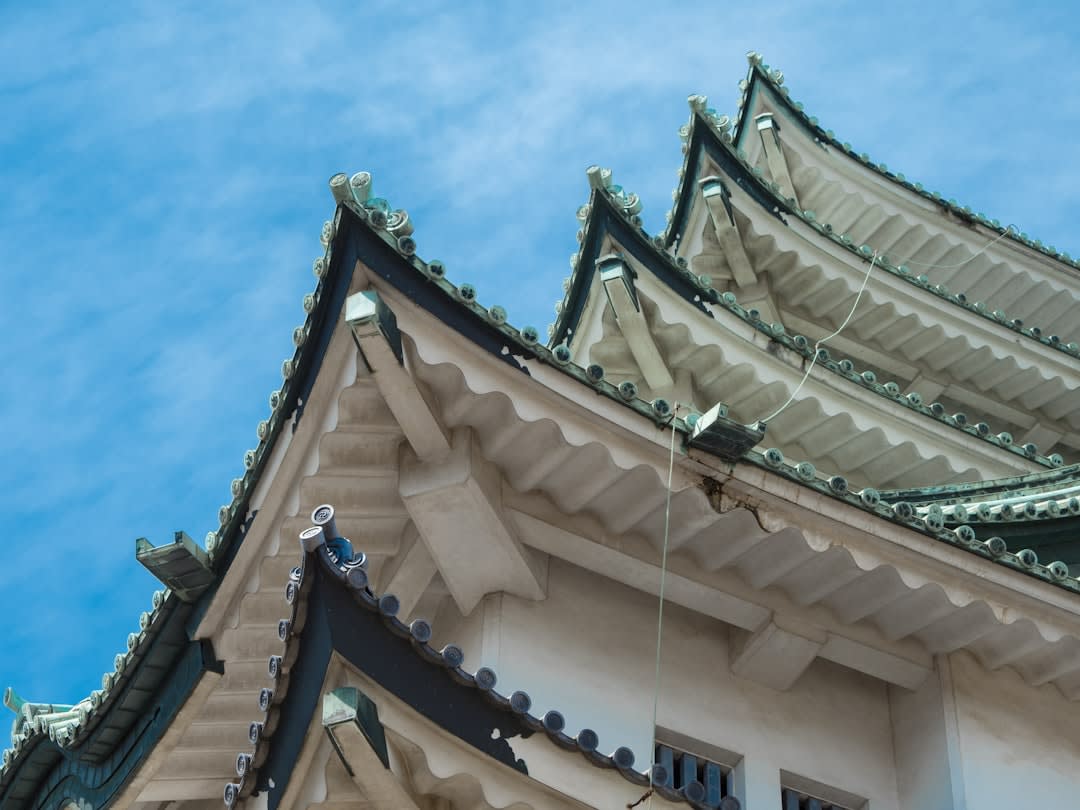
Nagoya Castle is the city’s emblem, and its two golden shachihoko — mythical tiger-headed carp that arch off either end of the main keep’s roof ridge — are so famous locally that they turn up on manhole covers and sweets. The keep was firebombed to nothing in 1945 and rebuilt in concrete, which the purists sniff at, but the real treasure is beside it: the Hommaru Palace, painstakingly reconstructed from old blueprints and photographs with traditional joinery, hinoki cypress, and gold-leaf sliding doors painted with tigers and pines. We spent a slow hour there in our socks on the cool wood floors, the rooms smelling of fresh cypress.
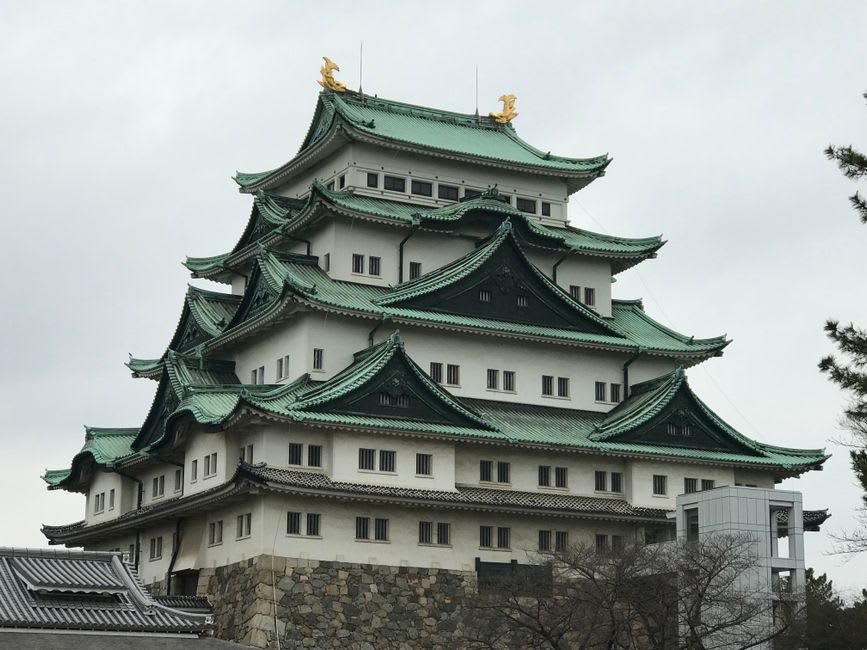
Outside, the grounds were full of local families and old men photographing the plum trees. Lia bought a shachihoko-shaped custard cake from a stall and we ate it on a bench under the ramparts, the golden fish catching the afternoon light far above us. It felt less like a monument and more like a park the whole city happens to share.
Atsuta and the Old Forest
If the castle is Nagoya’s face, Atsuta Shrine is its quiet heart. It is one of the most sacred sites in all of Shinto — said to house the Kusanagi sword, one of the three imperial regalia — and yet it announces none of this. You walk in off an ordinary street and the traffic simply falls away, swallowed by a dense grove of camphor trees, some of them a thousand years old. We followed the gravel path in dappled green light, past a giant camphor said to have been planted by a monk twelve centuries ago, its trunk wrapped in a sacred rope.
There were no crowds, only a trickle of locals stopping to bow on their way somewhere else. A bride in white was being photographed near the main hall. We washed our hands at the stone basin, and I stood for a while under the oldest tree, listening to the crows and the wind moving through a canopy that has outlived every building around it.
Eating Like a Nagoyan
Nagoya food — Nagoya-meshi — is its own proud cuisine, and it is unabashedly hearty. That first night we ate miso-katsu, a breaded pork cutlet drowned in a thick, dark, sweet-savory hatcho miso sauce that no other region would dare apply so generously. The next day we queued for hitsumabushi: grilled eel over rice, served in a lacquered tub, which you eat in three ceremonial stages — plain first, then with condiments, then finally drowned in dashi broth like a savory soup.
We finished, inevitably, with tebasaki — peppery, glazed chicken wings eaten with fingers and cold beer in a smoky standing bar near the station, the counter sticky and loud. Lia declared it the best meal of the whole trip, and I didn’t argue. Nagoya feeds you like it means it.
Getting There
Nagoya is one of the easiest cities in Japan to reach, precisely because everyone passes through it. It sits on the main Tokaido Shinkansen line — roughly 100 minutes from Tokyo, 35 minutes from Kyoto — and the station is a city in itself, with entire floors of restaurants. The castle and Atsuta Shrine are both a short subway ride from the center; the city’s grid is flat and legible. It is also the natural gateway to the Kiso Valley post towns, so consider a night here on the way to Magome rather than treating it, as we almost did, as a place to change trains.
Keep exploring
More of Chūbu