
Lake Motosu
"Lia held up a 1000-yen note, and there it was — the same mountain, the same lake, in her hand and in front of us."
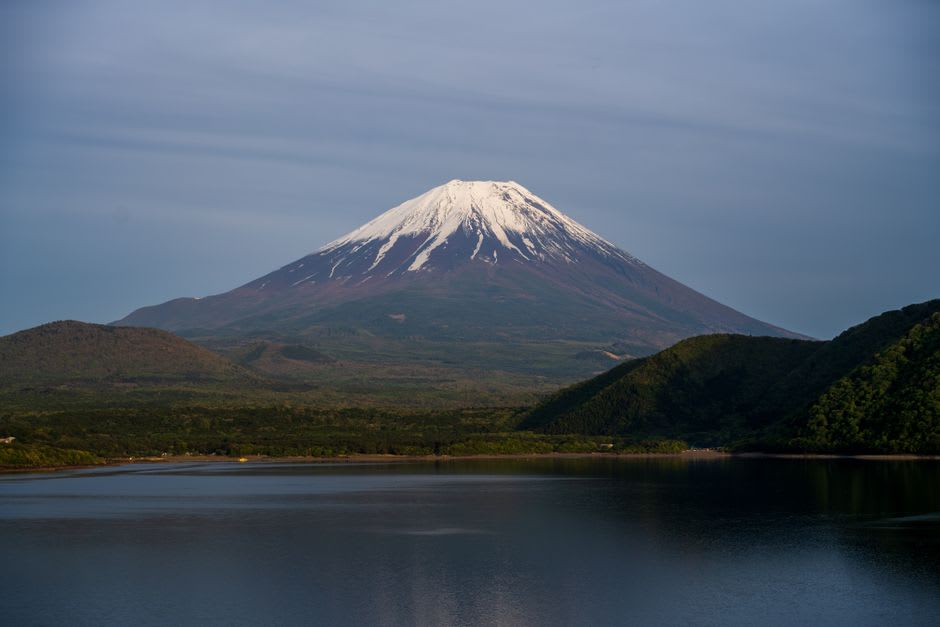
The deepest of the Fuji Five Lakes, so clear and still that on a windless morning it holds a second Mount Fuji upside down in the water. This is the exact view engraved on the back of the 1000-yen note. We came for the reflection and stayed for the silence.
We arrived at Lake Motosu the night before, on purpose, because the reflection only comes at dawn before the wind picks up. Our little rented car smelled of konbini coffee and the damp of a lake we couldn’t yet see. We slept badly, both of us, the way you sleep when you’ve set an alarm for something that might not happen. At 4:40 the sky was the color of wet slate. We walked down to the shore at Nakanokura Pass with a blanket around our shoulders, and for twenty minutes nothing happened at all. Then the water flattened, the last stars went out, and Fuji simply appeared — once above the horizon and once below it, folded into the lake like a photograph developing.
The reflection on the banknote
Lia dug a crumpled 1000-yen note out of her jacket and held it up at arm’s length, comparing. The photographer Okada Koyo took that image here in 1935, from this pass, and Japan has printed it ever since. Standing in the exact spot where a national banknote was composed is a strange, quiet thrill — like finding the address of a song. The trick, we learned, is that Motosu is the deepest of the five lakes and rarely freezes, so its surface stays glassy longer than the others. We stood there far too long, feet numb, neither of us willing to be the one who suggested leaving.
Camping on the western shore
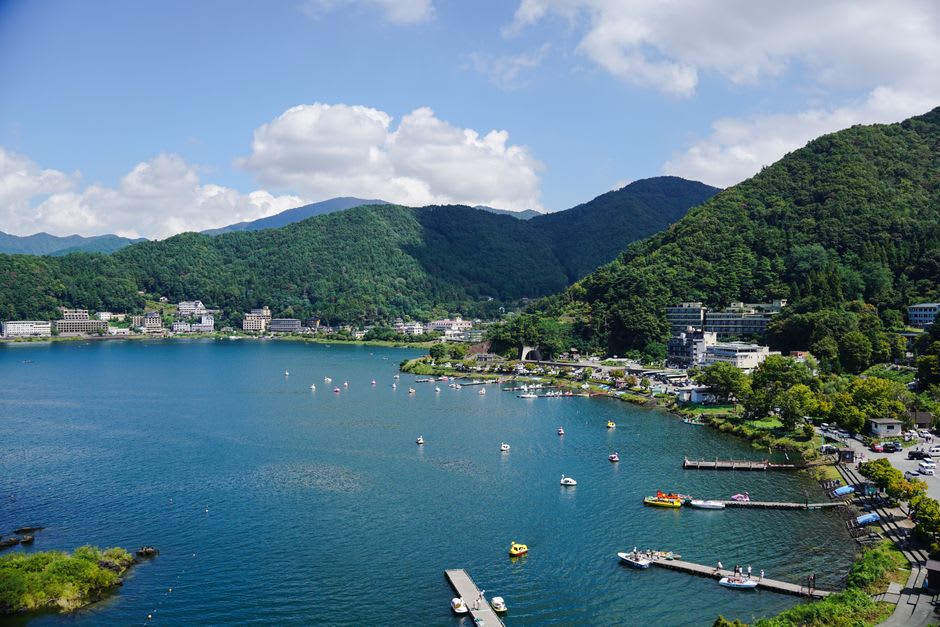
By eight the tour buses hadn’t found us yet, so we drove around to Koan campground on the western shore, where families were already frying eggs on portable stoves with Fuji looming behind them like a stage backdrop nobody could quite believe was real. We didn’t have a tent, but we bought two rice balls and a can of hot corn soup from a vending machine and ate on the pebbles. A man beside us had been coming for thirty years, he told us in slow English and slower gestures, and had never once tired of the mountain. I understood him. The lake changes its mind about the light every few minutes.
The color of the deep water
Later we rented a clear-bottomed kayak and paddled out past where the shallows drop away. Motosu goes down more than 120 meters, and you can feel the depth in the color — the pale jade of the edges giving way to an ink-blue that seems to have no floor. Lia trailed her fingers in it and yelped; snowmelt-cold even in summer. We stopped paddling in the middle and just drifted, the only sound the drip off the blades and, once, the far-off ring of a temple bell carrying across the water. From out there Fuji looked less like a postcard and more like a neighbor — enormous, patient, indifferent to us in the best way.
Getting There
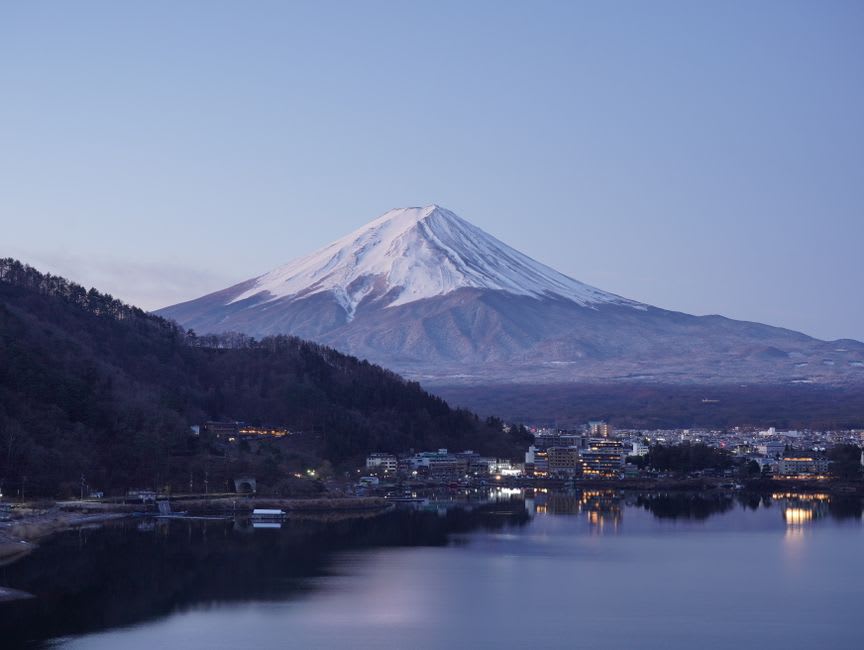
Lake Motosu sits at the western end of the Fuji Five Lakes in Yamanashi Prefecture, and honestly it’s the one you need a car for — it’s the least served by trains. From Tokyo we took the JR Chuo Line to Otsuki, changed for the Fujikyu Railway to Kawaguchiko Station, then picked up a rental. From Kawaguchiko it’s about a 25-minute drive west along Route 300. There are also seasonal Fujikyu buses from Kawaguchiko to the Motosu campgrounds, but they’re infrequent, so check the timetable before you commit. If you want the banknote view at Nakanokura Pass, plan to arrive before dawn — the reflection dies the moment the morning breeze arrives.
Keep exploring
More of Chūbu