
The heart of Japanese wine country, tucked into a Yamanashi valley where terraced vineyards of the native Koshu grape climb toward the peaks and, on a clear day, Mount Fuji watches over the whole basin. Small family wineries line the slopes, generous with pours and short on pretense. It is a place that surprised us — we came skeptical and left with three bottles and a soft spot.
I will confess my sin at the start: as a Frenchman, I arrived in Katsunuma a snob. Japanese wine sounded to me like an idea that ought to exist rather than one that should be poured into a glass and taken seriously. Lia, who has no such prejudices and better instincts, simply booked us onto the little wine train from Shinjuku and told me to keep my opinions in my pocket until I’d tasted something. By the end of the first afternoon I had tasted a great deal, and my opinions had quietly rearranged themselves. Katsunuma corrected me, kindly and thoroughly, one small pour at a time.
The Koshu Slopes
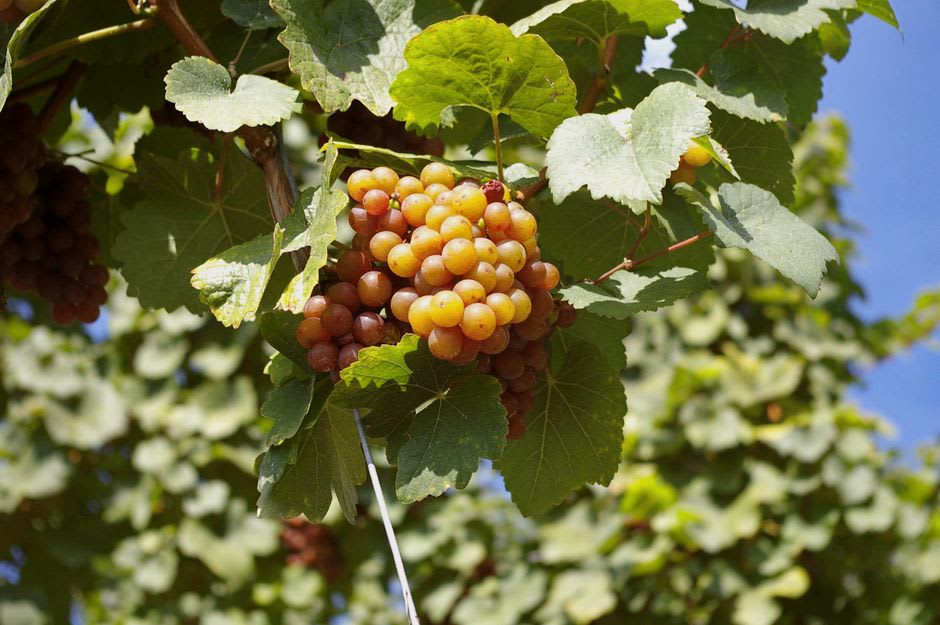
The vineyards here grow differently than any I knew. The Koshu grape — a pale pink-skinned variety that’s grown in this valley for centuries — is trained overhead on pergolas rather than the low rows I was raised beside, so you walk under the vines through a dappled green ceiling with the fruit hanging down around your head. We spent a morning wandering the terraced slopes above the town, the valley opening below us and the mountains stacked blue behind. A woman pruning near the path saw us gawking and explained, half in English and half in gesture, that the overhead training keeps the humid air moving through the fruit. Then she cut a single grape loose and handed it to Lia. It tasted of the place — light, faintly floral, nothing like what ends up in the bottle and everything like it at once.
Cellar Doors and Generous Pours
Katsunuma has more wineries packed into its slopes than anywhere else in Japan, and the joy of it is how unguarded they are. These are family operations, mostly, with a tasting counter squeezed between the tanks and someone’s grandfather doing the pouring. We visited three in an afternoon on foot, and at each one the tasting was a few hundred yen for a row of small glasses, poured with genuine curiosity about what we thought. The Koshu whites were the revelation — dry, delicate, faintly citrus, made for the very fish and tofu they’d be drunk with. There was a Muscat Bailey A red too, softer and stranger than any red I’d have chosen at home, and I bought a bottle just to keep arguing with it. Nobody rushed us. Nobody performed. It was the least pretentious wine tasting of my life, and I have been to a great many.
Fuji Over the Vines
On our second morning the haze lifted and there it was — Mount Fuji, floating over the southern rim of the basin, so clean and improbable it looked pasted onto the sky. We climbed to a lookout the winery woman had told us about, a bench on a high terrace where the whole valley of vines rolled downhill in front of us with the mountain beyond. Lia had bought a small bottle and two paper cups, because of course she had, and we sat and drank a very good white at ten in the morning with Fuji watching and felt no guilt about it whatsoever. I thought about all the people speeding past on the expressway below, on their way to somewhere more famous, and felt briefly and enormously lucky to have been dragged off the train by a woman with good instincts.
Getting There
Katsunuma sits in Yamanashi, about an hour and a half west of Tokyo. The limited-express train from Shinjuku runs to Katsunuma-Budokyo Station or nearby Enzan; from either it’s a short taxi to the vineyard slopes, though the wineries are spread out enough that a taxi or a rented electric bike makes the day far easier than walking alone. On weekends in season, seasonal “wine trains” and winery shuttle buses run — worth checking, since they let you taste without anyone having to stay sober to drive. Come in autumn for the harvest and the golden vines, but honestly, come whenever. The pours are generous year round.
Keep exploring
More of Chūbu