Hakuba
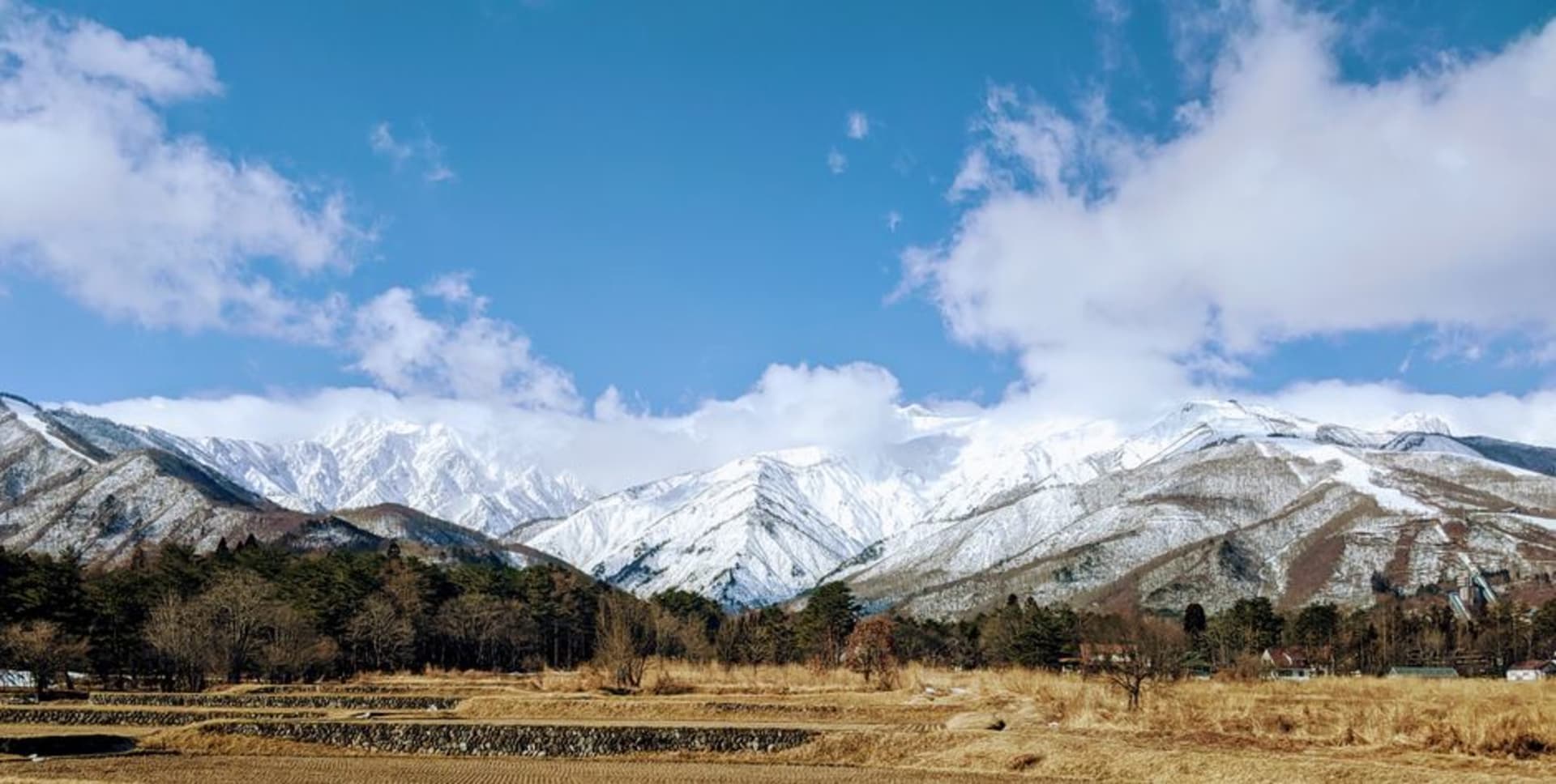
"Lia looked up at that wall of white mountains and said it didn't look like Japan at all. It didn't. It looked like the moon had grown teeth."
A long alpine valley in Nagano beneath the great wall of the Northern Japan Alps. Home to the 1998 Winter Olympics ski jumps and some of the deepest powder in the country, it trades its snow for green meadows, gondola rides and high ridge walks in summer.
We came to Hakuba chasing snow, and the snow, for once, more than delivered. Lia and I stepped off the bus from Nagano into a valley half-buried, the roofs weighed down under a metre of it, the road cut between walls of ploughed white taller than I am, and above all of it the Northern Japan Alps standing in one continuous jagged ridge, so close and so sheer they seemed to lean over the town. I have skied in the Alps at home, in the Pyrenees, in Colorado once, and I have never seen mountains rise so suddenly out of a valley floor. Lia, who does not ski and had come mostly for the hot springs and the company, stood in the car park with her mouth open and her camera forgotten in her hand.
The powder and the Olympic slopes
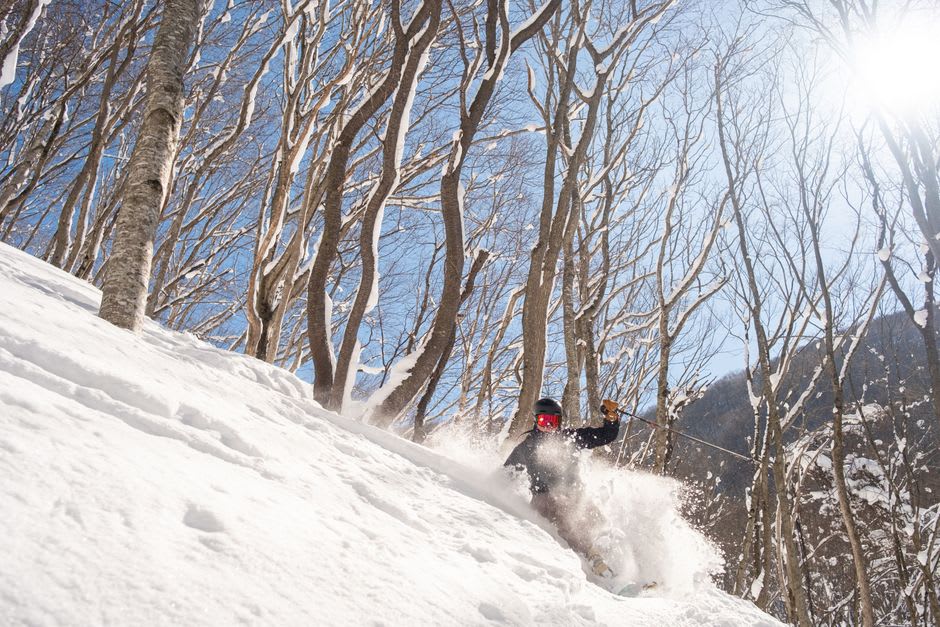
Hakuba was the ski heart of the 1998 Nagano Winter Olympics, and the great ski jumps at Hakuba still stand at the edge of the valley, twin ramps running impossibly steep down toward the town — you can ride a chairlift and a lift to the top of the larger one and stand at the gate the jumpers pushed off from, which is a fine way to feel your stomach drop without moving an inch. But the real inheritance of Hakuba is the snow itself. The valley holds a string of linked resorts — Happo-One, the biggest, where the Olympic downhill was run, and Goryū, Iwatake, Cortina further up — and the powder that falls here, blown in dry off the Sea of Japan, is the stuff skiers cross oceans for. I spent three days in it, up to my knees, grinning like a fool.
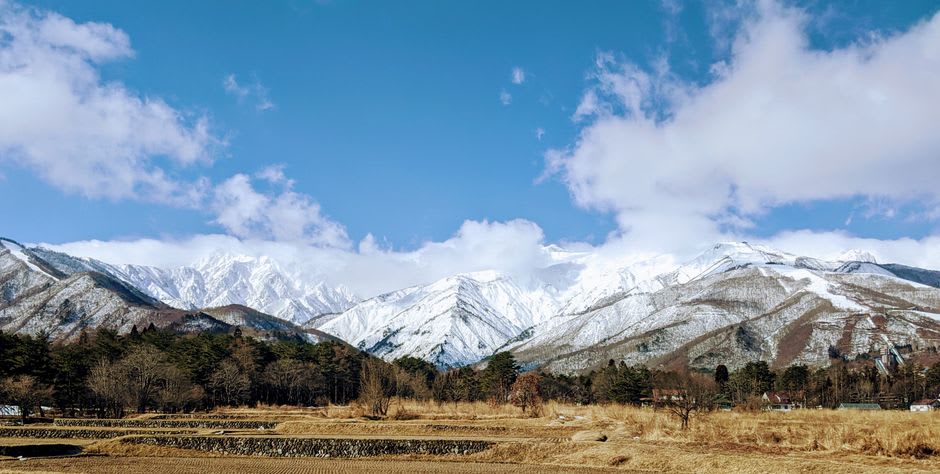
Happo-One climbs high off the valley floor, and from the top runs the whole spine of the Alps lies open in front of you — Shirouma, Yari, the lot — a view I kept stopping mid-run just to look at, until my legs got cold and reminded me why I was there.
Onsen at the foot of the mountains
The other half of Hakuba, the half Lia had come for, waits at the bottom of the lifts. The valley is dotted with onsen, and after a day in the cold there is nothing on this earth like lowering yourself into an outdoor bath with the snow still falling on your hair and the mountains going pink in the last light. We found a small rotenburo attached to our lodge, milky and faintly sulphurous, and sat in it until our fingers wrinkled, saying almost nothing, watching flakes vanish into the steam. Lia declared it the single best thing about Japan, and I did not argue.
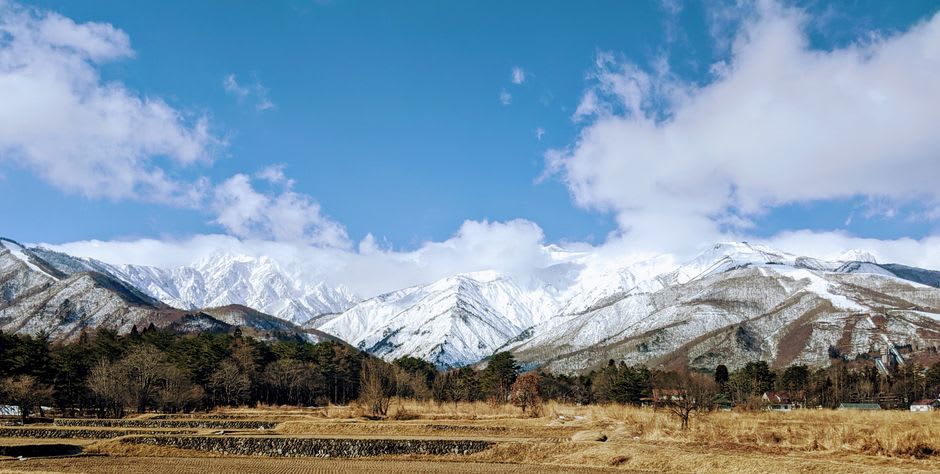
The village itself has grown a touch international — there are more Australian voices in the bars than Japanese in high season, and you can get a flat white as easily as a bowl of ramen — but step off the main strip and it is still a working mountain town, quiet and snowbound and kind.
Green valleys in summer
Hakuba is not only a winter place, and I would come back in summer to prove it. When the snow goes the same gondolas that carried skiers carry hikers up into a landscape of alpine meadow and cool forest, and the high trails open along the ridges toward Happo Pond, a small tarn near the tree line that on a still day holds a perfect upside-down reflection of the Shirouma peaks. The valley floor turns green and terraced, rice paddies mirroring the sky, and the whole place softens. Friends who have walked the high route in August tell me of wildflowers to the horizon and snow still lying in the gullies in the shade. We were there for the cold, but I left already planning the warm return.
Getting There
Hakuba sits in the far northwest of Nagano prefecture, under the Northern Japan Alps. The usual approach is by shinkansen to Nagano station, then a direct highway bus roughly an hour and a half up into the valley; in winter these buses run frequently and are packed with skis. You can also reach it by a slower, lovely local train line via Matsumoto. Come between December and March for the powder and the Olympic slopes, or in July and August for the green ridges, the gondola-borne hikes, and Happo Pond mirroring the peaks.
Keep exploring
More of Chūbu