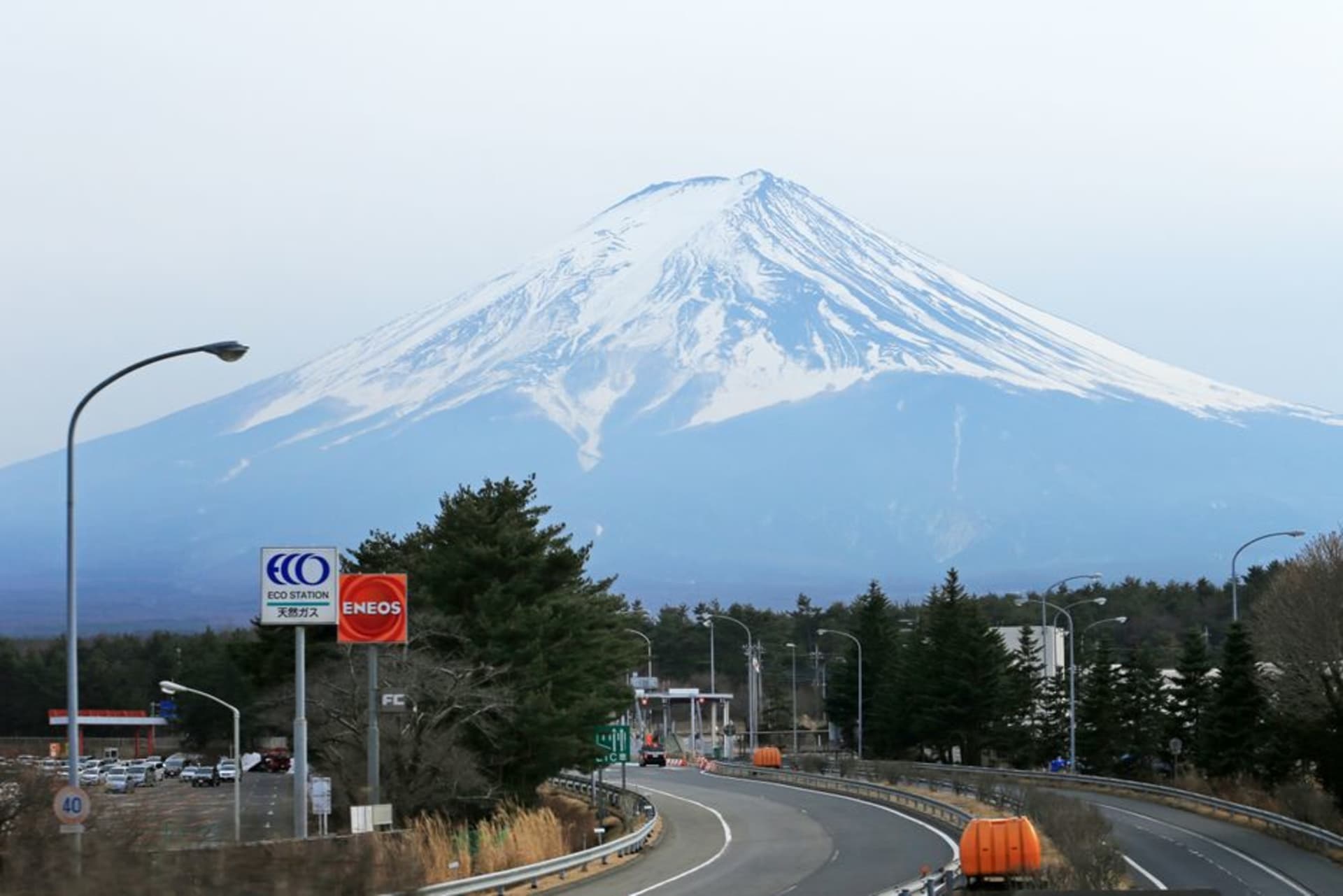
Gotemba
"In Gotemba you don't look for Fuji. You look away from it, and it's still there, filling the window."
A working town at the eastern foot of Mount Fuji, where the mountain fills half the sky and feels close enough to touch. Famous for its sprawling outlet mall, but we came for the view from the fifth station and the pilgrim's trailhead where climbers still begin. Fuji is not a backdrop here; it's the whole horizon.
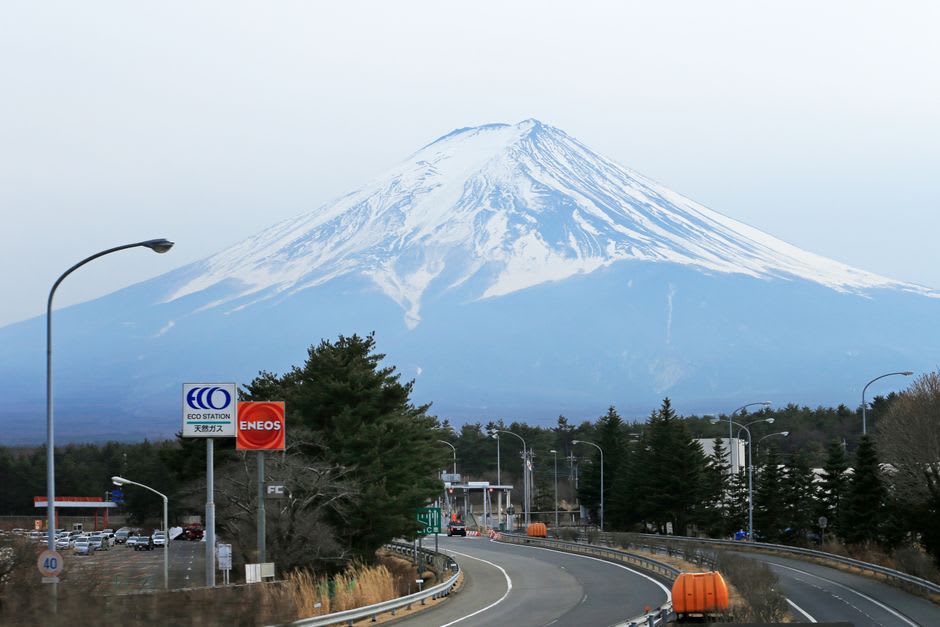
We didn’t plan to like Gotemba. On paper it’s the outlet-mall town, the place you pass through on the way to somewhere prettier, and the guidebooks give it a sentence and move on. But we’d taken the Odakyu bus in from Tokyo and stepped off into a car park, and there it was — Fuji, so absurdly large and near that Lia actually laughed out loud, a short startled sound, because nothing prepares you for the scale. From the Fuji Five Lakes side the mountain is a distant, elegant cone. From Gotemba, on the eastern flank, it’s a wall. It leans over the town. You feel watched by it, and after a day you stop minding.
The mountain at close range
The thing about Gotemba is proximity. This is where the Gotemba Trail begins, the longest and quietest of the four routes up Fuji, starting lower than the others so that serious climbers use it more for the descent — the famous sunabashiri, the sand-run, where you plunge down volcanic scree in great sliding strides. We didn’t climb; it was the wrong season and we were the wrong kind of tired. But we drove up to the trailhead at the new fifth station just to stand at 1,440 meters and watch cloud pour over the shoulder of the mountain like something spilled. A trail runner stretched nearby, unhurried, as if the biggest volcano in Japan were an ordinary hill behind his house. To him it was.
Peace and clean water at the foot
Down in the town again we wandered into the Fuji-Hongu grounds and then out to the wide green sprawl of the Peace Park, a hilltop Buddhist stupa donated after the war, gleaming white with a golden Buddha and a slightly kitsch charm we couldn’t resist. What redeemed it entirely was the view: the whole eastern face of Fuji framed by the stupa’s arch, and below it the tiled roofs of Gotemba running down toward the plain. Lia rang the peace bell — you’re meant to — and the sound hung there in the cold air a long time. The water in this town, fed by Fuji’s snowmelt aquifers, is so good the locals brag about it, and the beer they brew from it, and the whisky the big distillery down the road makes.
Outlets under the volcano
Yes, we went to the outlets. Everyone does — Gotemba Premium Outlets is one of the largest in Japan, a whole valley of glass-and-steel shopfronts, and it is exactly as un-romantic as it sounds until you look up. Because even here, between a coffee stand and a queue for luxury handbags, Fuji is right there over the rooftops, close and white and utterly unbothered by commerce. Lia bought nothing and I bought a pair of ludicrous discounted trail socks, and we sat on a bench with soft-serve watching the mountain change color as the afternoon went orange. There’s a Ferris wheel at the mall now, and riding it at dusk with Fuji filling the whole eastern window is one of the more genuinely lovely things you can do in a shopping center.
Getting There
Gotemba is one of the easiest Fuji-area towns to reach from Tokyo. The fastest way is the Odakyu “Fujisan Gotemba” express bus or the JR bus straight from Shinjuku, which drops you in Gotemba in about 90 minutes to two hours. By train, take the JR Tokaido Line to Kozu and change to the JR Gotemba Line, or come via Numazu from the west. The outlets run a free shuttle from Gotemba Station. For the fifth-station trailhead you’ll want a car or a seasonal climbing-season bus, which only runs in July and August. Come on a clear morning if you can — Gotemba’s whole reason for being, as far as we’re concerned, is that impossible close view of the mountain.
Keep exploring
More of Chūbu