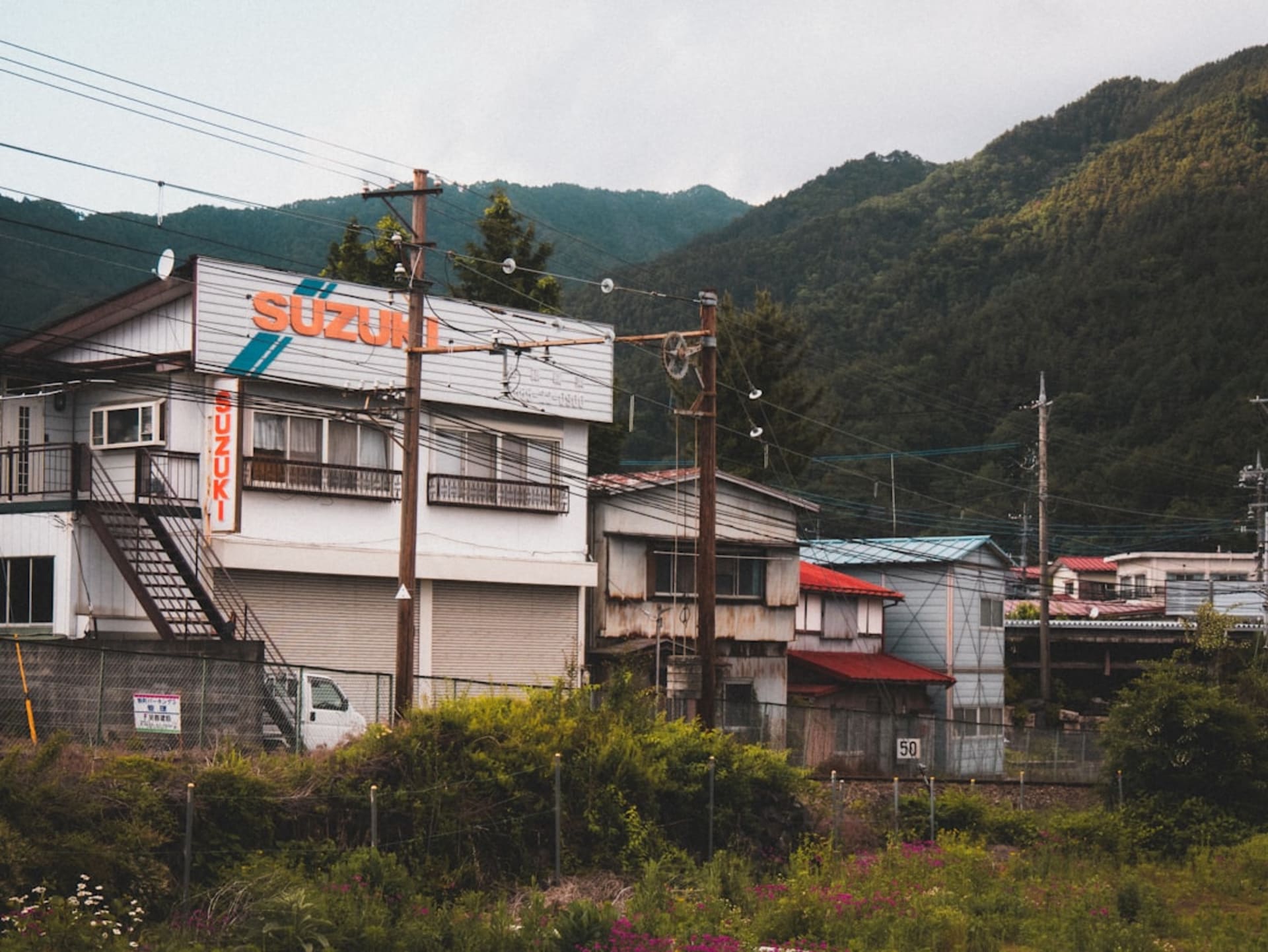
Gero Onsen
"We arrived cold off the mountain train and the whole town smelled faintly of warm stone and river water."
A steaming hot-spring town folded into the Gifu mountains, where the Hida river runs green below terraced ryokan and free foot baths sit open to the street. Counted among Japan's three greatest onsen, it is a place for slow soaking and slower walking. Autumn sets the whole valley on fire.
Lia and I got off the train at Gero with stiff legs and the specific hunger you build up crossing a mountain range, and the first thing we did — before the inn, before food — was sit down at a free foot bath on the riverbank and put our feet in the hot water. It was late afternoon, the light going gold on the far slope, the Hida river sliding past pale green below us. An old man two seats down nodded at us the way you nod at people doing the obviously correct thing. I understood, sitting there with steam curling around my ankles, why Gero has been drawing weary travellers down out of these mountains for centuries. It asks nothing of you except that you slow down.
A Town Built Around the Bath
Gero has been famous for its water for a very long time — a Muromachi-era poet ranked it among the three finest hot springs in Japan, alongside Arima and Kusatsu, and the town has been leaning on that reputation happily ever since. The spring water here is famously smooth, almost slippery, the kind that leaves your skin feeling polished. Ryokan climb the hillsides on both banks of the river, and many will sell a day-pass so you can wander between three of them and try their baths in turn.
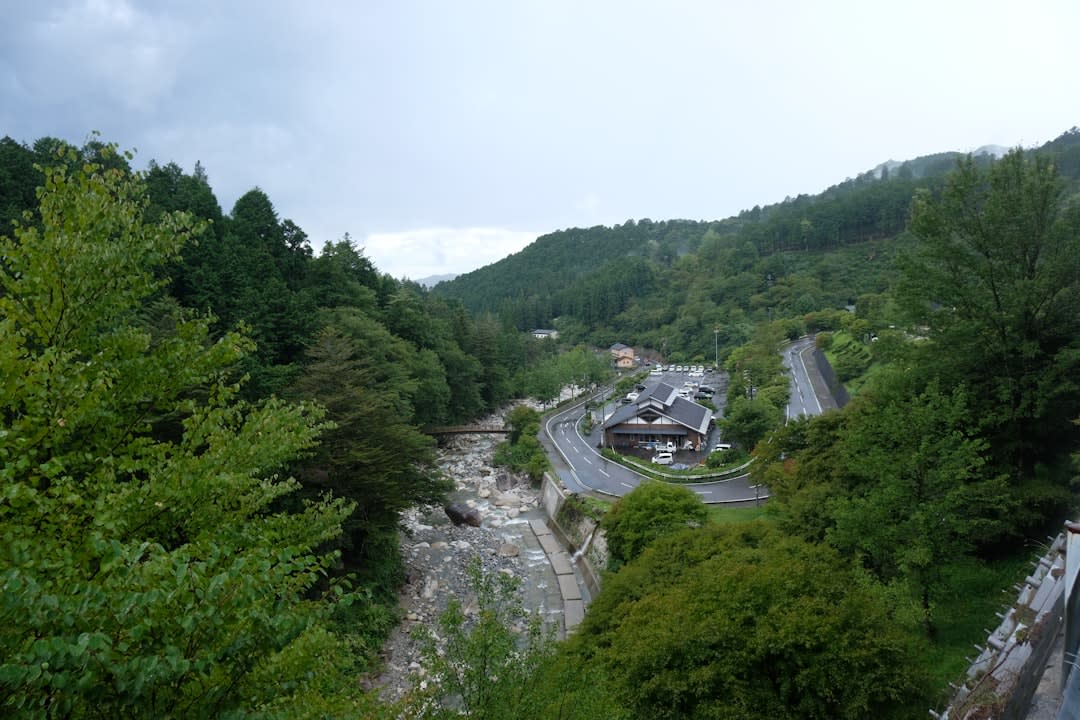
We spent an unhurried morning doing exactly that, moving from one bath to the next with wet hair and cotton yukata under our coats, and by lunchtime I had lost all interest in doing anything more strenuous than lowering myself into hot water and looking at trees.
Foot Baths and River Walks
What I loved most about Gero was how much of the pleasure is simply free. Dotted through the town are open-air ashiyu — foot baths — where anyone can sit, roll up their trousers, and soak. There is one right by the river, another tucked beside a shrine, and the ritual of finding the next one gave our aimless walking a shape. The Funsenchi, a famous open-air bath set right on the riverbed, is visible from the main bridge, and half the fun is watching braver souls than us take to it.
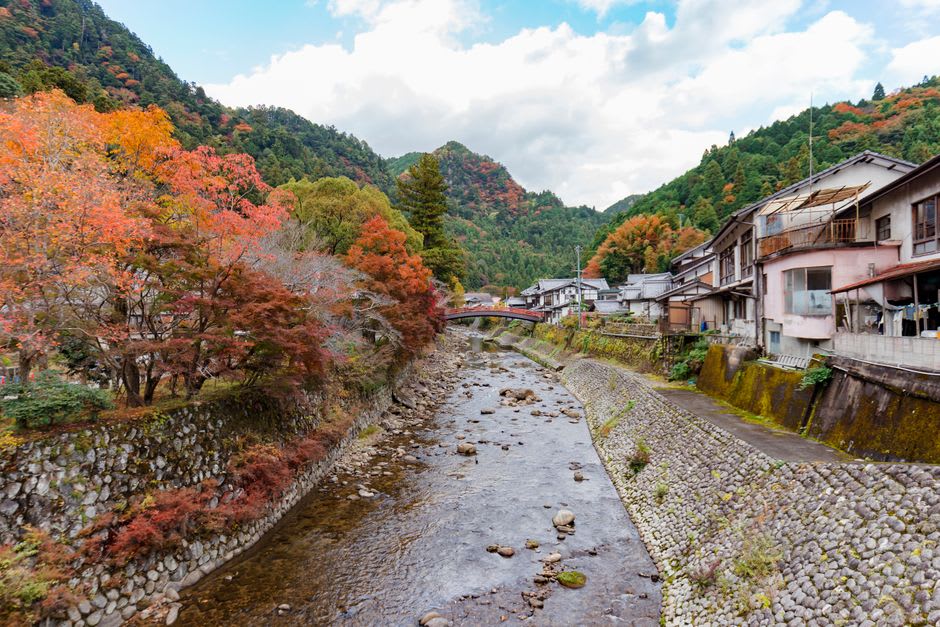
We crossed the arched bridge back and forth more times than we needed to, just for the view up the valley. Lia bought a small cloth onsen-tamago egg cooked in the spring water from a stall, and we ate it leaning on the railing, watching the river go by.
Autumn on the Slopes
We had come in late October on purpose, and the timing was perfect. The mountains around Gero turn in autumn into great tapestries of red and amber and rust, the maples especially, and from the higher baths the whole valley looked like it was quietly burning. In the evening the town lights its lanterns and the temperature drops sharply — the contrast that makes a hot bath feel like a small miracle.
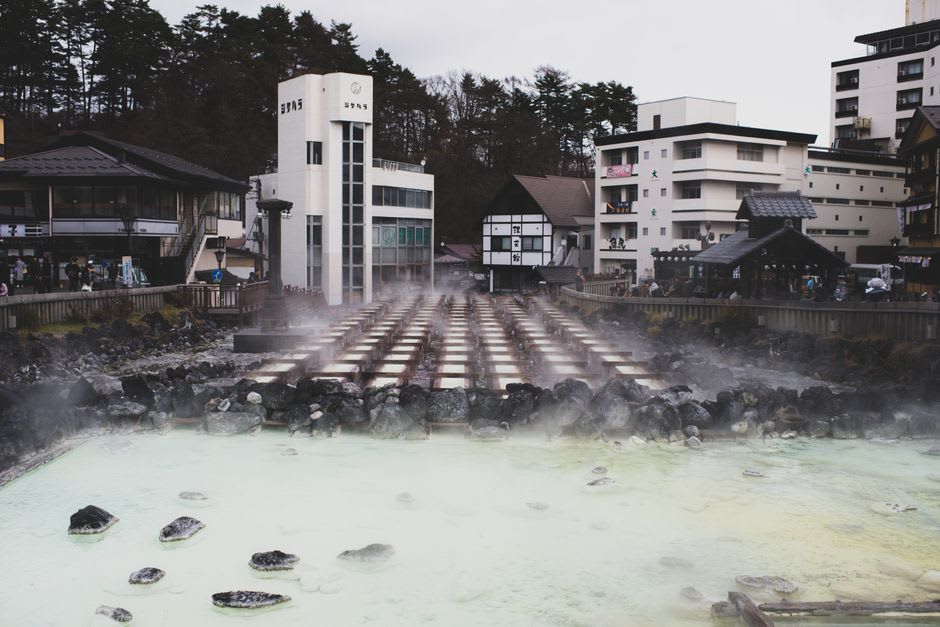
That last night we soaked outdoors as the cold came down, steam mixing with our breath, the coloured slopes going black against the sky. Lia said she couldn’t remember the last time she’d felt so thoroughly warm from the inside out. Neither could I.
Getting There
Gero sits on the Takayama Main Line in southern Gifu, roughly halfway between Nagoya and Takayama, which makes it an easy and scenic stop on the way to the Hida highlands. Limited express Hida trains from Nagoya take about an hour and a half and run through beautiful river gorges — sit on the right side coming up. From Takayama it’s under an hour heading south. The town is compact and entirely walkable; ryokan will often collect you from the station if you ask. Come in autumn for the colours or winter for the deepest contrast between cold air and hot water, and stay at least one night — Gero is a place to bathe repeatedly, not to pass through.
Keep exploring
More of Chūbu