Eiheiji
"A young monk crossed the courtyard in the rain without hurrying, without an umbrella, and Lia breathed, don't move, don't say anything, just watch."
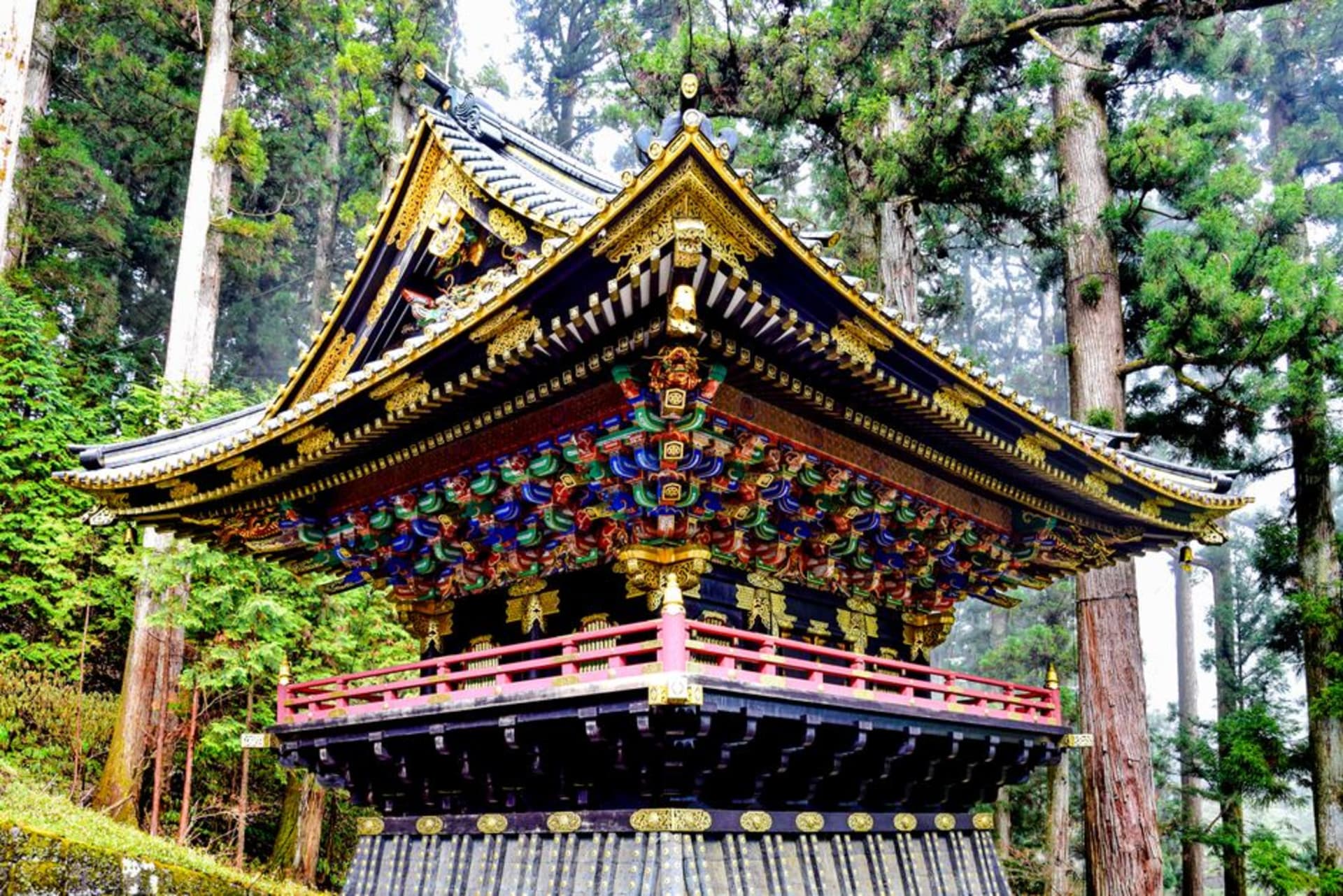
A great working Sōtō Zen training monastery deep in the cedar forests of Fukui. Founded in the thirteenth century, its wooden halls climb a mossy hillside linked by covered stairways, and hundreds of monks still live and practise here in silence and rain.
We took off our shoes at the entrance to Eiheiji and something in the temperature of the place made us both go quiet. Lia and I had visited a great many temples in Japan by then — we were, if I am honest, a little templed-out — but Eiheiji is not a sightseeing temple, it is a working monastery, one of the two head temples of Sōtō Zen, and the difference announces itself the moment you step onto the cold polished wood of its floors. Some seven hundred years of monks have walked these boards. Several hundred are here now, living and training in silence, and as we moved through the halls we kept passing them — a young monk sweeping, another carrying a tray, all of them moving with an economy and stillness that made us feel loud and clumsy in our socks. It was raining. Steam rose off the mossy cedars in the courtyards. I have rarely been anywhere that felt so fully itself.
The halls on the hillside
Eiheiji is not one building but a linked complex of some seventy, climbing the forested slope in tiers, and the great halls — the Sanmon gate, the Buddha Hall, the Dharma Hall at the top — are connected by covered wooden staircases and walkways so the monks can move between them without ever stepping out into the weather. You follow the same covered ways, in your socks, climbing and descending through a building that never quite ends, the rain drumming on the roofs and the smell of old cedar and incense everywhere. The Sanmon, the main gate, is a vast two-storey structure of dark unpainted wood, and standing beneath it looking up at the beams blackened by centuries of incense smoke, Lia said it felt less like architecture than like the inside of an enormous instrument.
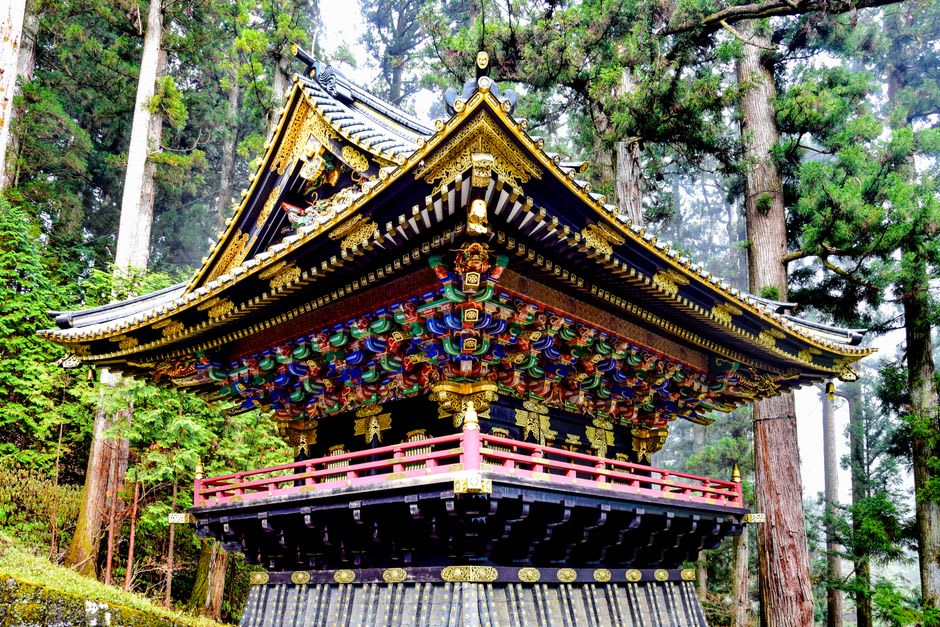
The most famous single sight is the painted ceiling of the Reception Hall, some two hundred and thirty panels of flowers and birds, and we lay back on the tatami as visitors do to look up at it — but it was the plain halls that moved me more, the empty meditation hall where the monks sit, sleep and eat all in the same narrow place.
The forest and the moss
What holds Eiheiji together, and holds you, is the forest. The monastery sits deep in the mountains among cedars so old and so tall that even at midday the light comes down green and dim, and the rain up here is near-constant, which is why every surface not walked upon is furred thick with moss — the stone lanterns, the roots, the bases of the walls, a soft luminous green over everything. Water runs everywhere, in channels and over stones, and its sound is the background to the whole place. Lia and I stood a long while on one of the covered bridges watching a stream come down through the cedars, and I understood that the setting is not incidental to the practice here. The damp, the green, the great indifferent trees — they are part of the teaching.
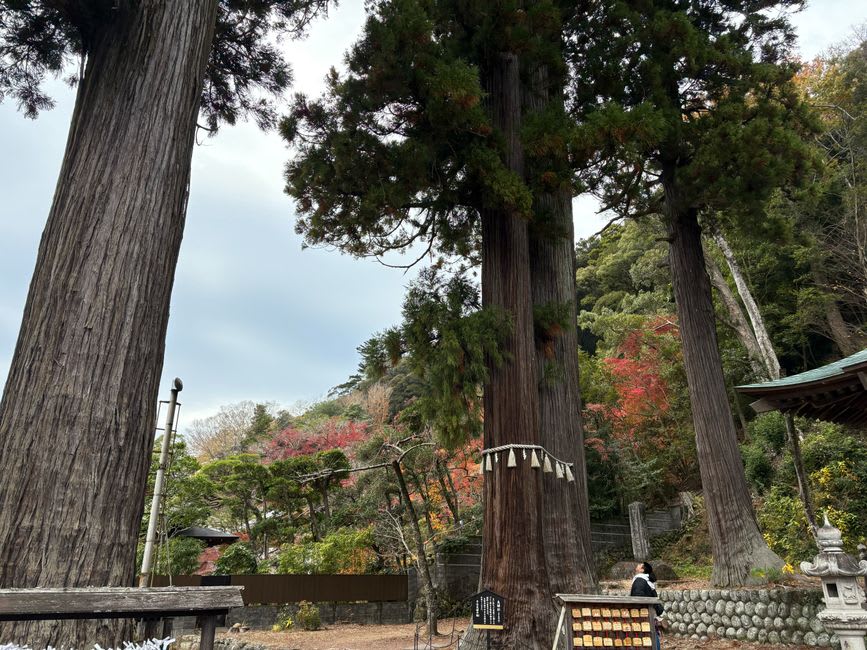
We kept our voices to whispers without being asked. Everyone does. The place asks it of you.
A living discipline
You can, if you wish, do more than visit. Eiheiji accepts lay people for short stays of zazen training, a taste of the monastic day — the early rising, the seated meditation, the silent formal meals eaten from a set of nested bowls, the cleaning as a form of practice. We did not have the days to spare, and I regret it, though I am not sure I would have lasted the 3 a.m. start. Watching the monks that afternoon was humbling enough: the youngest are barely out of their teens, sent here for a hard first year of training, and there is nothing romantic or soft about it — it is cold, wet, exacting, endless work. And yet the overwhelming feeling the place left me with was not austerity but a strange deep calm, as though the centuries of stillness had soaked into the wood along with the incense.
Getting There
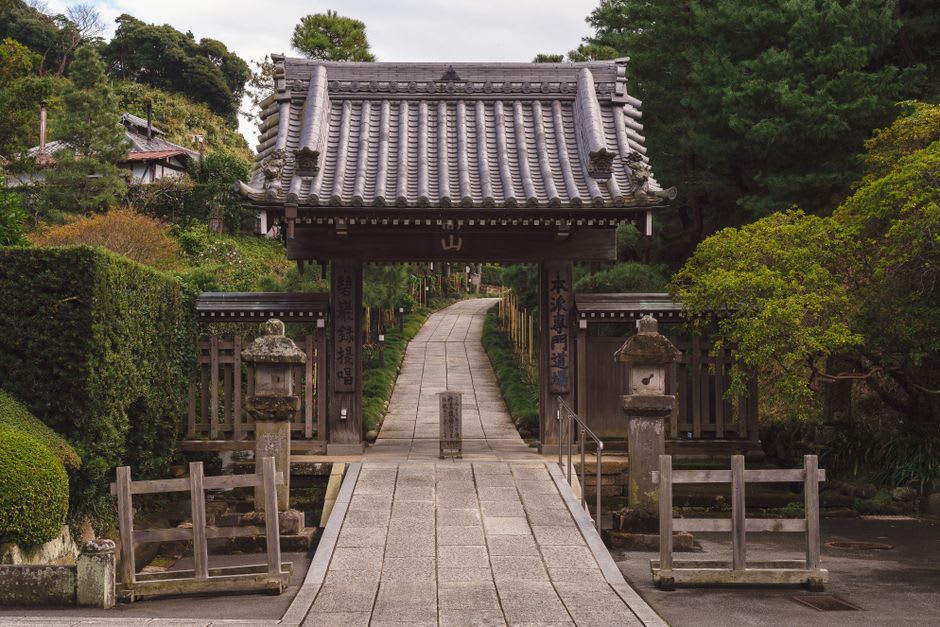
Eiheiji is in the mountains east of Fukui city, in Fukui prefecture. Take the shinkansen or a limited express to Fukui station, then a direct bus to the temple, roughly half an hour up into the hills; there is also a connecting local line and bus. It is an easy day trip from Fukui or Kanazawa, but consider staying nearby, or arranging a lay training stay at the temple itself, to catch it early or late when the day-visitors have gone. Come in the rain if you can — the moss and the cedars are never more themselves — or in autumn, when the maples turn among the dark evergreens.
Keep exploring
More of Chūbu