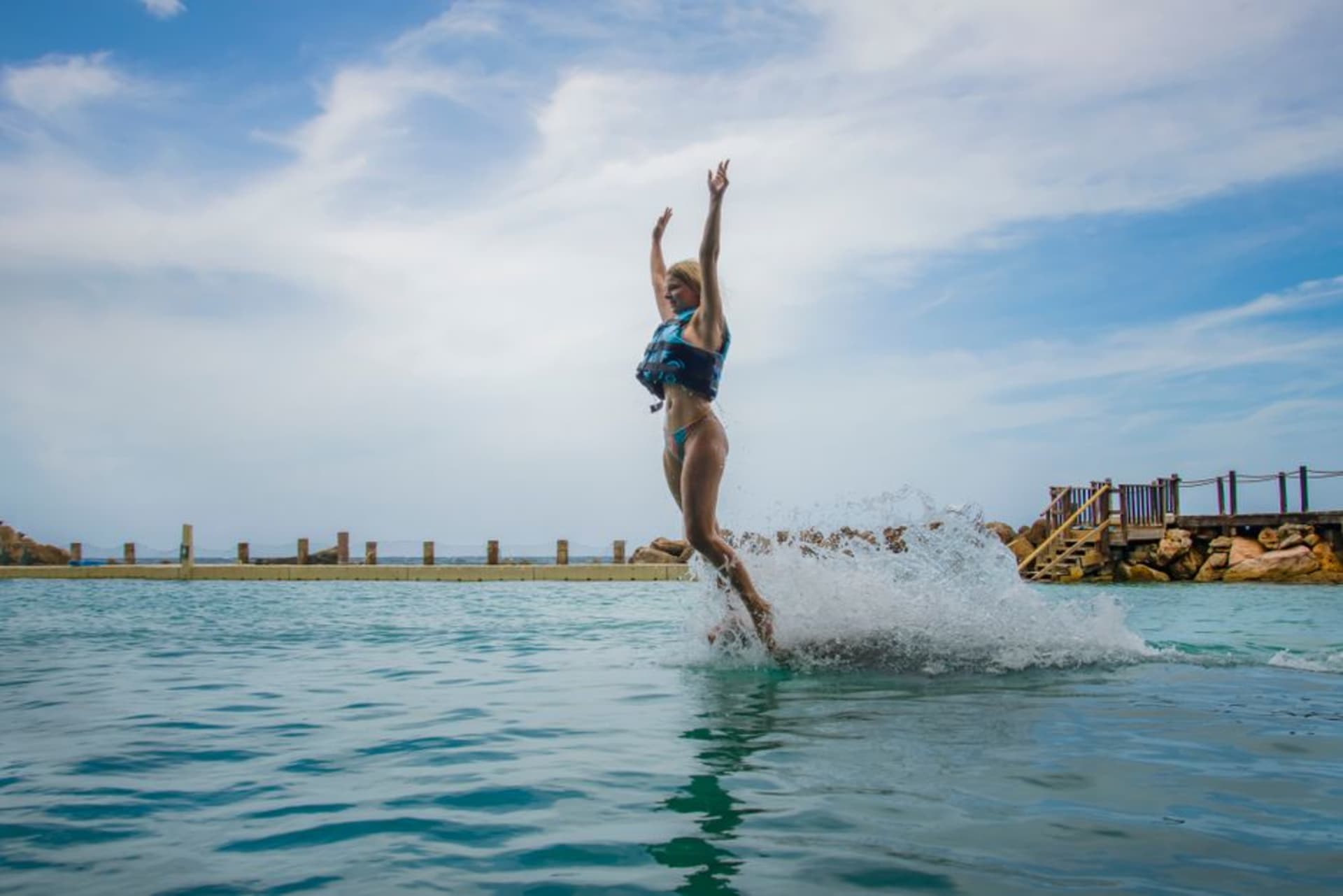
Dunn's River Falls
"Somewhere around the fourth tier, I stopped counting and just held on."
A staircase of travertine rock and cold river water tumbling straight into the Caribbean Sea, climbed hand in hand with strangers.
We got to Dunn’s River Falls early, before the cruise ship crowds from Ocho Rios port poured off their buses, and I’m glad we did. Lia had read that the falls climb about 180 meters over tiered limestone, but nothing prepares you for what that actually feels like underfoot — warm Caribbean air, cold river water pouring over your ankles, and rock so smooth from centuries of flow that it’s basically a natural water slide standing on end. Our guide lined up our little group — us, a French-Canadian couple, and a family from Kingston — into a human chain, hand to shoulder, and told us the rule was simple: nobody climbs alone.
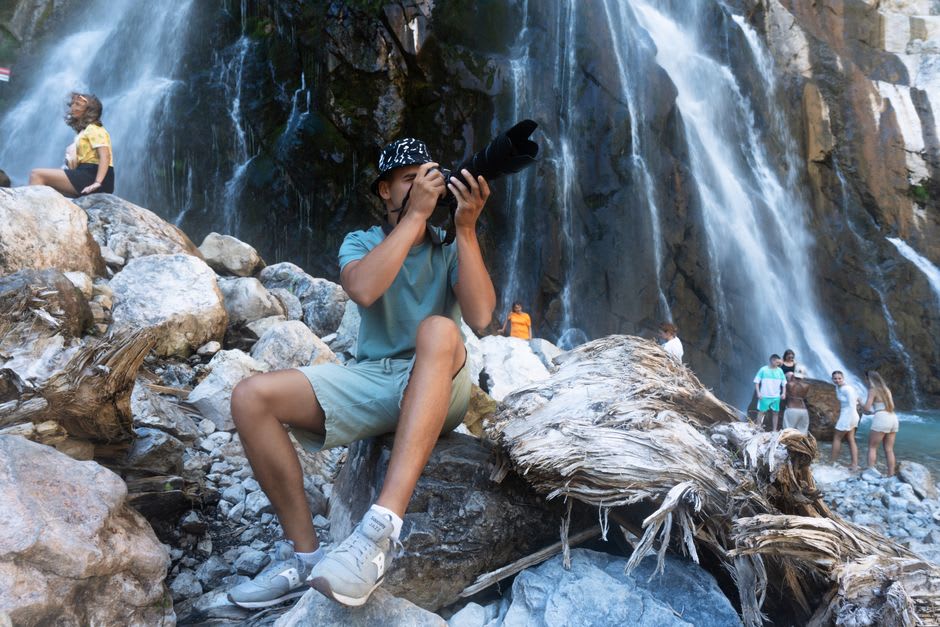
I’d seen the falls before, without knowing it — they show up in the 1962 James Bond film Dr. No, and there’s something surreal about recognizing a rock formation from a sixty-year-old movie under your own bare feet. What struck me most was how alive the whole place felt as a system, not just a photo backdrop: gardens pressed in close on either side, and the falls end right at a beach, so you climb an entire mountain of water and land in the sea. Lia went under one of the smaller cascades and came up laughing, hair plastered flat, saying it was the best natural shower she’d ever had.
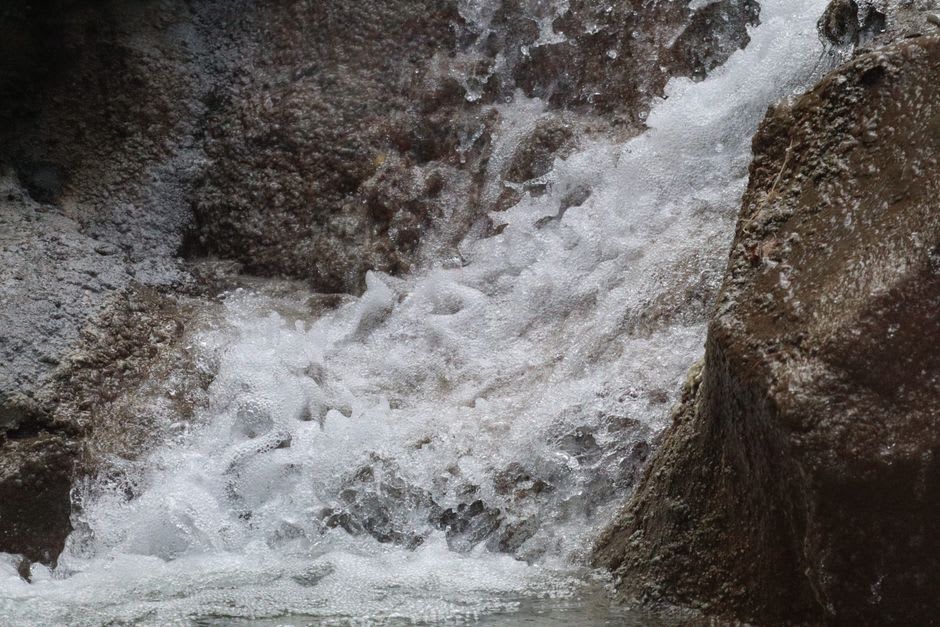
By the top, my calves were burning and I’d lost a flip-flop somewhere around the halfway pools, but the group cheered like we’d summited something real. We rewarded ourselves with fried fish and festival bread from a stall near the beach entrance, feet still damp, watching the next wave of human chains start their climb. It’s touristy, no question — there were easily two hundred people on the rocks with us by the time we left — but it earns it. Some things are famous for a reason.
When to go: We went in February and the water was low enough to make the climb feel playful rather than punishing — I’d stick to the dry season, roughly December through April, if you want an easier grip on the rock and a gentler current pulling at your legs.