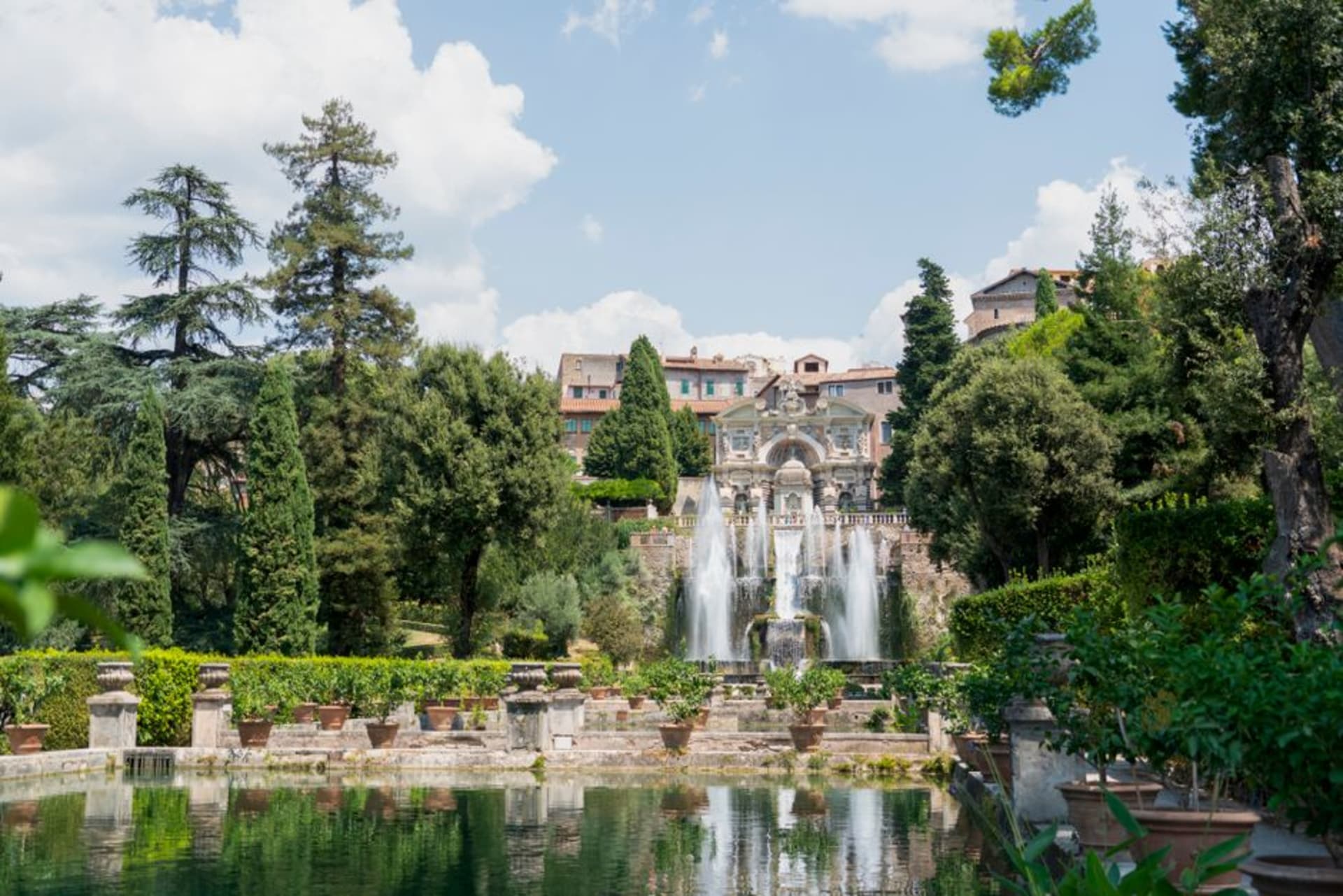
The hill town where Roman emperors and Renaissance cardinals both went to escape Rome, leaving behind two of the most extravagant estates I've ever walked through in a single day.
Tivoli is close enough to Rome to do as a day trip and different enough from Rome to make you wonder why you didn’t come sooner. I took the regional train out from Termini on a stifling July morning, chasing the same relief that Roman emperors and, much later, Renaissance cardinals were chasing when they built their escape estates in these hills above the Aniene valley — cooler air, running water, and a defensible distance from the political noise of the capital.
Hadrian’s Ruined Empire
Villa Adriana, Hadrian’s second-century retreat, is less a villa than a scale model of the empire he ruled. He built it to recreate the places that had impressed him on his travels — an Egyptian canal modeled on the Nile at Canopus, a version of Athens’s Stoa Poikile, a maritime theatre on its own artificial island where he could apparently retreat from his own retreat. Most of it is ruin now, columns and brick-faced concrete standing in fields of cypress and wild grass, but the scale is still staggering; this was reportedly the largest villa in the Roman Empire, and walking its grounds gives you a physical sense of imperial power that the Forum, oddly, doesn’t quite manage. I spent an hour just at the Canopus pool, its colonnade of copies still standing over still water, trying to imagine what it looked like staffed by the thousands of slaves and servants who once kept it running.
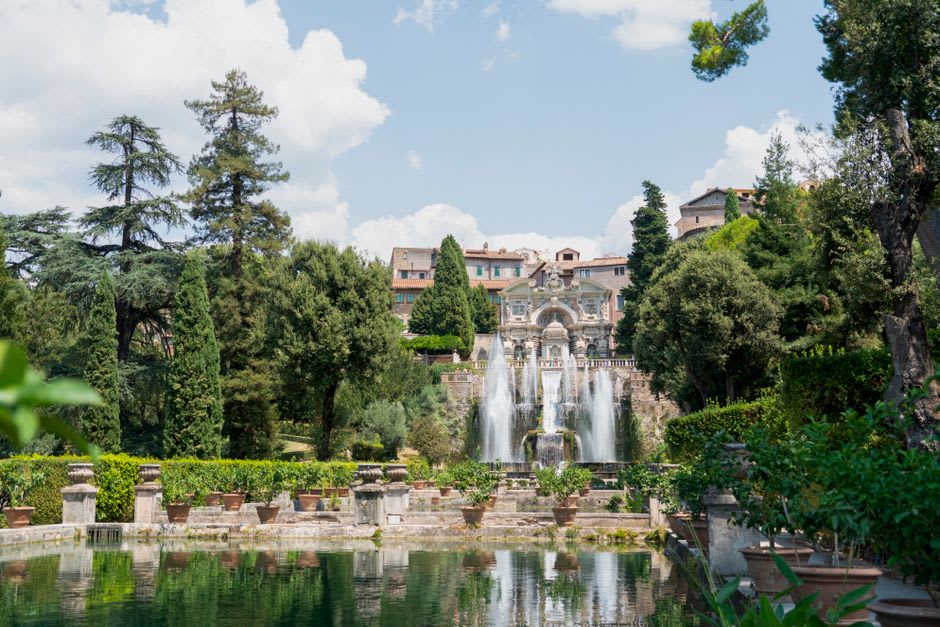
Cardinal d’Este’s Water Obsession
Up in the town itself, Villa d’Este is the opposite kind of extravagance — not ruined but almost aggressively intact, a sixteenth-century cardinal’s fever dream of hydraulic engineering. Ippolito II d’Este, denied the papacy he wanted, poured his consolation-prize energy into terraced gardens fed entirely by gravity from the Aniene, with something like five hundred fountains, jets, and cascades, no electric pumps required, all of it four hundred and fifty years old and still running today. The Fountain of the Organ actually plays music through hydraulic pressure on the hour; the Hundred Fountains lines a long terraced walkway with a continuous curtain of water. It is, frankly, over the top in a way only a spurned cardinal with unlimited resources could achieve, and I mean that as the highest compliment.
Between the two villas — both UNESCO World Heritage sites, remarkably, within a few kilometers of each other — Tivoli also has a genuinely dramatic natural feature worth the detour: the Villa Gregoriana park, where the Aniene plunges over a waterfall into a deep gorge, engineered by Pope Gregory XVI in the nineteenth century after floods repeatedly devastated the town below. Three completely different centuries, three completely different obsessions with the same water source, all within walking distance of each other.
When to go: Spring or early autumn, both for comfortable walking temperatures and because the fountains and gardens are at their lushest; go early on a weekday to beat the Rome day-trip buses that arrive by mid-morning.