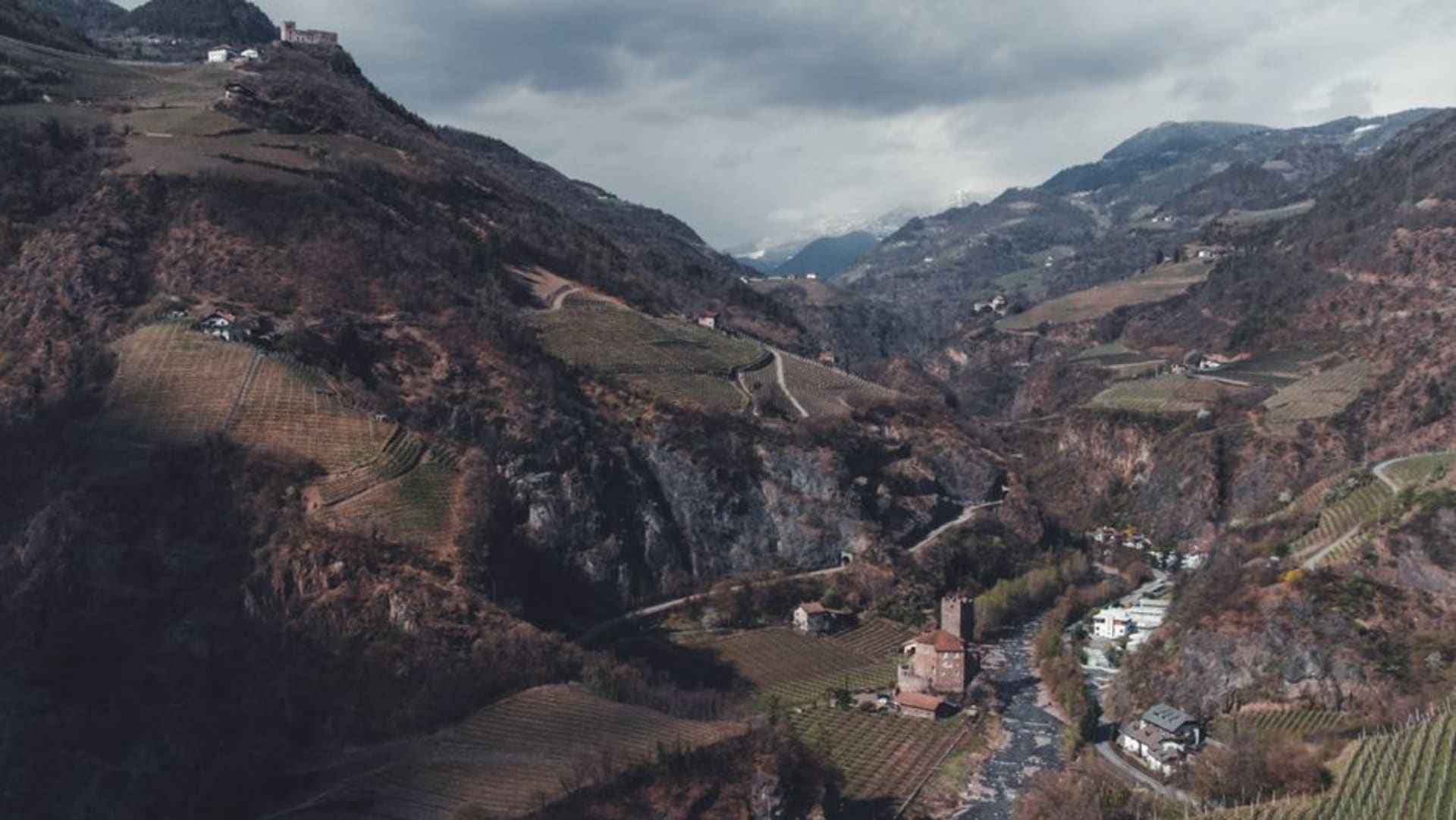
A vertical valley of terraced vineyards where the wine is stubborn, the mountains are close enough to touch, and almost no tourist bothers to look.
Sondrio is not a place you pass through on the way to somewhere else — it is the somewhere else, tucked into the Valtellina, a long east-west valley pinched between the Rhaetian Alps and the Orobie range in the far north of Lombardy, close enough to Switzerland that the mountain passes above town lead straight into it. I got there on a slow regional train from Lecco that hugged the shore of Lake Como before turning inland and climbing, and by the time I arrived the light had gone that particular gold it only goes at altitude in early evening.
What struck me first was the vineyards. Valtellina is one of the few places in the world where wine is grown on dry stone terraces cut directly into a nearly vertical mountainside — some slopes exceed a 65 percent gradient, worked entirely by hand because no machine can manage the pitch. The terraces are held up by thousands of kilometers of hand-built stone walls, a labor so vast and so old that UNESCO’s food and agriculture arm designated the Valtellina terraced vineyards a Globally Important Agricultural Heritage System. The grape is Nebbiolo, called Chiavennasca here, and the altitude and mineral soil produce a wine that is leaner and more austere than its Piedmontese cousins from Barolo — I found the local Sforzato, made from partially dried grapes in the same appassimento method as Amarone, to be the one worth chasing down.

A Border Town’s Kitchen
Sondrio’s food carries the memory of a harder mountain life. Pizzoccheri — buckwheat tagliatelle tossed with potatoes, cabbage or chard, and melted Casera cheese, all bound together with butter and garlic — is the dish everyone in the valley will insist you try, and it’s exactly the kind of heavy, warming food that makes sense once you understand these are people who spent centuries farming a valley that snows in by November. Bresaola, the air-dried, salted beef now sold in delis across Italy, originated here, cured in the dry Alpine air that funnels down the valley. I ate both in a small trattoria near the town center with a bottle of Valtellina Superiore, and it remains one of the more honest, unfussy meals I’ve had in Italy — nothing plated for a photograph, just food built for cold weather and hard work.

Above the Town
The town itself is small and workmanlike, its old center anchored by the Palazzo della Provincia and a scatter of narrow streets that climb toward the ruins of Masegra Castle. But the real point of Sondrio is what surrounds it: the Stelvio National Park to the north, the Bernina range visible on clear days, and the Rezia rack railway that used to climb toward the passes before cars took over. I didn’t have time to properly hike the higher trails, and I regret it — locals told me the alpine huts above 2,000 meters serve their own valley cheeses with views straight into Switzerland, which is reason enough to go back.
When to go: September and October, during the grape harvest and chestnut season, when the terraces turn amber and the trattorias lean fully into the season’s wine and mushrooms.