The heel of Italy's boot: trulli-dotted valleys, baroque Lecce stone, Adriatic fishing towns, and an olive-oiled, orecchiette-centric kitchen culture.
We arrived in Puglia from Naples on a regional train that rattled south through three hours of flat limestone plain, the landscape growing brighter and more insistently horizontal the deeper we went. By the time we pulled into Bari Centrale, the air through the window tasted different — drier, with a faint brine edge. This was no longer the Italy of hills and frescoes. This was the mezzogiorno at its most stripped and luminous.
Lecce and the Stone That Glows
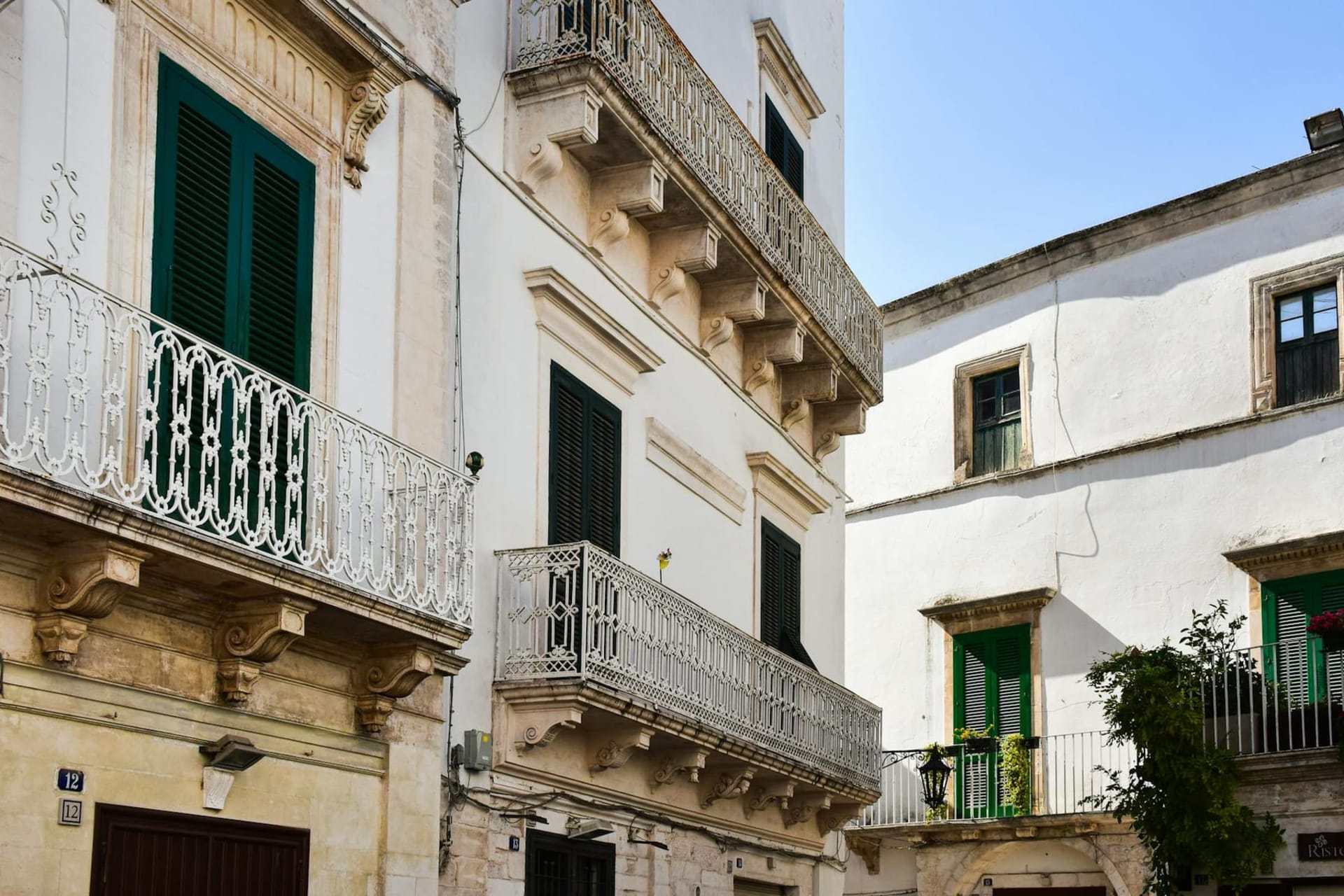
Lecce undoes you slowly. The city is built almost entirely from pietra leccese, a soft golden limestone that Baroque craftsmen carved with a freedom no harder stone would permit — cherubs tumbling off cornices, columns braided like rope, façades dense with leaf and flame. The Basilica di Santa Croce on Via Umberto I stopped me mid-step the first morning. I stood there longer than made sense, tilting my head at the rose window while Lia photographed the shadows the carvings made at nine in the morning, when the low sun turned every surface amber. The warmth of that stone — not just optical warmth but actual retained heat under my palm — stays with me still.
The old town lanes between Via Trinchese and Piazza Sant’Oronzo are narrow enough that you could touch both walls. Pasticcerias sell pasticciotto, the Lecce custard pastry, from six in the morning. I ate one standing up, powdered sugar on my shirt, before breakfast.
Alberobello and the Valle d’Itria
The trulli of Alberobello are stranger in person than any photograph prepares you for. Those conical dry-stone roofs — whitewashed cylinders crowned with grey stone cones, some painted with alchemical symbols — cluster so densely across the Rione Monti quarter that from the opposite hillside the whole neighbourhood looks like a single organism. The surprise was this: I expected a theme park and found instead that people live here. Hanging laundry. A dog asleep in a doorway. A woman watering geraniums on a trullo step on Via Monte Nero. The architecture is UNESCO-listed and tourist-photographed, but it is not a museum. It is just how some people’s grandparents built houses.
Driving east from Alberobello through the Valle d’Itria, the road passes through walls of olive trees — ancient ones, gnarled to the diameter of small cars, some over a thousand years old according to the signs. Puglia produces forty percent of Europe’s olive oil, and here you understand the arithmetic of that statistic in the body rather than in your head.
The Table
Puglian cooking resists elaboration. Orecchiette con cime di rapa — the small ear-shaped pasta with bitter turnip greens and anchovy — is assembled from almost nothing and achieves something close to perfection. In Bari’s old town, on Arco Basso, women sit outside in the afternoon pulling orecchiette across wooden boards to sell to passing strangers. I bought a portion to cook that evening, though we were leaving the next day and I had no kitchen. I carried them home to Mexico in my bag.
The crudo di mare at a harbour-side table in Polignano a Mare — raw sea urchin, razor clams, mussels rinsed in lemon and nothing else — arrived on ice with a quarter-litre of cold Primitivo and the cliff-edged sea below us, improbably blue in late afternoon. Some meals are the place as much as the food.
When to go: May and early June for the full bloom of wildflowers across the Murge plateau and emptier roads. September brings the grape harvest and the light goes amber and long-shadowed — the best weeks for photography and for eating.