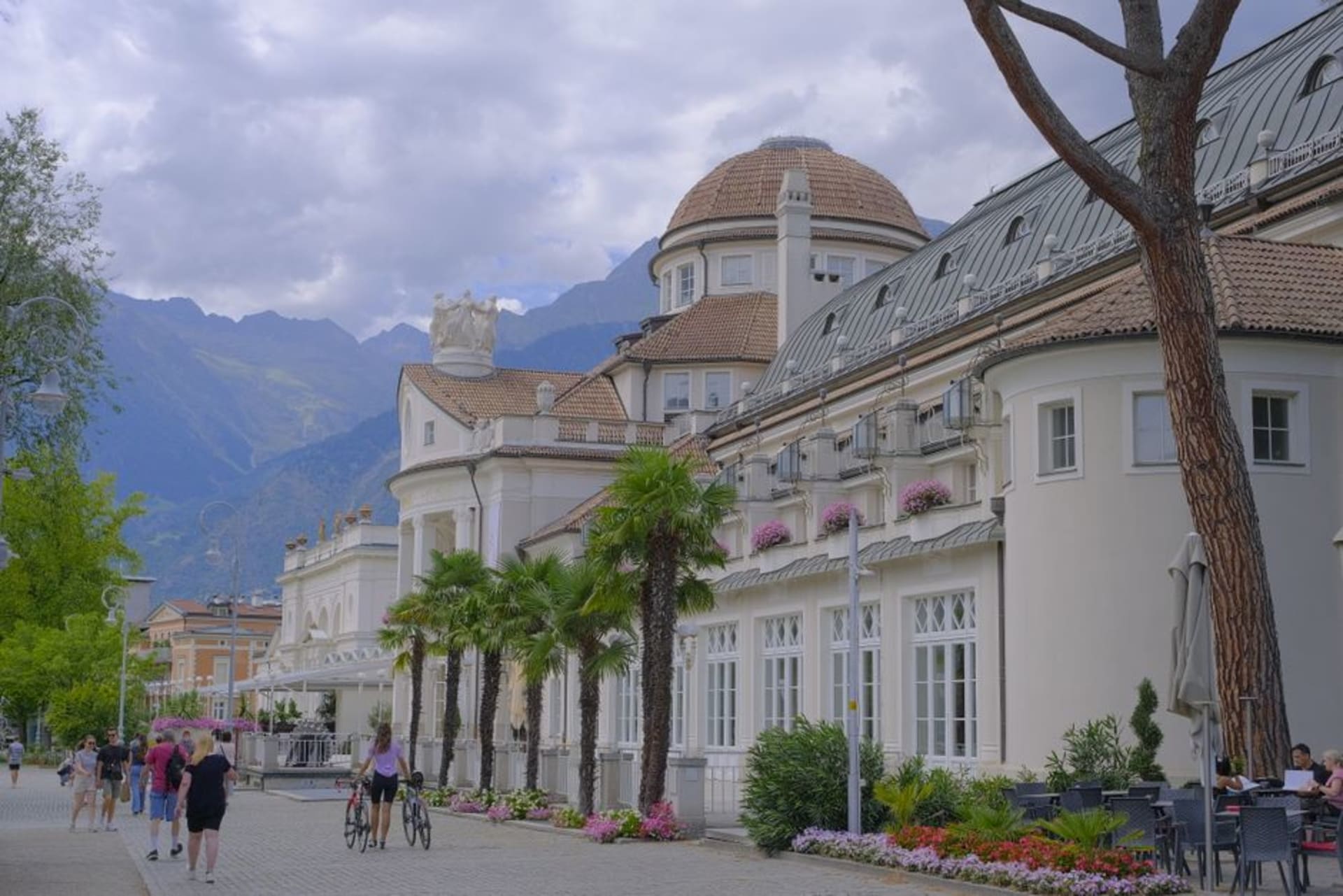
Palm trees and glaciers in the same sightline — a spa town built for Habsburg lungs that never lost its taste for slowness.
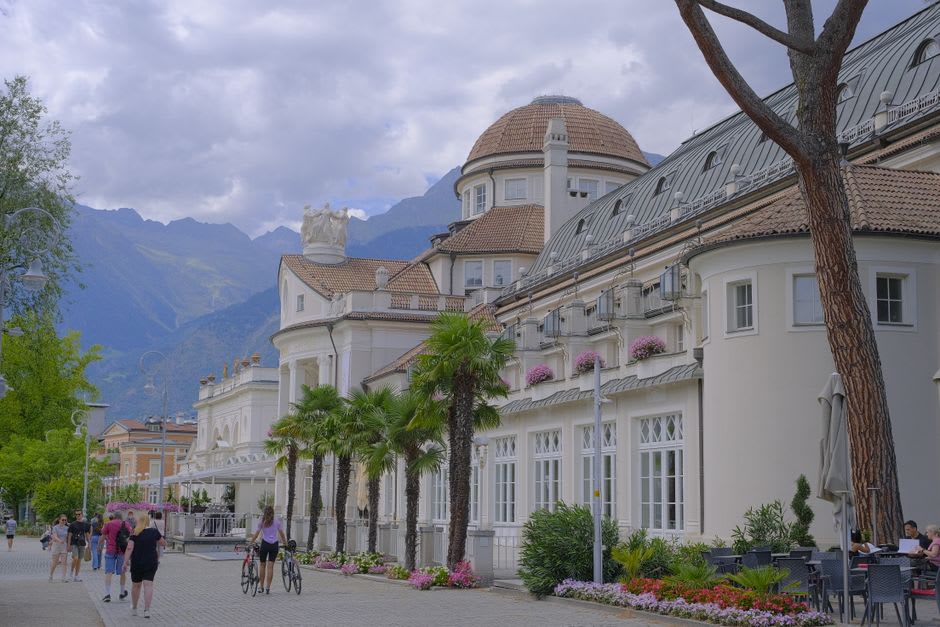
Merano confused me pleasantly for about a day. I walked along the Passeggiata d’Inverno — the Winter Promenade — past actual palm trees and agave plants growing under actual snow-capped peaks, and kept doing the mental math that says these two things shouldn’t coexist. But they do, and have for a long time: the town sits in a sheltered basin where the warm currents rolling up from the Mediterranean meet the cold air pouring down from the Alps, giving Merano a microclimate that made it, by the late nineteenth century, one of the most fashionable health resorts in the Habsburg Empire. Empress Elisabeth of Austria — Sisi — came here for her lungs and her nerves, and the Kurhaus, Merano’s magnificent Art Nouveau spa building, still stands as a monument to that era of taking the air very, very seriously.
The Two Promenades
Merano has two riverside walks running along the Passirio, and I’d recommend both, ideally at the two different times of day their names suggest. The Passeggiata d’Estate — the Summer Promenade — runs shaded under plane trees on the sunnier bank, popular for the afternoon passeggiata that every Italian town half-remembers even when, like this one, it spent a chunk of its history as Austrian Meran. The Winter Promenade, opposite, catches the low sun and stays warmer through the colder months, its Mediterranean plantings a deliberate flourish by the resort’s nineteenth-century garden designers who wanted visitors to forget they were minutes from glacier country.
I climbed up into the old town one morning, past the Gothic Duomo di San Nicolò with its crenellated bell tower — more castle than church at first glance — and got lost happily in the arcaded streets of Via dei Portici, where South Tyrolean bakeries sell Vinschgerl rye bread next to Italian pasticcerie, sometimes in the same block. That layering is Merano’s whole character: German is still the majority language here, road signs are bilingual, and the food swings from speck and knödel to risotto within the same meal without anyone finding it strange.
Gardens Above the Town
The Gardens of Trauttmansdorff Castle, on the hillside above town, were the reason I extended my stay by a day. Terraced across a south-facing slope, the gardens move through climate zones the way the town itself does — a woodland trail gives way to a Mediterranean terrace of olive and cypress, which gives way to a sun garden of succulents, all overlooking the Merano basin and the Texel mountains beyond. The castle itself houses the Touriseum, a genuinely good museum on the history of Alpine tourism, tracing exactly how places like Merano got invented as destinations in the first place.
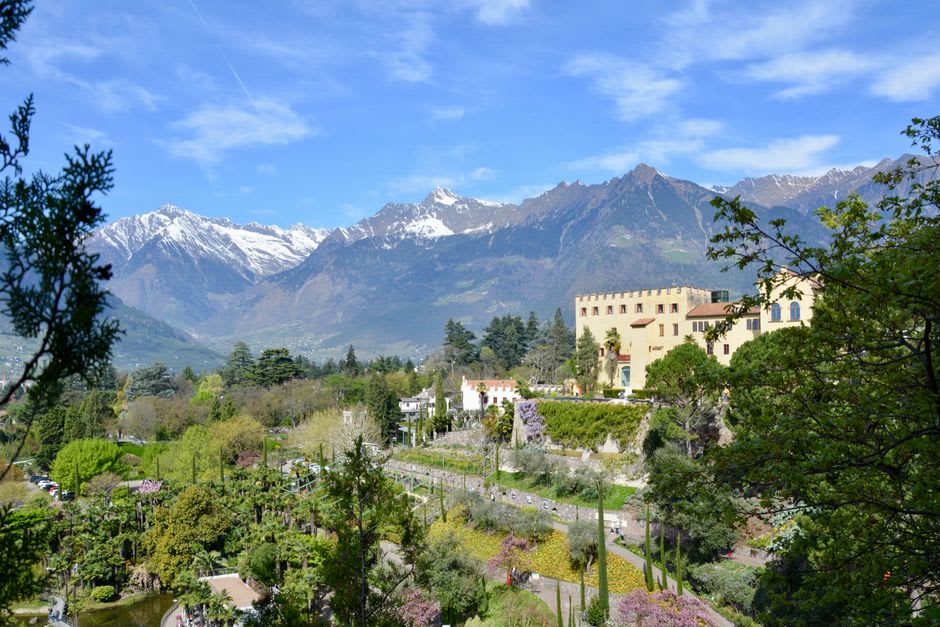
Apple orchards fill the valley floor below the town — South Tyrol grows a disproportionate share of Italy’s apples, and in April the whole basin turns a soft, improbable white with blossom. I didn’t catch that particular week, but the smell of ripening fruit in early autumn, drifting up from the orchards as I walked back down from the gardens, was its own kind of argument for coming back.
When to go: Late March to April for apple blossom season across the valley, or September to October for grape and apple harvest and clearer Alpine views; the spa town’s mild microclimate makes it pleasant even in winter, when the Christmas market along the promenades draws crowds from across the region.