Bolzano
"The border town that never quite decided which side of the border it was on, and is better for it."
A city that speaks German and Italian in the same breath, where Tyrolean chalets meet Venetian arcades at the foot of the Dolomites.
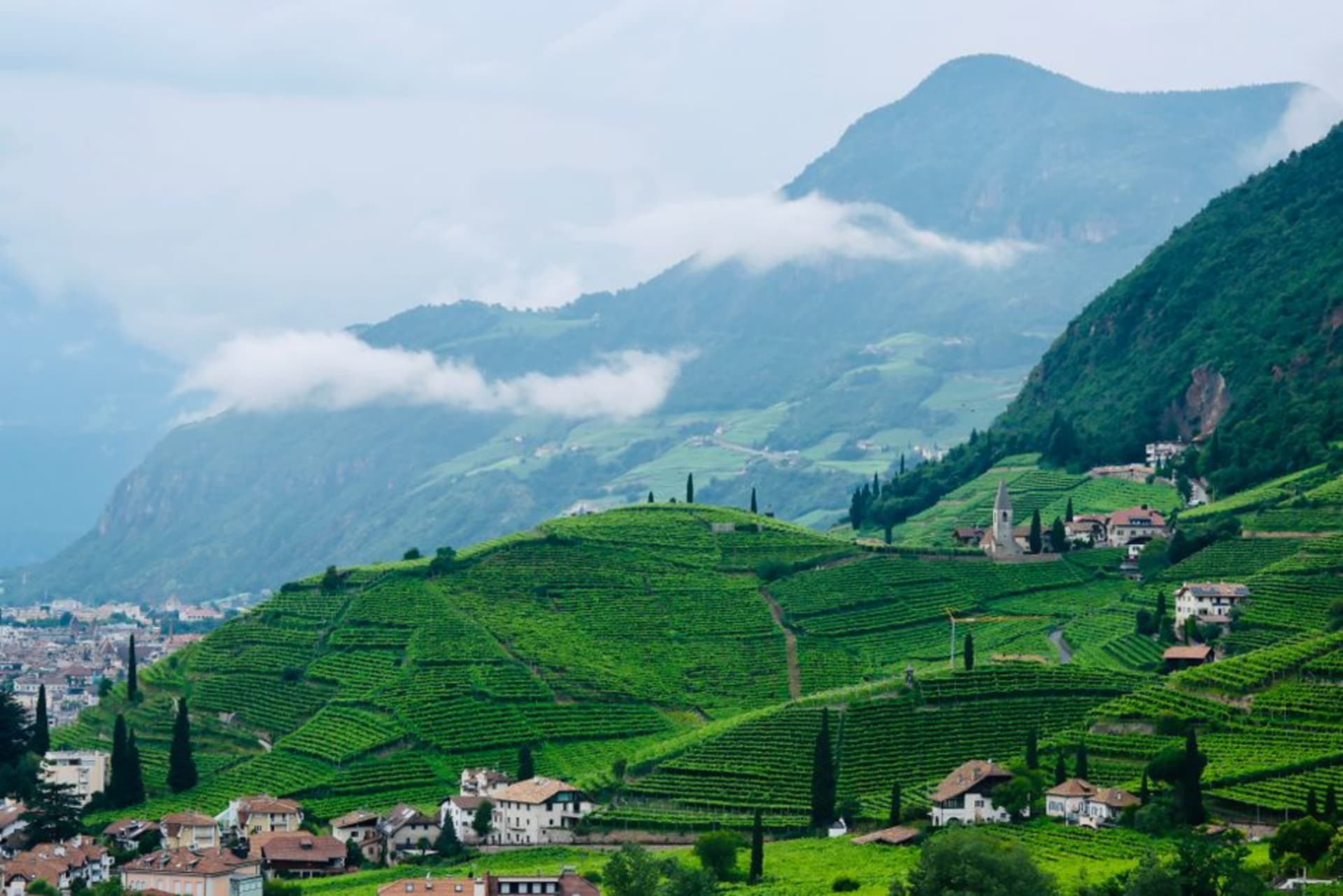
Bolzano — Bozen, if you ask half the people on the street — is the strangest kind of Italian city: one where the menus, street signs, and conversations switch fluidly between Italian and German, sometimes mid-sentence, and where a plate of canederli (bread dumplings, unmistakably Tyrolean) sits on the same menu as risotto and polenta. This is South Tyrol, Alto Adige, a province that belonged to Austria-Hungary until it was ceded to Italy after World War I, and the identity friction never fully resolved — it just settled into something genuinely bilingual and, walking the streets, oddly harmonious. I’d read about the German-Italian divide before arriving and expected some kind of visible tension. Instead I found arcaded medieval streets, alpine gabled roofs, and a produce market selling speck alongside mozzarella, with nobody treating the combination as remarkable.
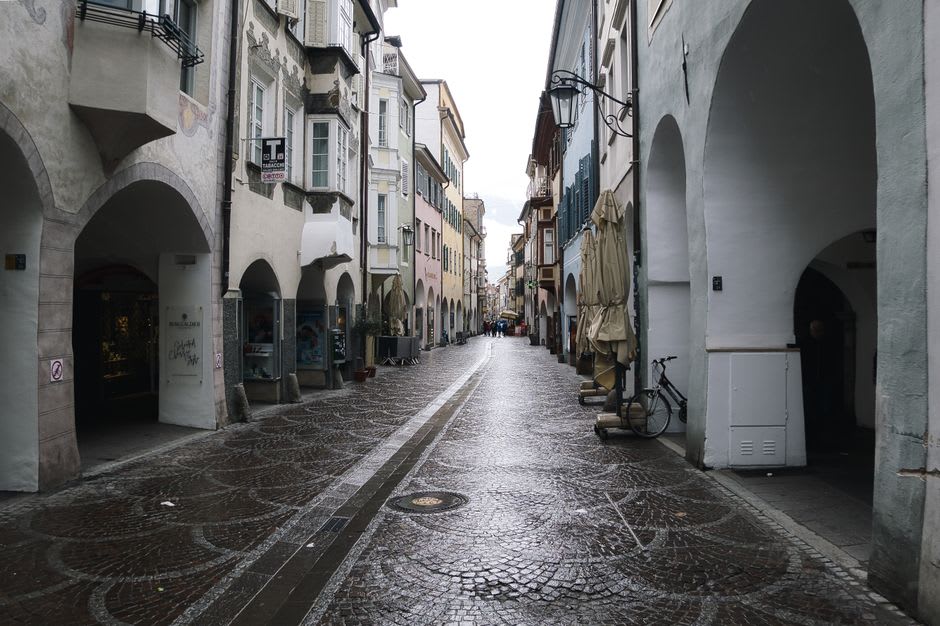
The Piazza delle Erbe / Obstmarkt — even the market square carries two names — has sold fruit and vegetables on the same spot since medieval times, and it’s still the best place to feel the city’s rhythm: stalls piled with alpine cheeses, cured speck hanging in ropes, apples from the orchards that blanket the valley (South Tyrol grows an outsized share of Italy’s apples, something I hadn’t known until I saw the orchards from the train window on the way in). The old town’s arcaded Via dei Portici / Laubengasse runs through the center with covered walkways on both sides — a design lifted straight from the trading-town playbook of the medieval Germanic world, not something you’d find further south in Italy.
Ötzi and the Dolomites
Bolzano’s most famous resident predates the Italian-Austrian dispute by about 5,300 years. Ötzi the Iceman, the naturally mummified body discovered in a melting glacier on the Austrian-Italian border in 1991, lives at the South Tyrol Museum of Archaeology here, and it’s genuinely one of the more unsettling and fascinating museum experiences I’ve had — his actual preserved body, tattoos still visible on the skin, alongside the copper axe, bow, and clothing he was carrying when he died. I went in skeptical of the hype and came out having spent close to two hours reading every panel.
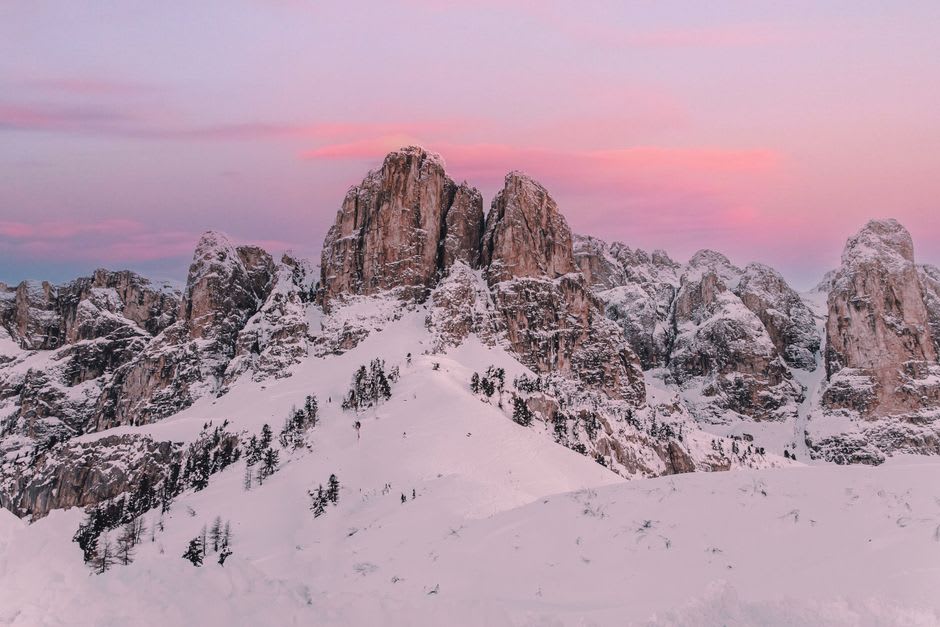
The Dolomites are the other draw, and they’re visible from the city itself — jagged limestone peaks that turn pink and orange at sunset, a phenomenon locals call enrosadira. Bolzano is the gateway to them; a cable car right from the edge of downtown, the Funivia del Renon, lifts you up to the Renon/Ritten plateau in minutes, swapping city streets for alpine meadows, pine forest, and views back down over the whole valley. I rode it up on a whim one afternoon with no plan beyond the ticket price and ended up hiking for three hours through larch woods with barely another person in sight.
A Kitchen of Two Cultures
Eating in Bolzano means accepting that you’re in neither Italy nor Austria, exactly. Canederli in broth, speck and cheese boards, strudel for dessert — all sitting comfortably beside espresso and a proper Italian aperitivo hour. The Christmas markets here, when the season allows, are some of the most atmospheric in the country, wooden stalls strung with lights against a backdrop of alpine peaks that most of mainland Italy simply doesn’t have.
When to go: Late September to October for the apple harvest, crisp alpine air, and the Dolomites turning color; December for the Christmas markets if you can handle the cold.