Zeinodin Caravanserai
"Silk Road merchants slept inside these same round walls. So did I, four hundred years later."
A perfectly circular Safavid-era caravanserai in open desert, restored into one of the most atmospheric places to sleep in Iran.
Most of the caravanserais scattered across Iran’s old trade routes are either ruined shells or converted into something else entirely. Zeinodin is neither. It’s a fully circular Safavid-era waystation, built under Shah Abbas I around four hundred years ago to shelter caravans on the road between Yazd and Kerman, and it has been restored carefully enough that you can still spend the night inside it, sleeping in a stone alcove that once housed traders and their camels.
A Circle in the Middle of Nothing
The caravanserai’s defining feature is its shape — a near-perfect circle with four corner towers, unusual among Iran’s caravanserais, most of which are built on a square or rectangular plan. From outside, in the flat empty desert that surrounds it in every direction, it looks almost like a fortress dropped from somewhere else, no town, no other structure visible on the horizon. I arrived by late afternoon and watched the light turn the mud-brick walls a deep orange as the sun dropped, with absolutely no other sound except wind.
Sleeping Where Traders Slept
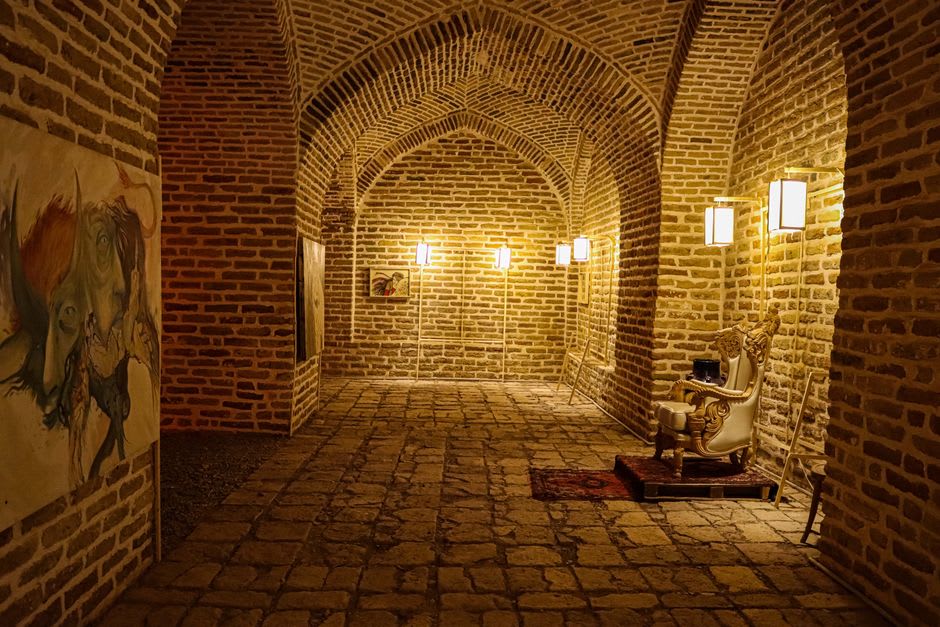
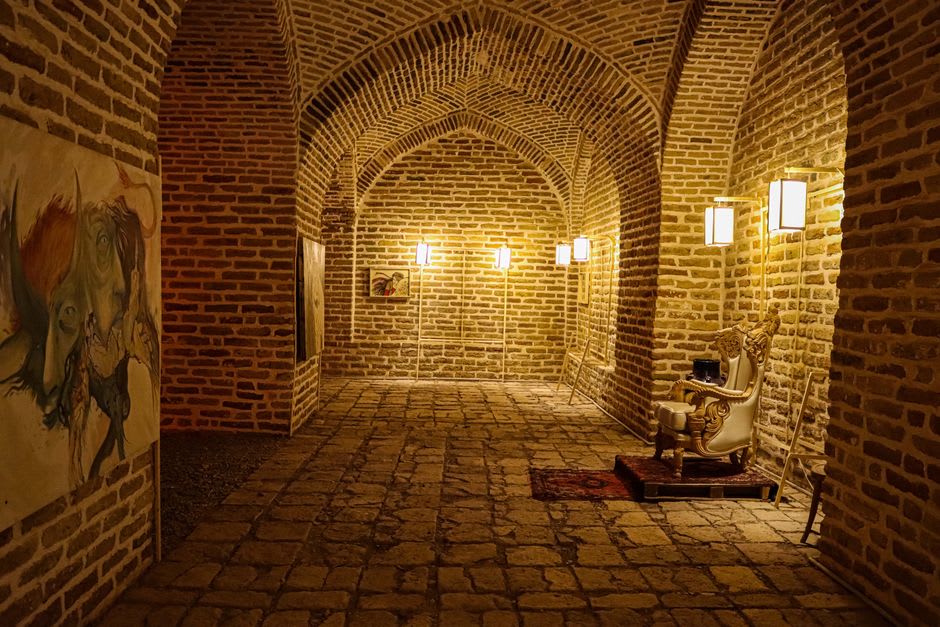
The rooms are simple stone alcoves arranged around the circular courtyard, now fitted with mattresses, rugs, and blankets rather than left bare, but the architecture is otherwise unchanged — thick walls, small high windows, a courtyard open to the sky at the center where camels and horses would once have been tethered overnight. Dinner is served communally in the old stable area, usually a simple stew with rice and flatbread, and after the meal most guests end up on the roof, where the desert sky with essentially zero light pollution produces more visible stars than I’ve seen almost anywhere else on this trip.
A Genuine Silk Road Sensation
What stayed with me wasn’t any single detail but the accumulated effect of the place — waking up at dawn, stepping into the still-cool courtyard, and realizing that merchants moving silk, spices, and news between empires would have done exactly this same thing in exactly this same spot, four centuries ago, with the same silence and the same particular quality of desert morning light. It’s the closest I’ve come to feeling an actual continuity with the trade routes I’d only read about before.
When to go: Spring and autumn for comfortable overnight temperatures — desert nights can still get cold even when days are hot. Book ahead; it has limited rooms and fills up with both tour groups and independent travelers.
Keep exploring
More from Iran
 iran
iran Abarkuh
A quiet desert town built around a four-thousand-year-old cypress tree that was already ancient when most of history happened.
Explore iran
iran Abu Musa Island
A small, quietly militarized Persian Gulf island at the center of a decades-long territorial dispute, with red volcanic hills and almost no visitors at all.
Explore iran
iran Abyaneh
A mountainside village built entirely of red clay, where old women in floral headscarves still speak a dialect closer to Middle Persian than Farsi.
Explore iran
iran Afif-Abad Garden
A Qajar general's private garden and armory, now one of Shiraz's quietest museums — and its best-kept secret for an afternoon nap under a cypress.
Explore iran
iran Agha Bozorg Mosque
A sunken twin-courtyard mosque-madrasa where the architecture itself teaches a lesson in Islamic cosmology, one level at a time.
Explore iran
iran Ahvaz
A hot, unpretentious oil city on the Karun River that most travelers skip entirely, and the best base for exploring Khuzestan's ancient sites.
Explore