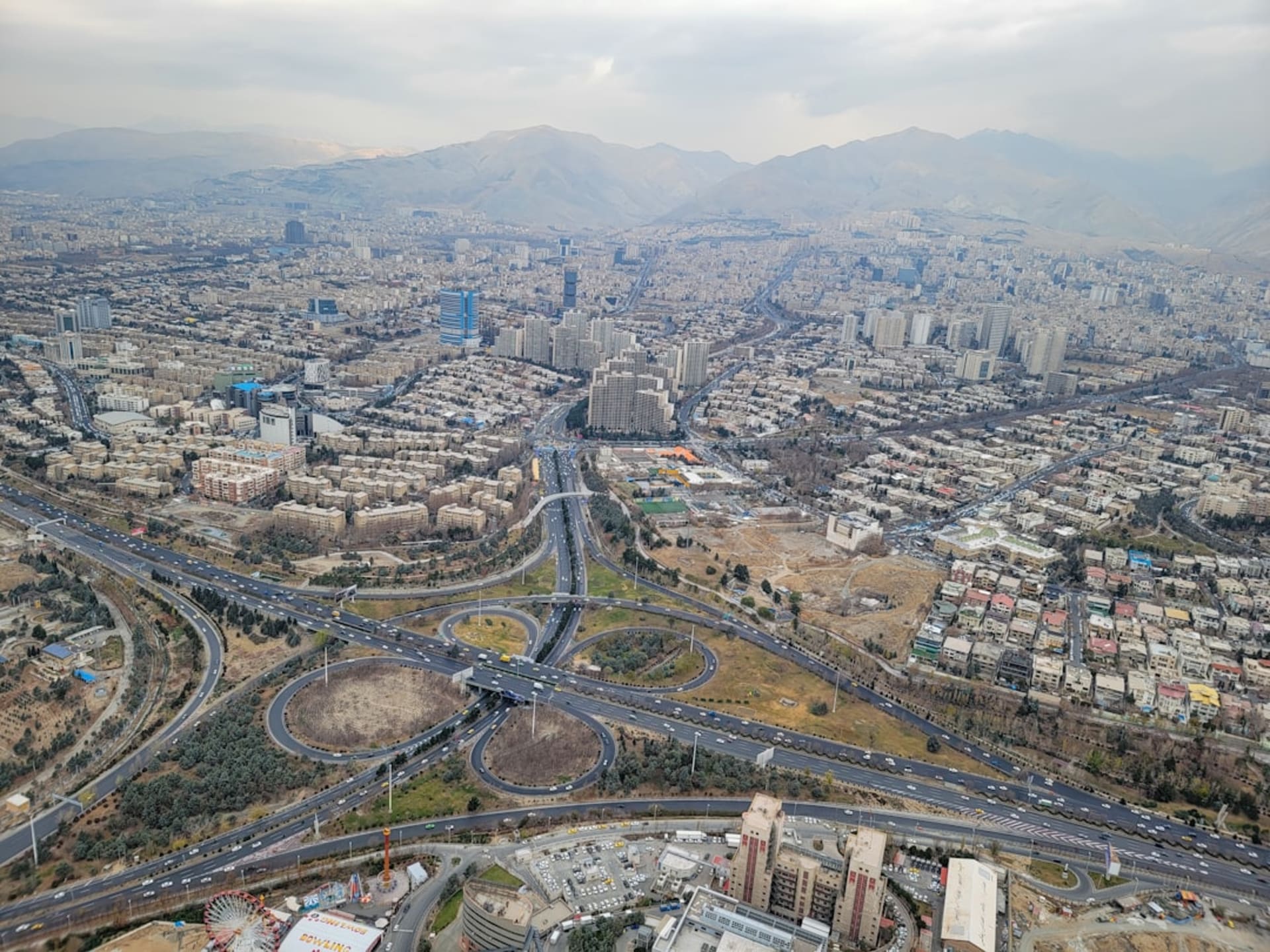
Tabiat Bridge
"Everyone I asked about Tehran's best contemporary architecture pointed me to a bridge."
A 270-meter pedestrian bridge that proves contemporary Iranian design didn't stop in 1979 — and the park beneath it where Tehran actually relaxes.
Every guidebook photo of Iran seems to be a mosque dome or a bazaar corridor, which is fair — those are extraordinary — but it also creates the impression that Iranian design stopped evolving somewhere around the Safavid era. Tabiat Bridge exists specifically to correct that impression. It was designed by a 26-year-old Iranian architect, Leila Araghian, who won an open competition for it, and it opened in 2014 to immediate local pride.
Walking the Bridge
The bridge connects two public parks — Taleghani and Ab-o-Atash — across a valley that used to be crossed only by a busy highway underpass. It isn’t a single span; it’s three interlocking levels of steel trusses and timber decking that shift and fold as you walk, opening onto different seating nooks, cafés, and lookout points along the way. I crossed it slowly, in no hurry, stopping at each level to watch the highway traffic pass beneath in a way that felt almost soothing rather than stressful, which is not a sentence I expected to write about a Tehran overpass.
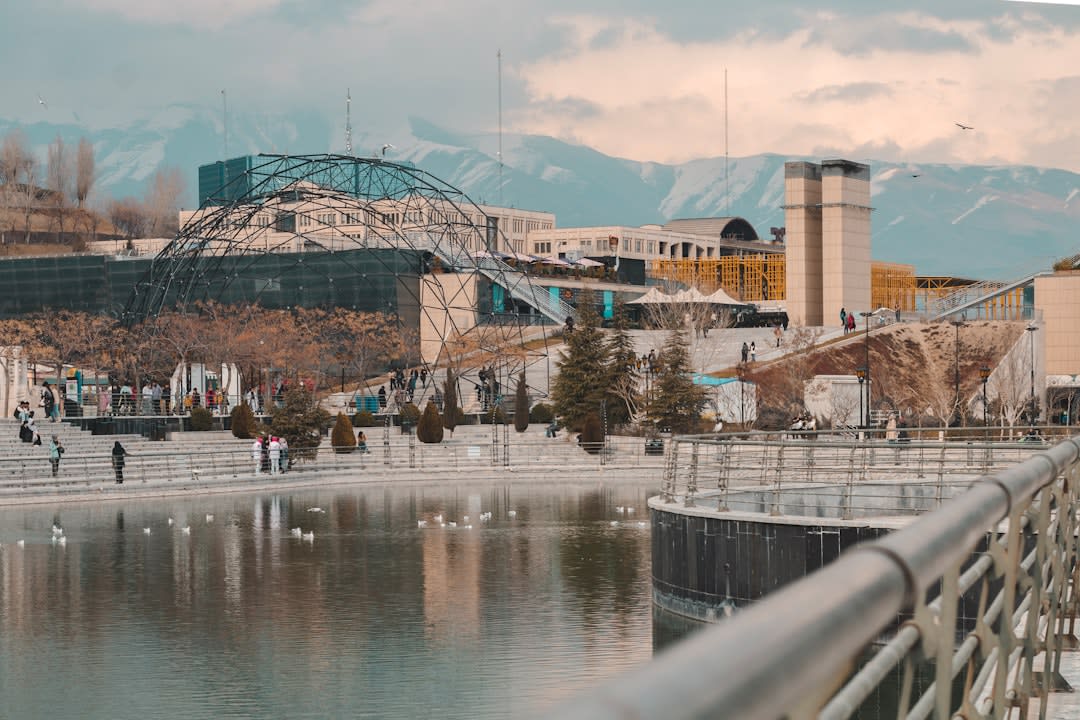
Ab-o-Atash Park
On the far side, Ab-o-Atash — literally “water and fire” park — earns its name with a large fire installation that throws flame into the night sky on a timer, along with fountains and reflecting pools that families gather around after dark. It’s one of the few spots in Tehran that felt genuinely designed for lingering rather than passing through, and the crowd skewed young: students, couples, teenagers doing exactly what teenagers do near fire and water anywhere in the world.
Why It Matters
Talking to younger Tehranis, I kept hearing the bridge cited as a point of quiet pride — proof that the country can still produce ambitious public architecture and that a young Iranian architect can win an international-caliber commission at home rather than needing to leave. It’s a small structure to carry that much symbolic weight, but it carries it well.
When to go: Early evening, an hour before sunset through to after dark, when the crossing is at its coolest and Ab-o-Atash’s fire feature is running. Weekends bring bigger crowds and more atmosphere; weekday evenings are quieter.