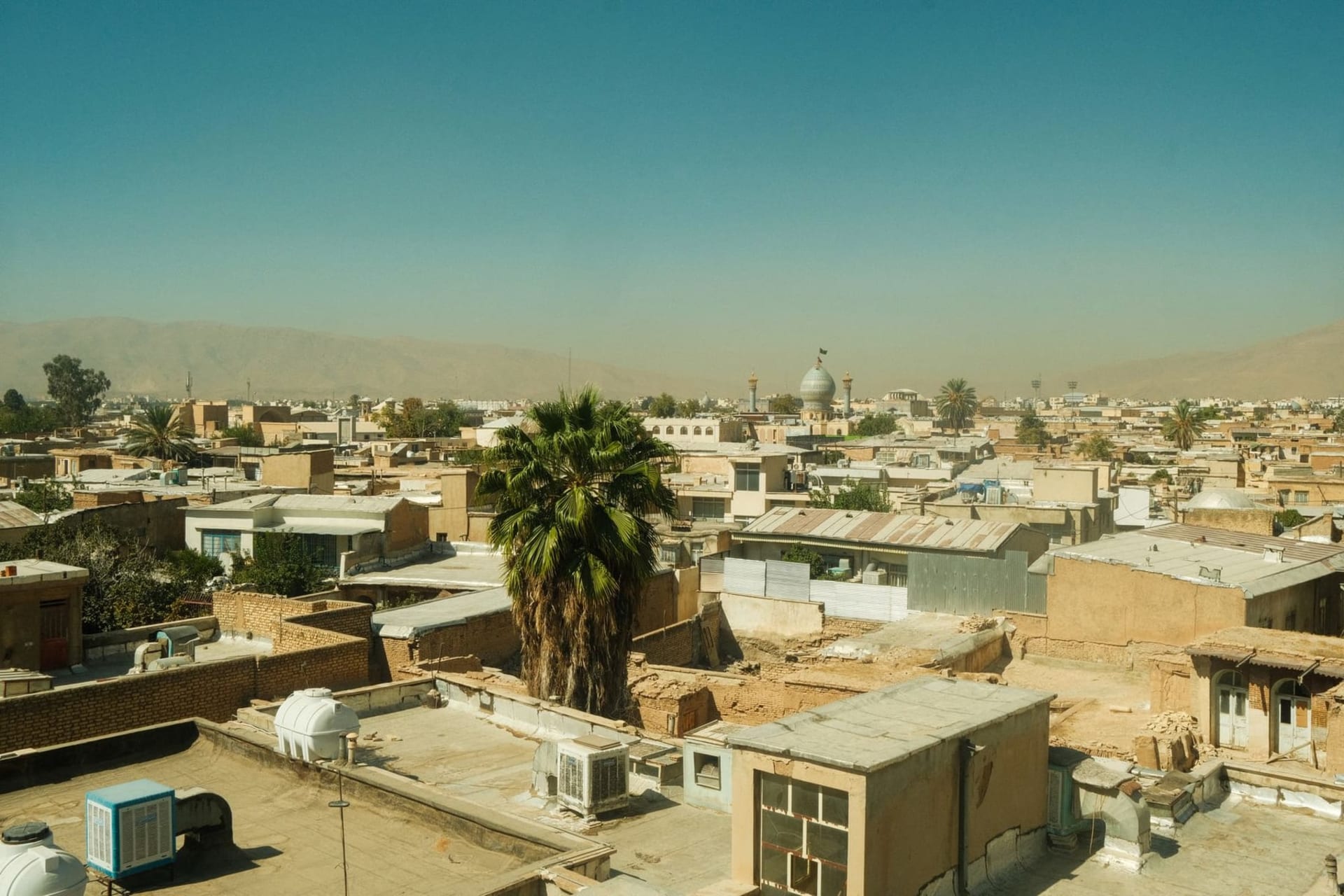
City of poets, roses, and the kaleidoscopic Pink Mosque — where light itself becomes architecture.
There is a moment, just after five in the morning, when the custodian of the Nasir al-Mulk mosque unlocks the inner courtyard and says nothing — because there is nothing to say. The stained glass does the talking. Rose and cobalt and gold fracture across the Persian carpets in shifting lozenges of color, and the whole room breathes with light as though the architecture itself is alive. I stood there on the cold tiles in socked feet and felt, genuinely, that I had wandered into someone’s dream.
The Mosque the Guides Don’t Prepare You For
Every traveler to Shiraz knows to come to Nasir al-Mulk early. What the guides omit is the quality of the wait. We arrived before the doors opened and sat in the alley off Lotf Ali Khan Zand Street drinking tea from a thermos Lia had the foresight to bring, watching a city that was already awake — bread sellers wheeling carts, a man hosing the dust off the pavement in long silver arcs. When the light finally hit the mosque’s western windows and threw itself across the floor, the handful of other visitors went quiet in unison, a spontaneous, collective hush. That silence felt like the real monument.
Hafez, Roses, and Dinner on a Rooftop
Shiraz smells of roses in a way that is not metaphorical. The Eram Garden in spring is almost overwhelming — heavy, dark-petaled Damask roses planted in rows so dense the fragrance pools at knee height. We walked through slowly, speaking less than usual.
The city feeds you well if you know where to ask. On Anvari Street, a small basement kitchen serves mast-o-khiar so thick it barely moves on the spoon, and a lamb stew called qormeh sabzi that arrives with enough saffron rice to embarrass every other rice I have ever eaten. Lia ordered seconds without discussion.
That evening we found the rooftop of a guesthouse near the Vakil Bazaar that no one had mentioned in any listing — the owner simply pointed upward when we asked if there was anywhere quiet to sit. We ate flatbread and sheep’s-milk cheese with dried mulberries and watched the city fold into itself under a sky that turned the color of old copper.
What Nobody Mentions About the Bazaar
The Vakil Bazaar is famous for its brickwork and its carpet merchants. What surprised me was the spice quarter, tucked into the northeastern corridor: sacks of dried limes, barberries, turmeric ground so fine it rises in clouds when touched, and in one stall an elderly man selling only dried rose petals by weight, measuring them out on a brass scale with the gravity of someone handling gold.
When to go: March through early May for cool temperatures and the rose harvest — the city is at its most generous. September and October are a quieter, drier alternative before the winter chill arrives.