Pasargadae
"The most powerful man of his century is buried under six plain stone steps. Nothing else."
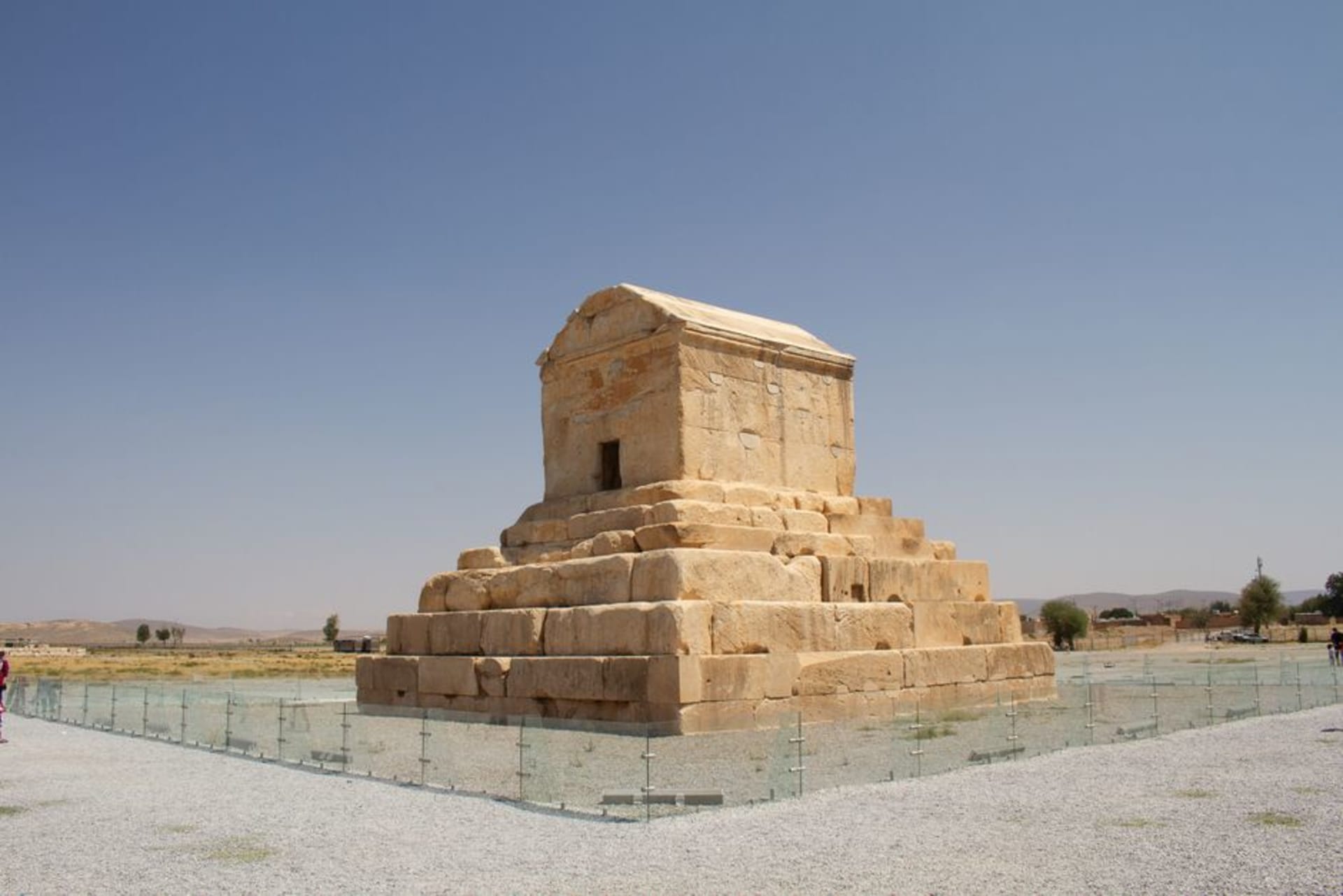
The plain stone tomb of Cyrus the Great, sitting alone in a field — the emptiest, most powerful monument in Iran.
Pasargadae is an hour and a half north of Shiraz, and I almost skipped it — the itinerary was already crowded with Persepolis and Naqsh-e Rustam, and how much more Achaemenid stone could one trip reasonably need? Lia insisted, mostly because Cyrus the Great had founded the first Persian empire here around 546 BCE and she thought it would feel wrong to come this close and not pay respects. She was right, and it was the quietest, most affecting site of the entire Iran trip.
A Tomb With Nothing to Prove
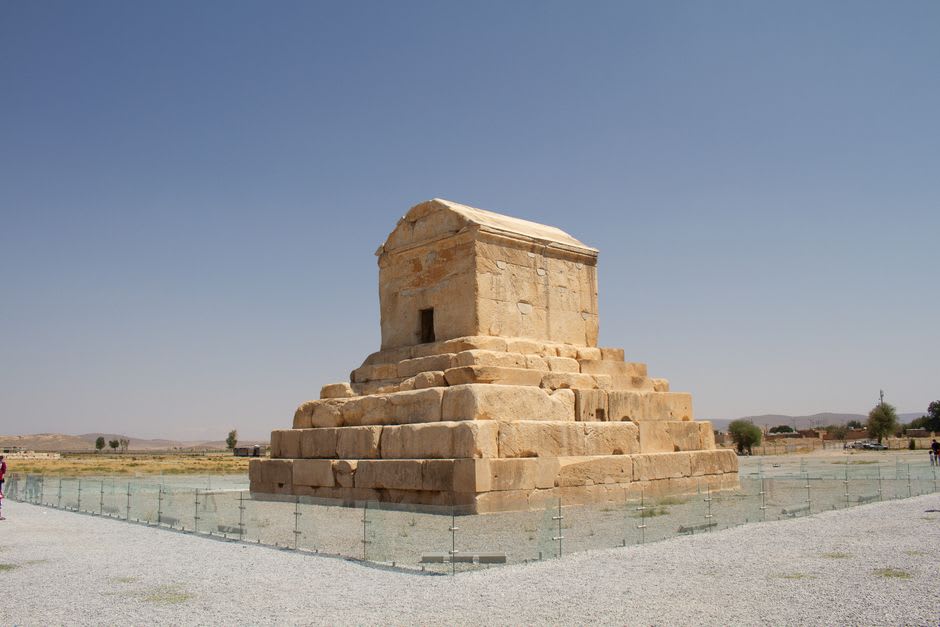
Where Persepolis overwhelms with scale and ornament, Cyrus’s tomb does the opposite. It’s a gabled stone chamber set on six broad steps, standing by itself in an open field with almost no surrounding structure, no crowd, often no other visitors at all. Alexander the Great, when he conquered the Persian empire two centuries later, is said to have wept at this same tomb and ordered it restored after finding it looted — a rare moment of a conqueror honoring the man he’d just posthumously outdone.
The Ruins Around the Edges
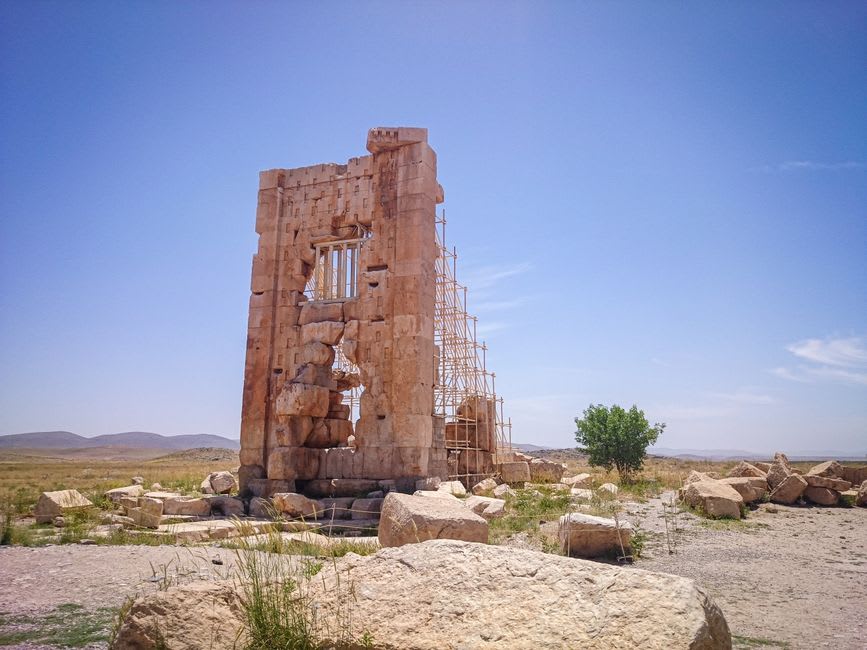
Scattered across the wider plain are the foundations of Cyrus’s original palaces and gardens — low stone bases, a few standing columns, and a striking carved relief once thought to depict a four-winged guardian figure, possibly Cyrus himself, that has become one of the most reproduced images of Achaemenid art despite most of the original carving now being badly weathered. Walking the site means a fair bit of imagination filling in stone footprints where palace walls once stood, but the layout of formal water channels — the same chahar bagh garden geometry we’d later see echoed at Eram Garden in Shiraz — is still traceable in the ground.
We sat on the grass near the tomb for a long while, mostly in silence, watching a shepherd move a small flock across the far edge of the plain, indifferent to twenty-six centuries of history under his feet. It struck me as the correct way to encounter Cyrus — not through spectacle, but through this kind of plain, working landscape that has simply continued.
When to go: Spring or autumn, combined with a day trip from Shiraz. The site is remote enough that a car or organized tour is worth arranging in advance.