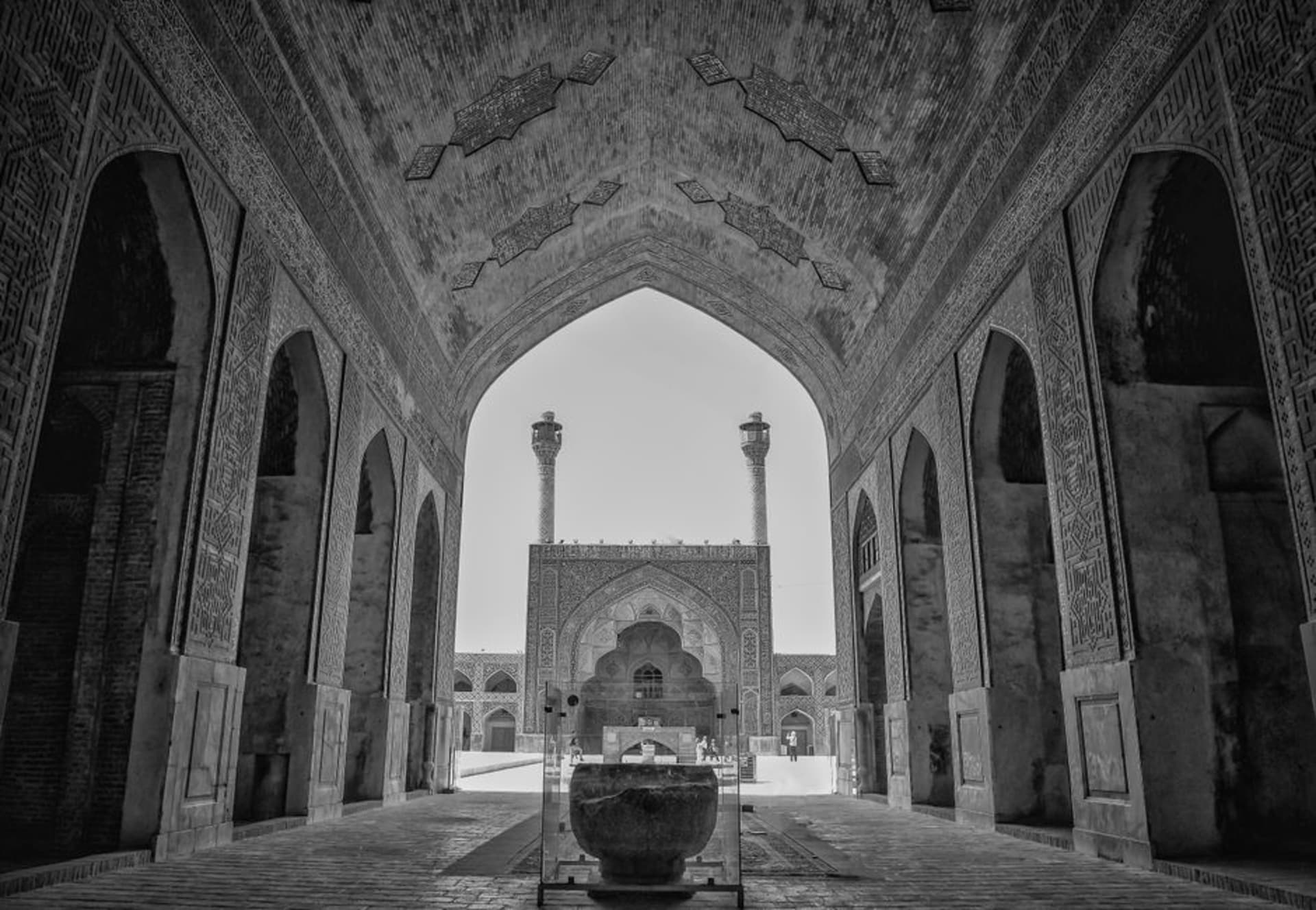
Narenjestan-e Qavam
"A wealthy merchant's house, decorated to out-dazzle any palace in town. It nearly does."
A merchant family's Qajar-era mansion and orange garden, decorated with mirror mosaics and a genuinely surprising basement bar.
Narenjestan-e Qavam, the “Orange Garden,” is easy to walk past — it’s tucked behind an unassuming gate off a busy Shiraz street near the bazaar, and nothing about the exterior wall suggests what’s inside. We only found it because a shopkeeper we’d been chatting with about saffron prices told us, almost as an afterthought, that we hadn’t really seen Qajar-era Shiraz until we’d seen the Qavam family’s house.
A Merchant Family That Out-Decorated the Aristocracy
The Qavam were merchants and local officials, not royalty, but the mansion they built in the nineteenth century doesn’t act like it knows the difference. The facade facing the garden pool is covered in mirror mosaic and colorful tilework depicting European-style figures in frock coats alongside traditional Persian motifs — a strange, confident mash-up that reflects how much Qajar-era elites were absorbing from European visitors passing through on trade routes, while still building squarely within Persian garden tradition.
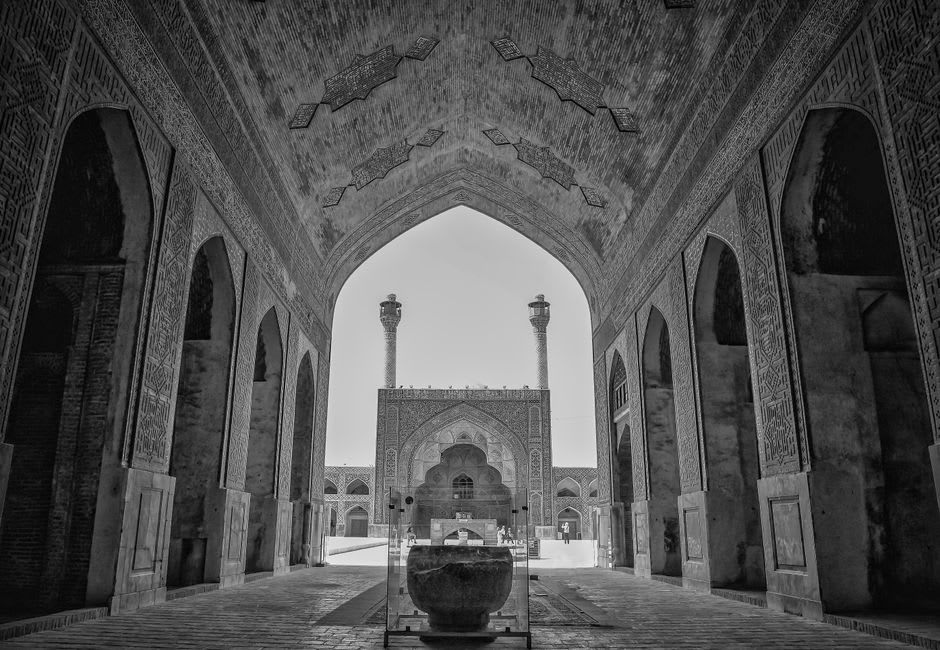
Inside, the reception hall’s ceiling is entirely mirror-worked, the same aina-kari technique we’d later see at a far grander scale at Shah-e Cheragh, but here in a domestic setting it felt almost intimate — a wealthy family’s private show of taste rather than a shrine’s expression of devotion.
The Basement Nobody Expects
Down a narrow staircase, the house has a windcatcher-cooled basement level that housed a private bar and lounge, complete with painted alcoves — an unexpectedly worldly detail for a household in a country now defined by strict prohibition, and a small reminder of how differently Iranian elite life once looked before 1979. Lia found it the most quietly telling room in the whole house.
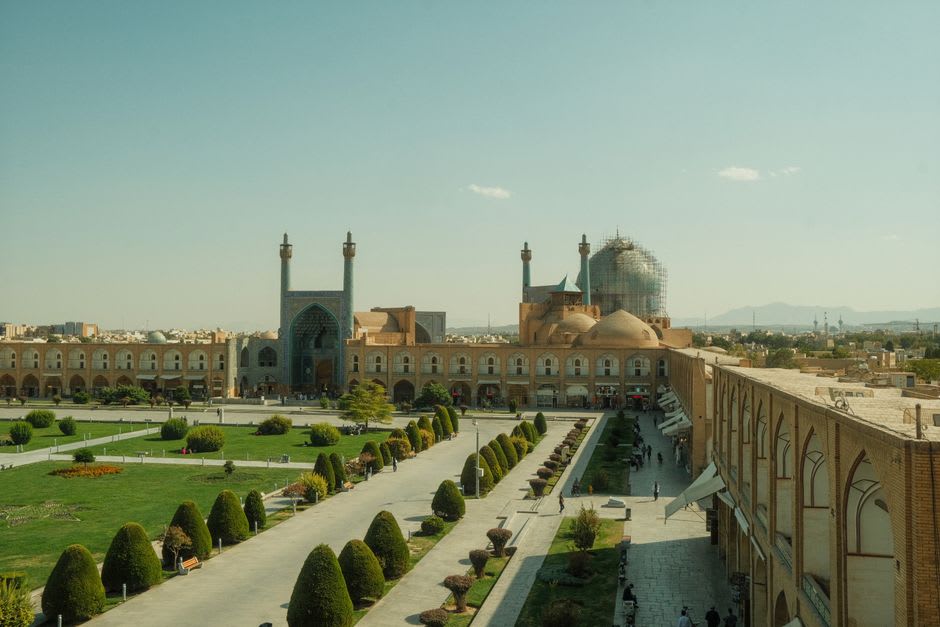
We finished in the small courtyard garden itself, orange trees heavy with fruit around the reflecting pool, and sat for a while on a stone bench doing nothing but watching the mirror facade catch the changing afternoon light, the same way we had, days later, at the more famous mosques across town.
When to go: Any time the weather is mild; it’s a compact, mostly shaded site that works well as a midday break between the bazaar and the Vakil complex nearby.