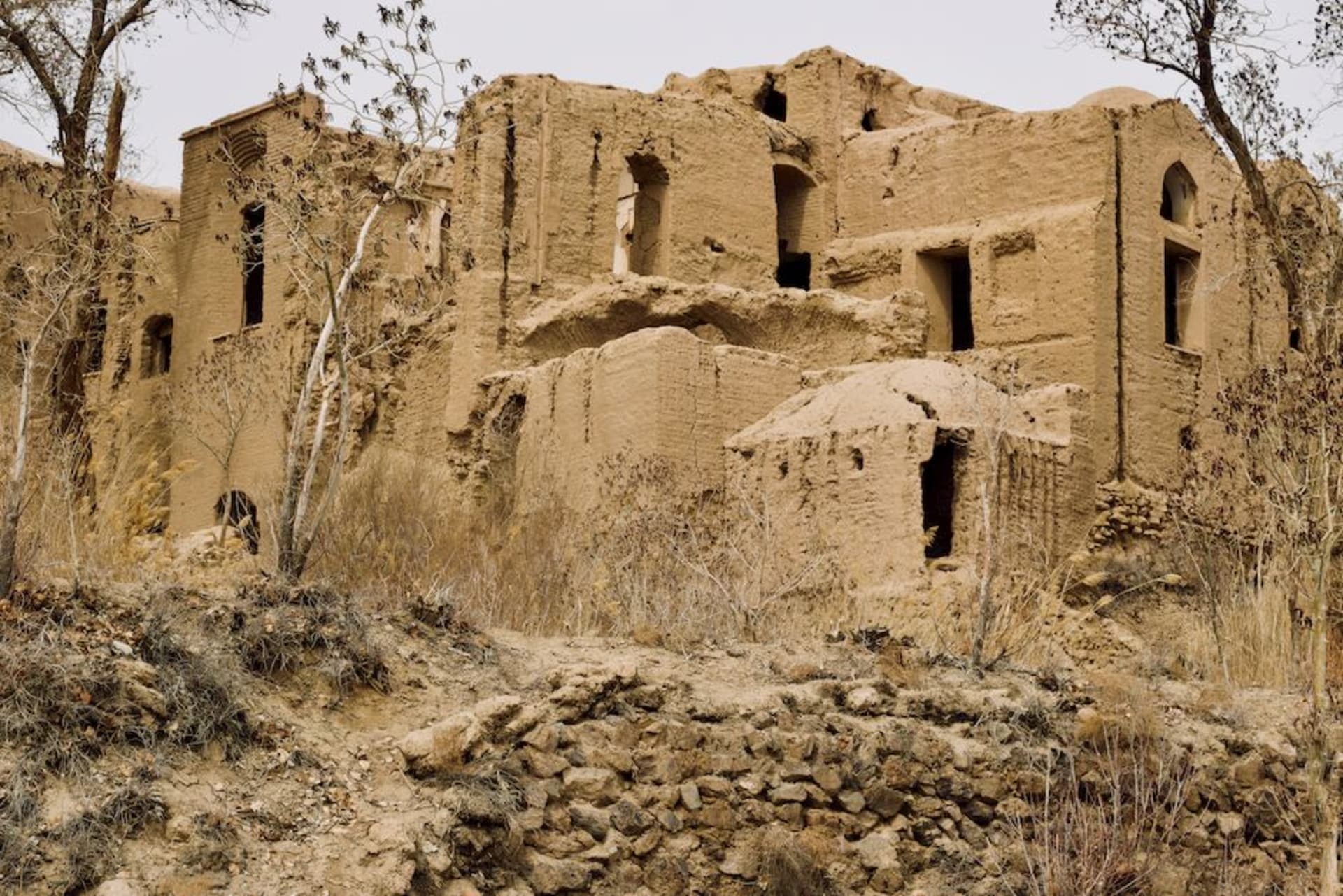
An abandoned mud-brick village on a cliff edge, left to the wind exactly as its last residents walked out of it decades ago.
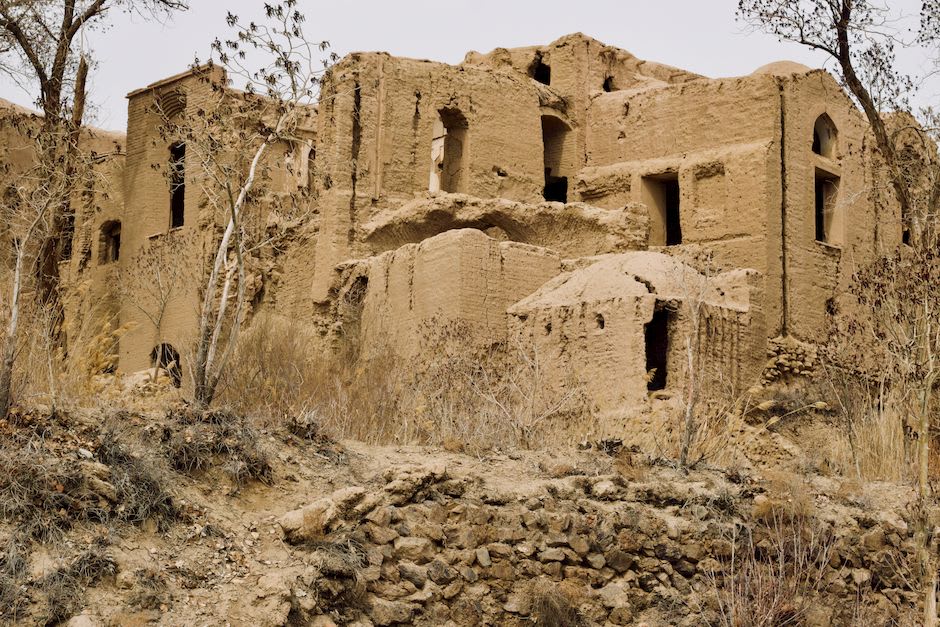
Kharanaq doesn’t announce itself. The road from Yazd runs through flat, scrubby desert for over an hour, and then the old village appears suddenly on the left, a jumble of collapsing mud-brick houses stacked on top of each other along a cliff edge above a dry riverbed, like something that grew there rather than something built. I asked our driver to stop, and we ended up staying two hours longer than planned.
Walking Through an Empty Town
Most of Kharanaq’s residents left in the mid-twentieth century, drawn by better infrastructure in newer settlements nearby, and what remains is a genuinely abandoned village rather than a restored heritage site — no ticket booth, no signage, just narrow covered alleys between crumbling multi-story houses that you can still walk into. Some floors have collapsed entirely; others are intact enough to climb stairs to a rooftop and look out over the whole huddled mass of the settlement. Lia found a doorway with a wooden lintel still carved with a decorative pattern, faded but legible, and we stood there a while trying to guess how old it was.
The Minaret and the Bridge
At the village’s edge stands a leaning minaret, tilted enough that photographing it straight feels almost dishonest, part of a mosque that predates most of the surrounding houses by centuries. A narrow multi-arched bridge crosses the dry riverbed just below the village, built for foot traffic and now mostly used by photographers waiting for the light to drop low enough to throw long shadows across the arches. I waited there myself, and the wait was worth it — the whole scene turned copper-colored in the last twenty minutes before sunset.
Why It Stayed This Way
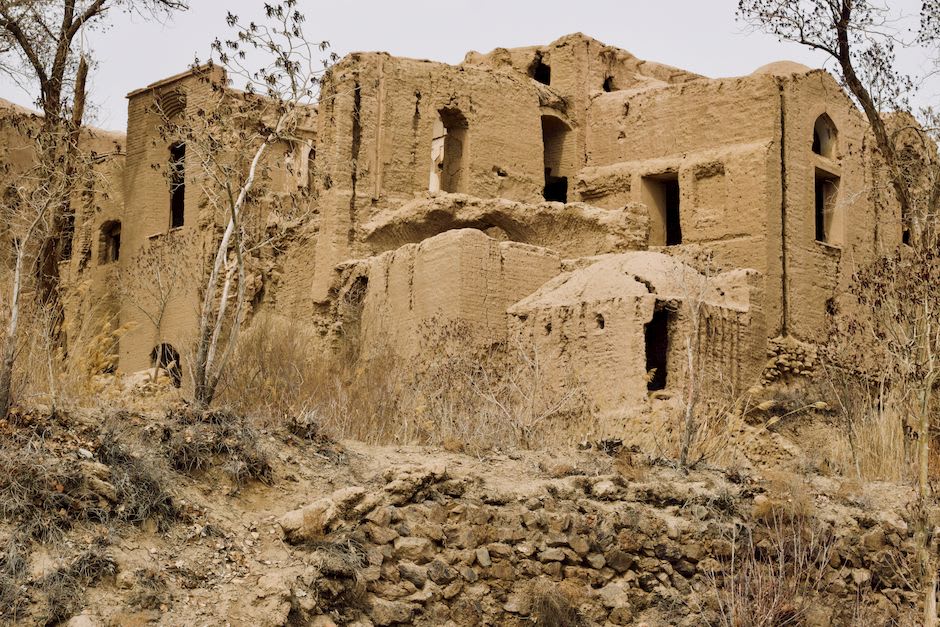
What struck me most was the total absence of restoration effort, which is unusual in a country that has invested heavily in preserving its architectural heritage elsewhere. Kharanaq exists in a kind of suspended decay — not actively maintained, not actively destroyed, just aging at whatever rate the desert allows. A handful of families apparently still live in the newer part of the village nearby and use the old town’s remaining structures for storage. It gave the whole visit a quality closer to trespassing gently through someone’s memory than touring a monument.
When to go: Late afternoon, an hour or two before sunset, for the light and the temperature both. It’s usually visited as a stop en route to or from Chak Chak, about ninety minutes further into the desert.