
Agha Bozorg Mosque
"A local architecture student walked me through it and I understood, for the first time, that a building can be an argument."
A sunken twin-courtyard mosque-madrasa where the architecture itself teaches a lesson in Islamic cosmology, one level at a time.
Agha Bozorg is a working mosque and former theological school in the middle of Kashan’s old quarter, built in the late eighteenth century by an influential cleric, and it’s easy to walk past the plain exterior wall without registering that anything remarkable is inside. I nearly did. What changed my mind was a young architecture student, Sina, who was sketching the courtyard when we arrived and offered, unprompted, to explain what he was drawing.
A Building Sunk Into the Ground on Purpose
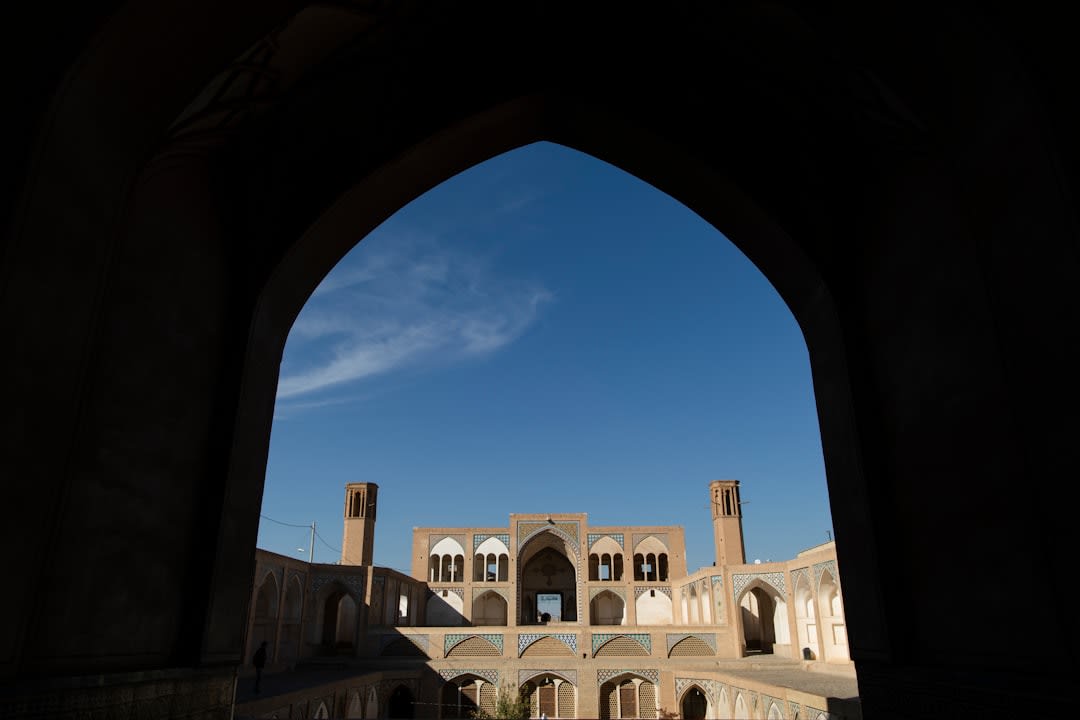
The mosque’s defining feature is that its main courtyard sits several meters below street level, reached by a descending staircase, while the sanctuary itself rises up through two full stories to a tall symmetrical dome. Sina explained this wasn’t just for cooling — sinking the courtyard and raising the dome was meant to symbolize a journey from the earthly to the divine, a physical descent followed by a visual and spiritual ascent as your eye travels up the mosque’s facade toward the sky. I’d walked through a dozen mosques by that point in the trip. This was the first time someone explained one to me as an argument rather than just a floor plan.
Symmetry as Discipline
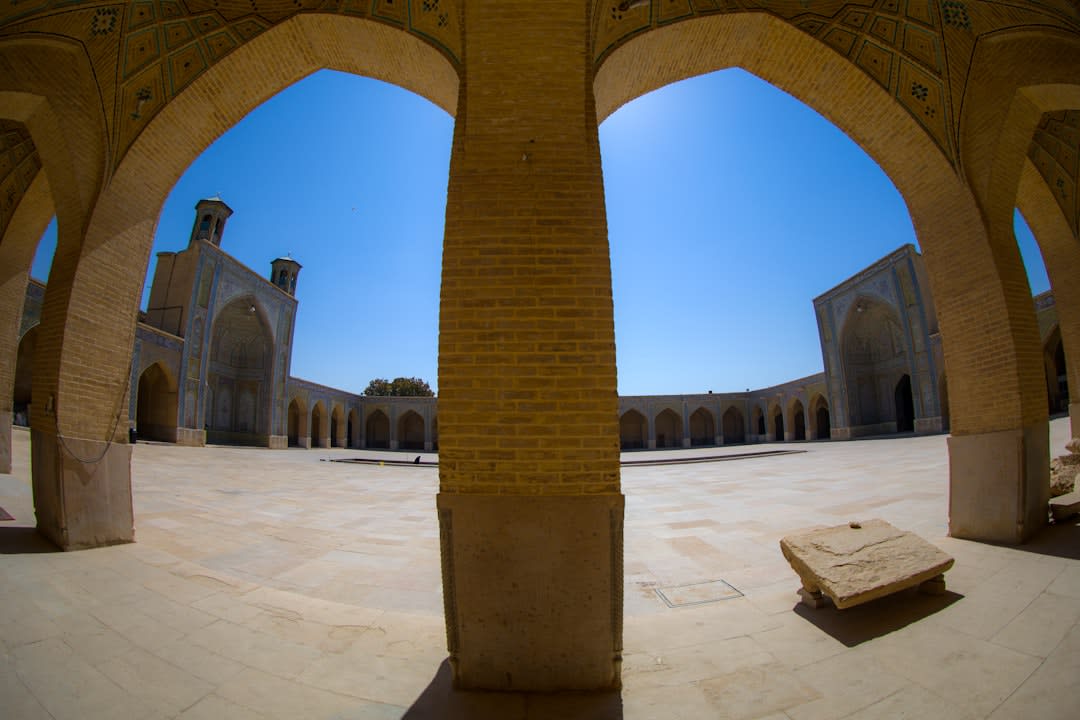
The whole complex is built on a strict axis, with matching iwans facing each other across the courtyard pool and matching minarets flanking the entrance — a deliberate visual balance that Qajar-era religious architecture pursued almost obsessively. Turquoise and cobalt tilework runs in bands around the courtyard walls, less dense and showy than what I’d seen in Isfahan’s grand mosques, but somehow more affecting for its restraint. A handful of theology students still study here, and a few of them nodded to us from the shaded arcades as we walked the perimeter.
Sina refused any payment for the impromptu tour and instead asked us, with obvious sincerity, what we thought of Iran so far. It was a question I got asked constantly during the trip, always with the same slight anxiety behind it, as though the country wasn’t sure the world had gotten the memo yet.
When to go: Year-round, since the sunken courtyard stays relatively cool even in summer. Midday brings the strongest light into the courtyard for photographing the tilework.
Keep exploring
More from Iran
 iran
iran Ahvaz
A hot, unpretentious oil city on the Karun River that most travelers skip entirely, and the best base for exploring Khuzestan's ancient sites.
Explore iran
iran Alamut Valley
A narrow Alborz mountain valley where the Assassins built their eagle's nest castles on unassailable ridges, and apple orchards fill the floor below in almost implausible tranquility.
Explore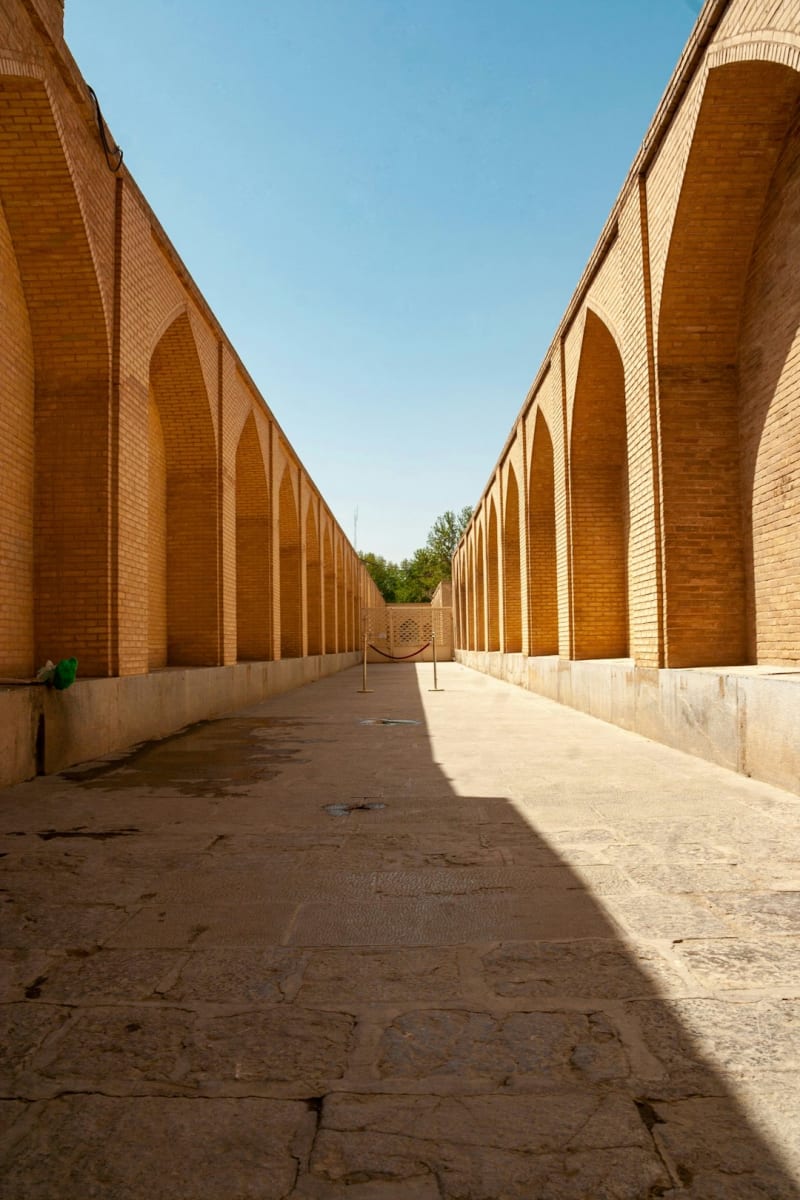 iran
iran Ali Qapu Palace
A six-story royal grandstand overlooking Naqsh-e Jahan Square, topped by a music room whose plaster walls are carved into hollow instrument shapes for acoustics, not decoration.
Explore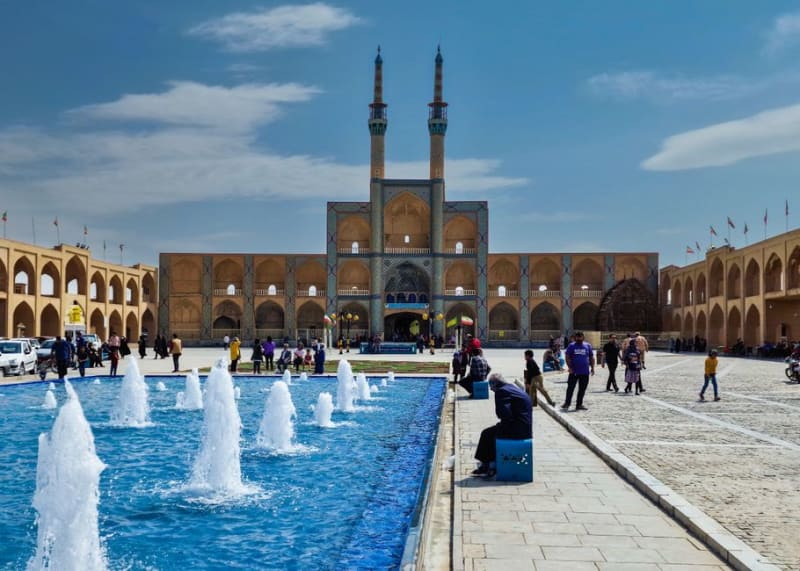 iran
iran Amir Chakhmaq Complex
A three-tiered facade of symmetrical sunken alcoves that turns into Yazd's evening living room the moment the sun goes down.
Explore iran
iran Aran va Bidgol
A carpet-weaving desert town at the edge of a salt lake, where you can watch a rug take shape thread by thread and then walk out onto white crust to the horizon.
Explore iran
iran Ardabil
A cool, mountainous city built around the shrine of a Sufi saint whose descendants founded the Safavid dynasty — the tomb complex that essentially launched modern Iran, wrapped in tile work most travelers never see.
Explore