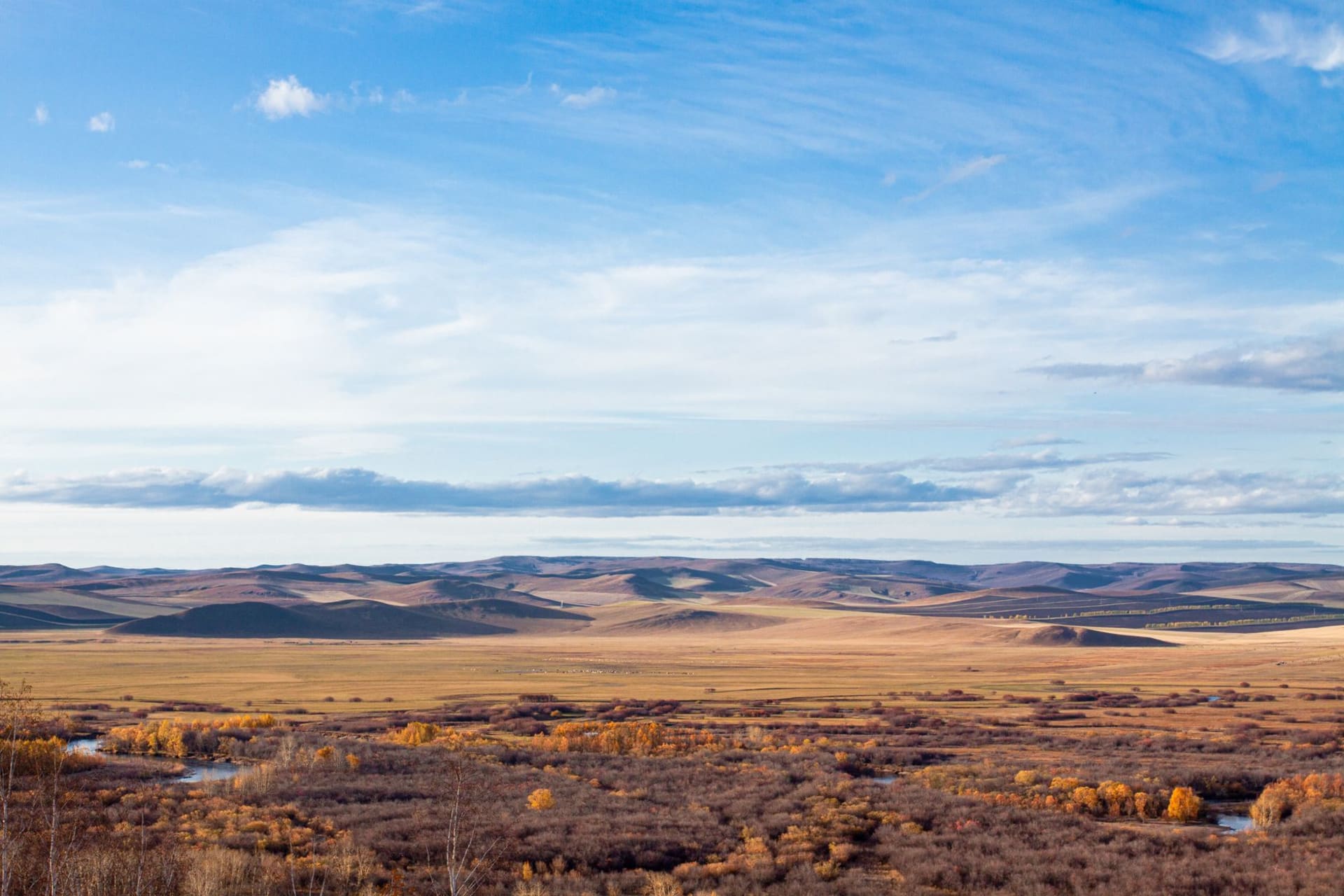
Gegentala Grassland
"The ger smelled of felt and coal smoke. I slept better in it than I have in any hotel in years."
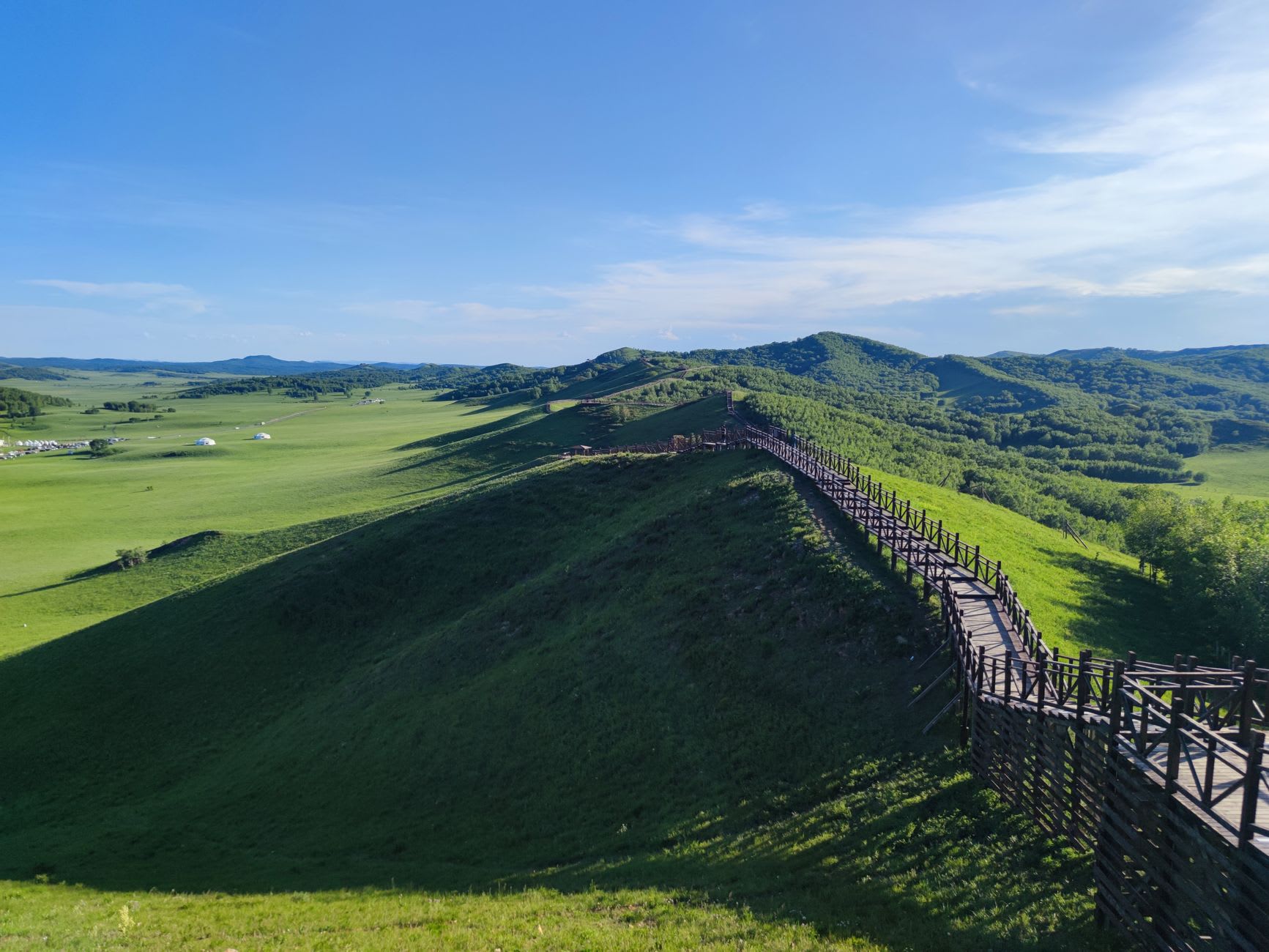
The road north from Hohhot climbs through a landscape that transitions without fuss — first the city’s industrial fringe, then small farms and windbreaks of poplar, then a plateau edge where the farms stop and the grass takes over entirely and the sky doubles in size. I have made this drive three times now, at different seasons, and the transition always happens at roughly the same point but always surprises me, the way an expected thing can still be surprising if it is big enough.
Gegentala is about two hours north, in the Ulanqab grasslands, and it is what most people mean when they talk about the Inner Mongolia grassland experience: a camp of traditional white gers set in the open steppe, horses available, Mongolian families who host travelers in a way that has been going on long enough that the hosting has developed its own rhythms and protocols. What makes Gegentala better than the generic version of this experience is that some of the families here have resisted the full theme-park drift. The ger I stayed in belonged to a woman named Nara whose grandmother had been born on this stretch of land and whose grandmother’s grandmother had probably camped somewhere nearby. She cooked on a coal stove and the ger smelled of burning coal and felt and the dried milk curds that were strung from a line near the ceiling to dry, and that combination of smells is now, permanently, what I think of when I think of Inner Mongolia.
The evening meal was tsuivan — stir-fried noodles with mutton and vegetables — followed by airag, the fermented mare’s milk that is slightly carbonated and slightly alcoholic and tastes of the steppe in a way I can only describe as accurate, as though someone distilled the place into a drink. After dinner, Nara’s uncle played a morin khuur, the horse-head fiddle, and the sound it made in the ger carried something in its lower register that I have not been able to identify except as longing, as distance, as the feeling of being very far from the familiar. We sang what I can only describe as encouragingly, given my complete ignorance of the songs.
The night sky was the other reason to be here. I woke at two in the morning and unzipped the ger door and stepped outside into cold so clear it had edges, and the Milky Way was directly overhead, the galactic arm so dense and bright it seemed structural, like scaffolding. I stood barefoot on the cold grass for as long as I could stand the temperature and then went back inside and lay in the dark with the coal stove cooling and listened to the wind moving the felt walls of the ger and felt the particular quality of happiness that comes from being precisely where you intended to be.
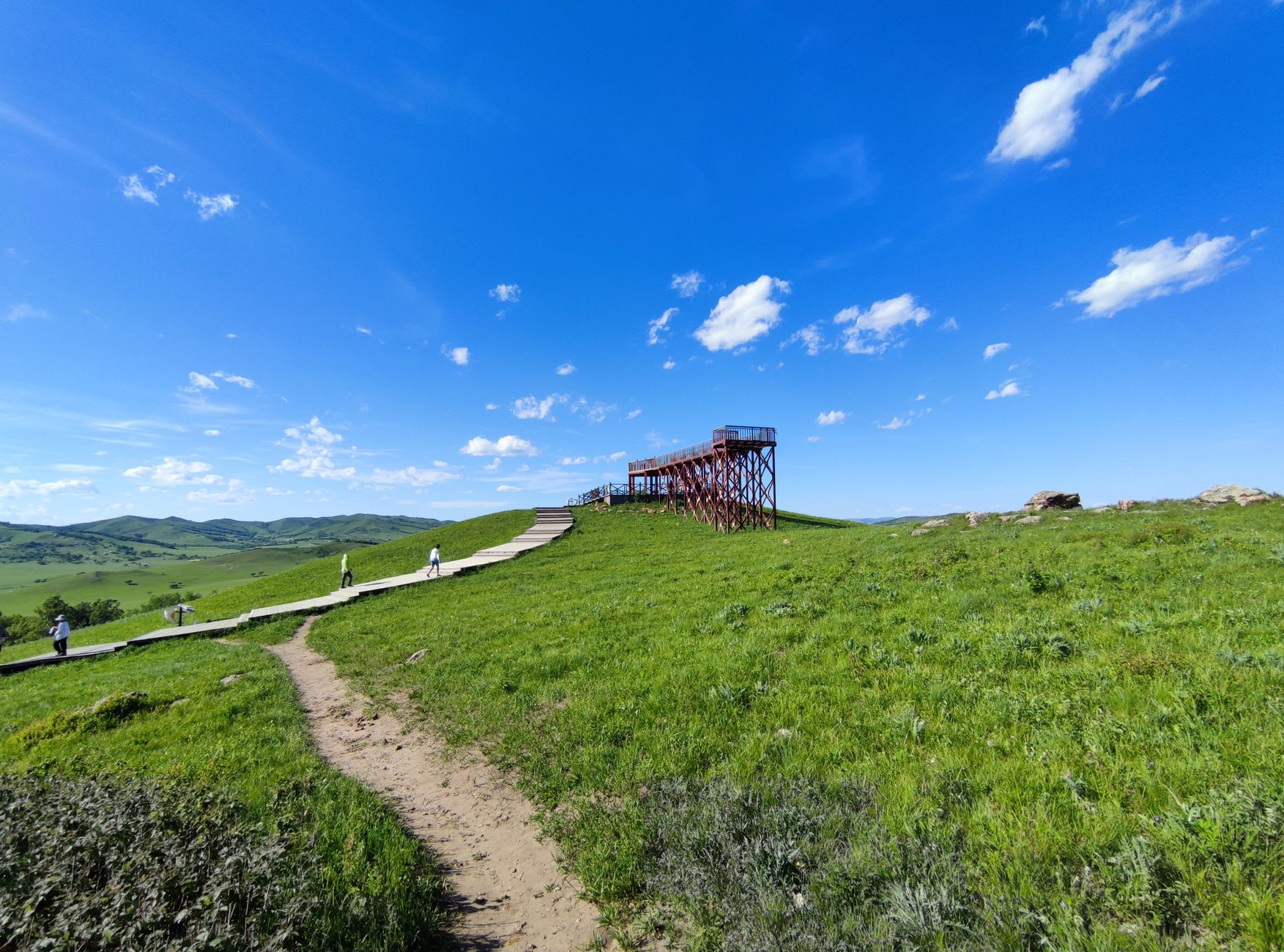
Morning on the steppe has its own logic. The horses come awake before the humans, and the sound of them moving and grazing in the early dark is the first alarm. By five-thirty, Nara had the stove going and there was süütei tsai on the ring, salt milk tea, which I have now come to love in the same unreasonable way you come to love things associated with places you were happy. We rode before breakfast, south into the long grass, and the mist was still on the low ground and the horses breathed clouds into the cold air.
When to go: Late June through August is the window when the grass is tall and deeply green, the camps are fully running, and the Naadam-style festivals take place. The summer solstice period is peak Mongolian cultural activity — singing, wrestling, archery, the whole ceremonial register. September is quieter and the light on the steppe in the afternoons turns the grass to copper, which is beautiful in a more melancholy register. October is cold but the camps still run on reduced schedules for travelers who prefer silence to crowds.