Ternate
"The whole island is a volcano, and the whole volcano used to be worth more than gold."
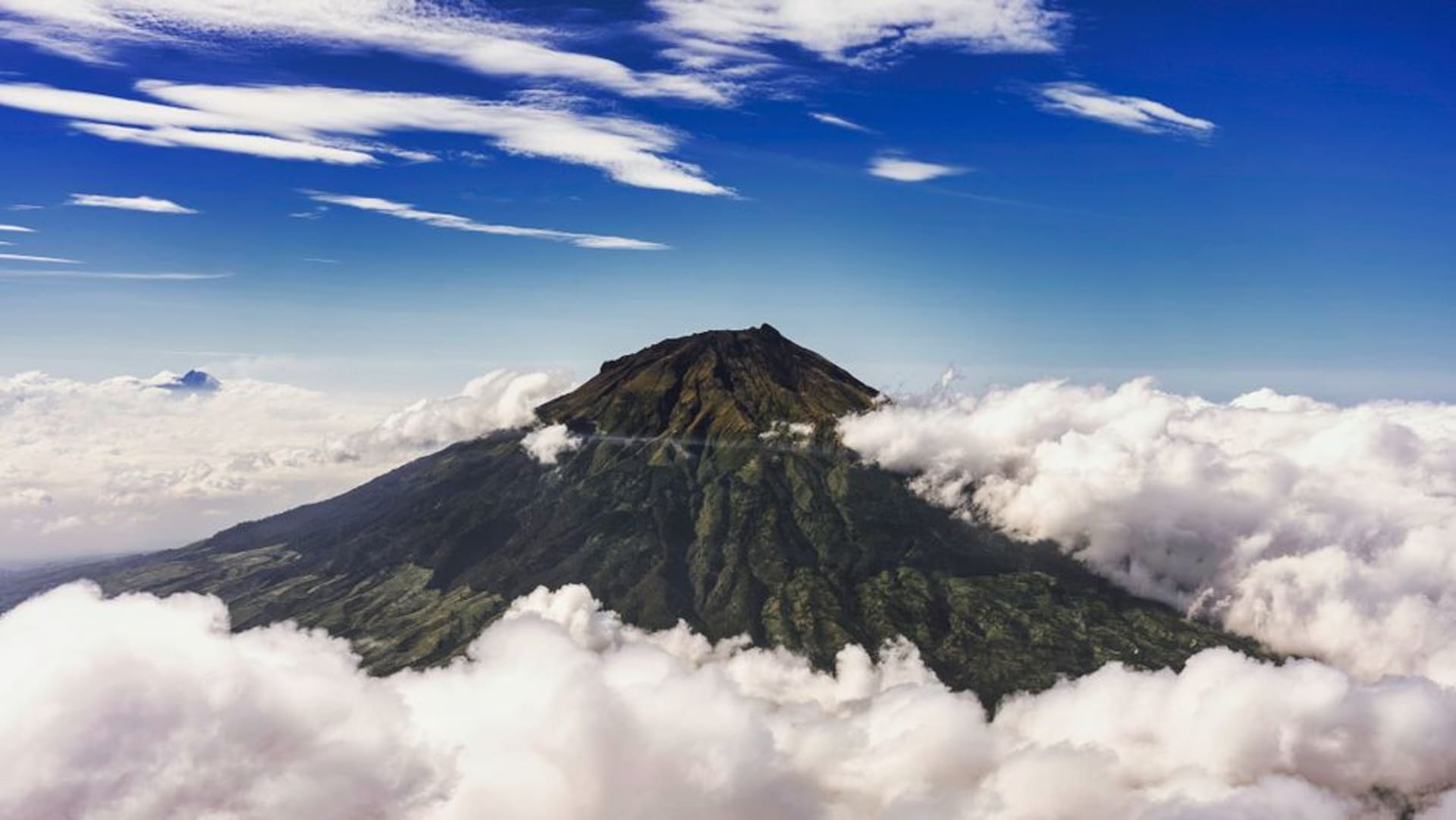
A perfect volcanic cone rising straight out of the Maluku Sea, ringed by the sultanate palaces and Portuguese forts that clove made inevitable.
Ternate is one of those places where geography explains everything before you’ve read a single plaque. The island is essentially a single mountain, Gunung Gamalama, an active stratovolcano that rises in a nearly symmetrical cone straight from the Maluku Sea to over 1,700 meters, with the town wrapped in a thin coastal ring around its base. There’s no flat interior to speak of, no room to spread out — every road on Ternate either hugs the coastline or climbs partway up the slope before the terrain gets too steep. I circled the whole island in a rented motorbike in under two hours, volcano on one side, sea on the other, the road occasionally crossing black lava fields from eruptions within living memory. Gamalama last erupted in 2014 and is watched constantly; ash occasionally closes the airport, which felt less alarming once I understood how normal it was to everyone who actually lives there.
This tiny island, together with its twin Tidore visible across the strait, was once the single most valuable piece of real estate on earth. Ternate was the original source of cloves, and for centuries it was the only one — the clove tree, Syzygium aromaticum, grew natively nowhere else. That monopoly drew the Portuguese in the sixteenth century, then the Spanish, then the Dutch, all of them building forts around the same small coastline to control a spice that was, at various points, worth more by weight than gold in European markets. Fort Oranje, built by the Dutch in 1607, still stands near the harbor with its walls intact, and Fort Tolukko, a Portuguese fortification from 1540 perched on a headland above the sea, gives you the clearest sense of why this location mattered — you can see Tidore, Maitara, and Halmahera all from the same ramparts, the entire contested strait laid out at once.
The sultan’s palace and the scientist who almost beat Darwin
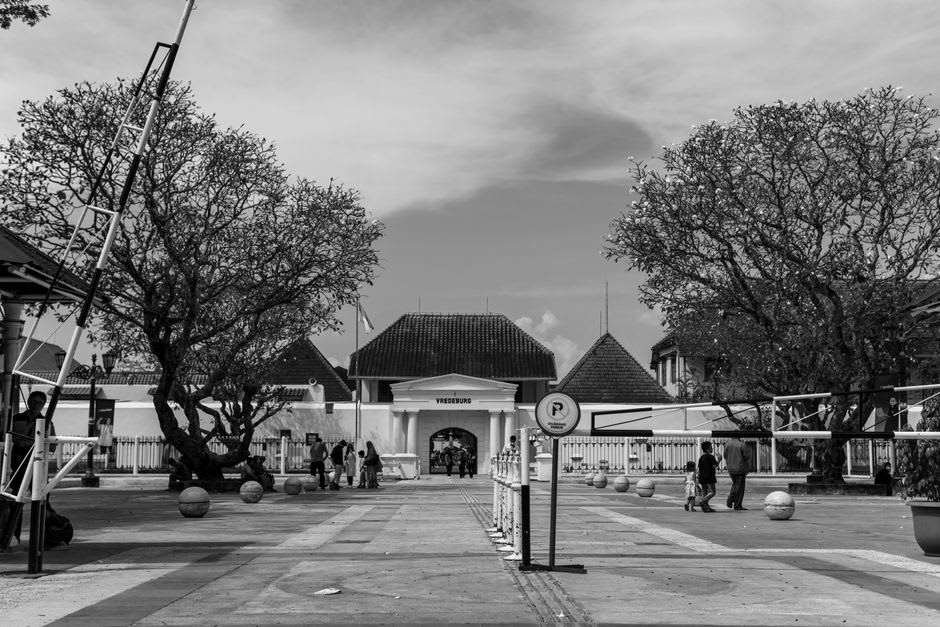
The Sultanate of Ternate predates the European arrival by centuries and, remarkably, still exists — a living monarchy, not a museum piece, though its political power is now mostly ceremonial within Indonesia’s republic. The Kedaton Kesultanan Ternate, the sultan’s palace, houses royal regalia including a crown said to grow its own hair, and the current sultan still performs ceremonial duties tied to the old clove trade rituals. What I didn’t expect was how alive the connection to natural history is here: Alfred Russel Wallace, the naturalist who developed a theory of evolution by natural selection independently of and simultaneously with Darwin, wrote his famous 1858 letter to Darwin from Ternate, where he was based for years collecting specimens across the Maluku islands. The house associated with his stay and the broader Wallace Line — the biogeographic boundary separating Asian and Australian species that runs right through this archipelago — gives the island a second identity as a birthplace of evolutionary science that most visitors never learn about.
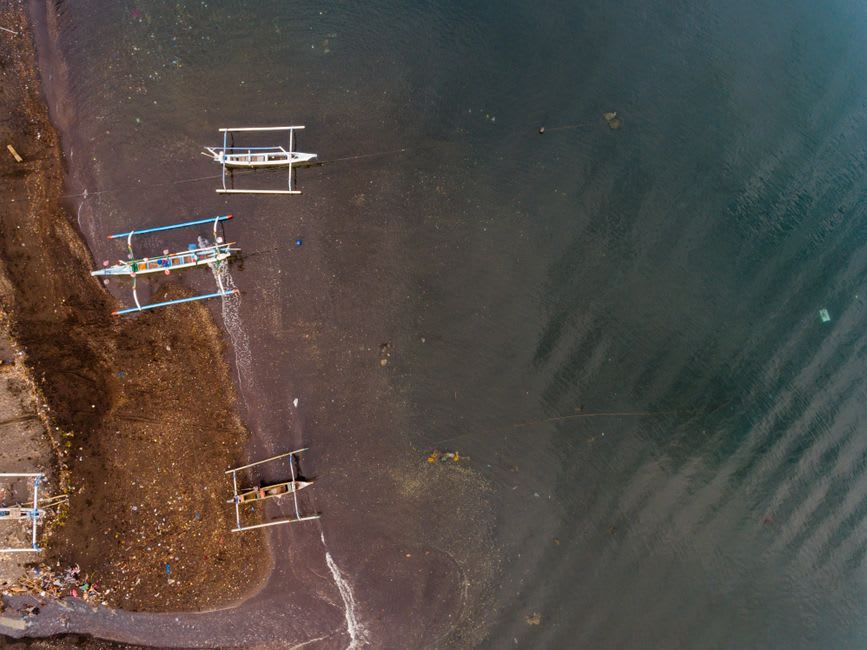
Evenings in Ternate town happen along the waterfront, where fish stalls set up as the light goes orange behind Tidore’s own volcanic silhouette across the water, and where you can eat grilled tuna or skipjack pulled from the strait that morning for a price that feels almost apologetic. The pace is unhurried in a way that has nothing to do with tourism — there simply isn’t much tourism here yet, and the island’s rhythm is still set by fishing boats and the mosque’s call to prayer echoing off the volcano’s lower slopes.
When to go: April to October, during the dry season, gives the clearest views of Gamalama and Tidore and the calmest seas for the short ferry crossings between islands.