Sidemen
"Everyone tells you Bali's rice terraces are ruined by tourism. Nobody tells you about Sidemen."
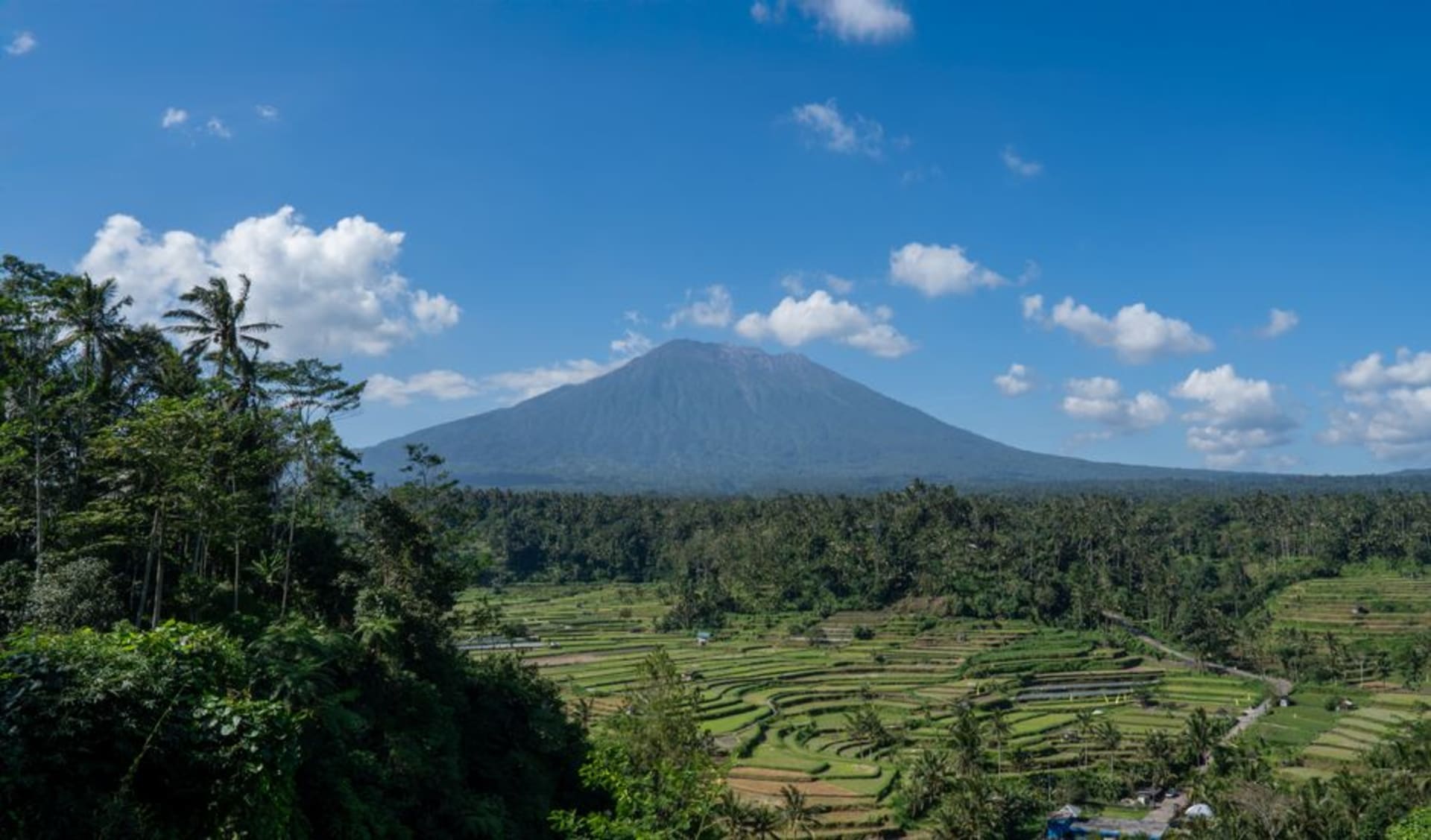
The rice-terrace valley Bali forgot to ruin — no billboards, no beach clubs, just Gunung Agung looming over green in every direction.
I got to Sidemen by accident, the way you get to most of the places that end up mattering. I’d meant to spend an afternoon in Tirta Gangga and then loop back to Ubud before dark, but the road east out of the water palace kept climbing, kept narrowing, kept getting greener, and by the time I noticed Gunung Agung filling the entire windshield I’d already decided I wasn’t leaving that day. Sidemen sits in the valley beneath Bali’s holiest and highest volcano, in the regency of Karangasem, and it has managed something increasingly rare on this island: it looks almost exactly the way Ubud must have looked before Elizabeth Gilbert wrote a book about it.
The valley is a working landscape, not a curated one. Farmers still flood the sawah using the subak system — that UNESCO-listed network of water temples and irrigation channels that Balinese communities have run cooperatively, and continuously, since at least the eleventh century. There’s no admission fee to walk the terraces here, no ticket booth, because nobody thought to build one; you just find a dirt path between two paddies and follow it until a farmer waves at you or a rooster objects. The Iseh area, where the German painter Walter Spies and later the Swiss artist Theo Meier both kept houses in the mid-twentieth century, still has some of the most photographed (and least crowded) terrace views on the island — layered green steps folding down toward the Unda River with Agung standing sentinel over all of it.
Weaving, coffee, and arak
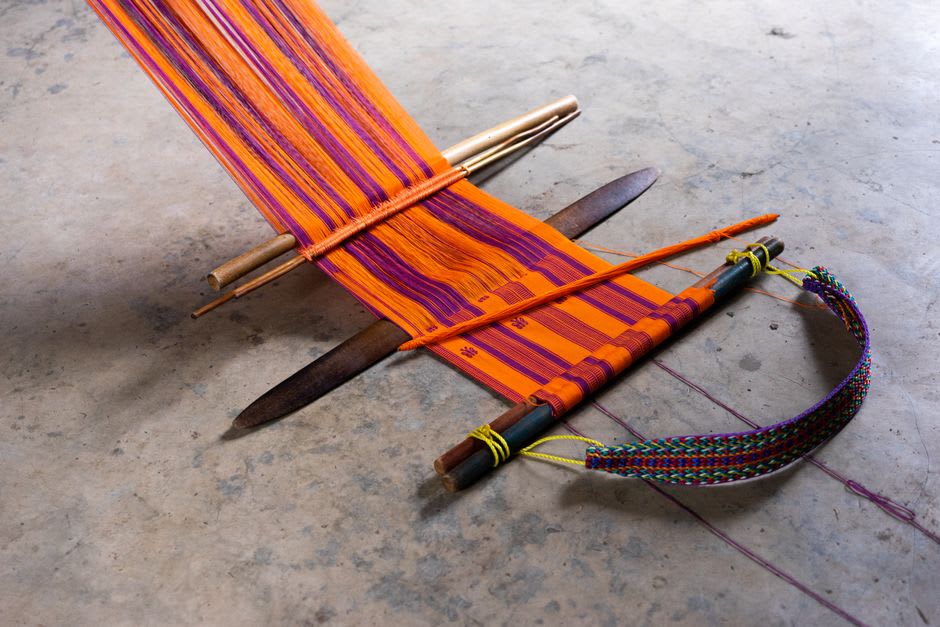
Sidemen has a quieter economic identity too, built on crafts that predate tourism by centuries. This is one of the last places in Bali where you can still watch women working backstrap looms to produce endek, the traditional ikat-dyed weaving that once clothed royalty across the Klungkung and Karangasem courts. The threads are dyed before weaving in a resist process that takes weeks, and the geometric patterns that emerge are specific enough that older Balinese can sometimes identify which village produced a given cloth just by looking at it. Up in the surrounding hills, smallholder plots grow robusta and arabica coffee alongside cacao, and roadside stalls sell tuak and arak — the local palm and rice spirits — distilled in bamboo stills that haven’t changed much in generations.
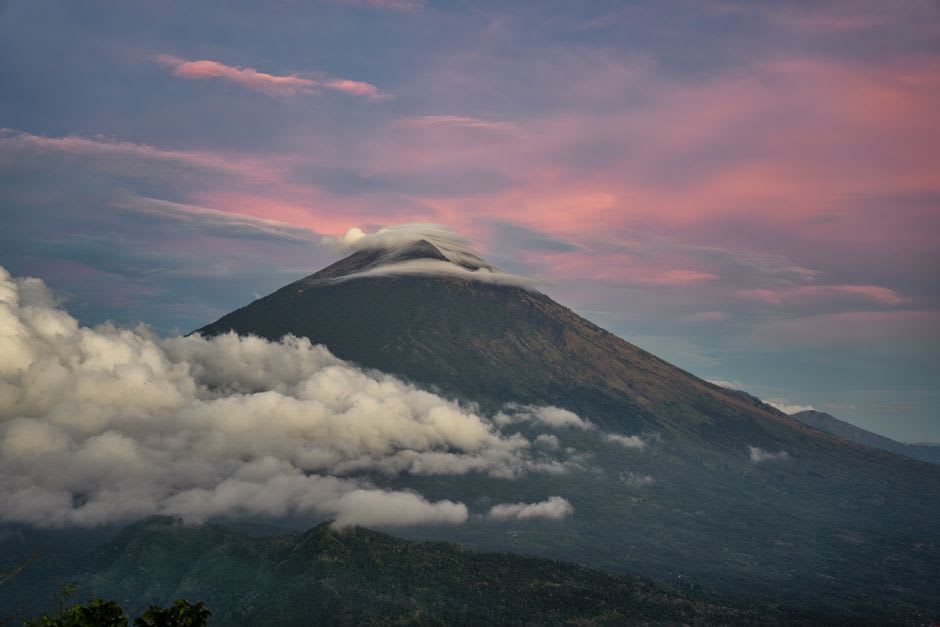
What struck me most, though, was the trekking. The paths that connect Sidemen’s hamlets — Tabola, Telun Wayah, Iseh — were cut by farmers, not by tourism boards, so they go where the work goes: along ridgelines, through clove and coffee groves, past family temples with their black-and-white checked poleng cloth wrapped around the gates. I hired a local guide for a half-day walk that started before dawn specifically so we’d catch the sunrise from a ridge above the valley, Agung backlit and enormous, its slopes still scarred faintly from the 2017-2018 eruptions that forced tens of thousands of Balinese to evacuate. The mountain is quiet again now, but everyone in Sidemen talks about it the way people elsewhere talk about a flood or a fire — a shared, recent memory, not ancient history.
By evening the valley does something no beach town manages: it goes properly dark and properly quiet, cicadas and frogs replacing the motorbike traffic, the outline of the terraces visible only as a deeper shade of black against the sky. I sat on a homestay balcony with a glass of arak I probably shouldn’t have finished and thought about how strange it is that this — genuinely one of the most beautiful landscapes in Bali — remains a detour rather than a destination for most visitors.
When to go: April through October for drier trails and clearer volcano views; the terraces are at their most vivid green during planting season, roughly March–May and again around September.