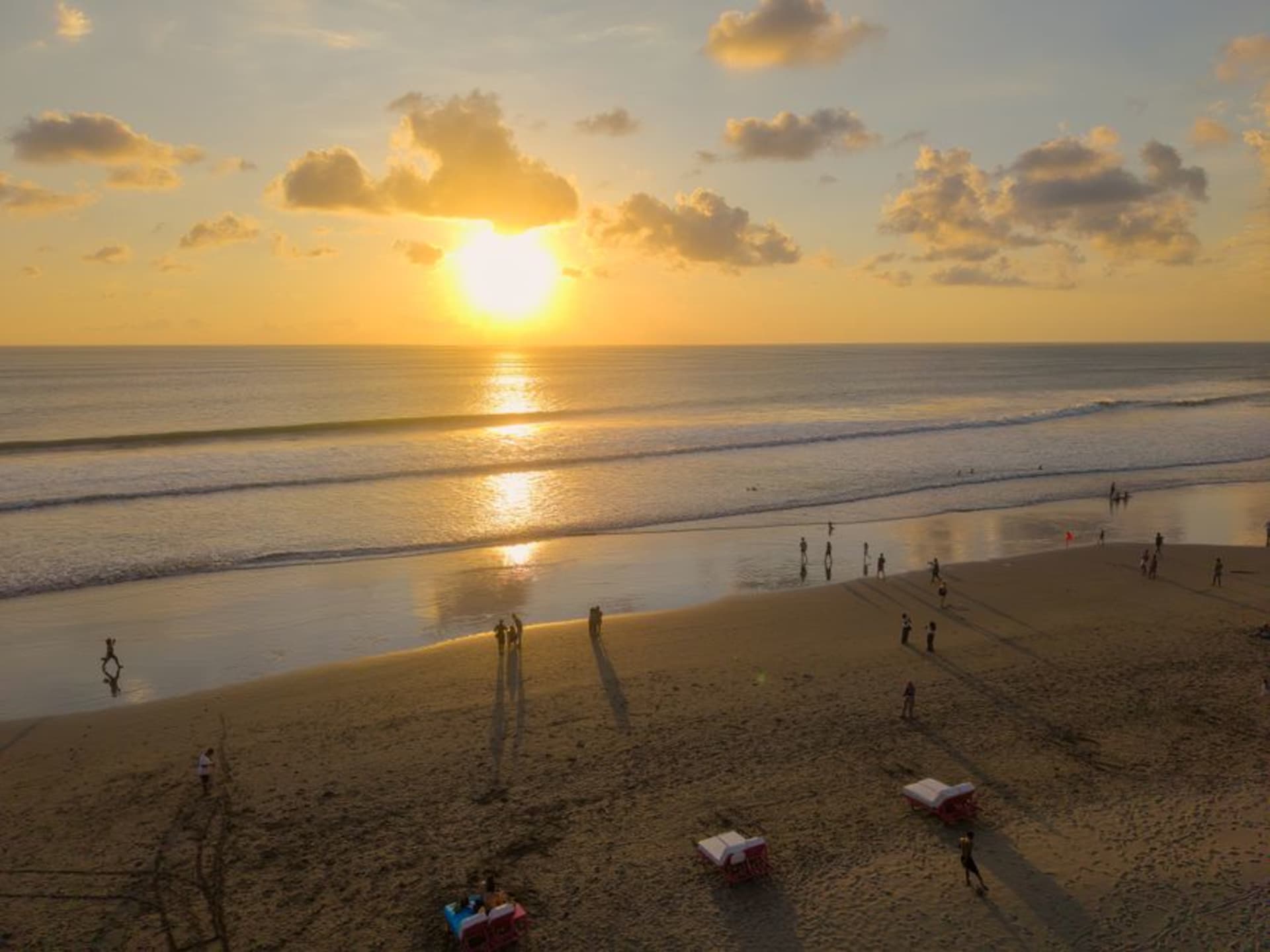
Once Bali's quiet fishing coast, now its most polished stretch of beach clubs and boutique villas — Seminyak is what happens when a paradise gets a design budget.
Seminyak was Bali’s quiet escape before it was Bali’s loud one. In the 1970s and 80s, when Kuta was already crowded with backpackers, a small wave of designers and artists — Australian and European, mostly — started buying up land just north along the same stretch of coast, drawn by the wide black-and-gold sand beach and the fact that nobody else wanted it yet. That early wave of design sensibility never really left; it just scaled up. Walk down Jalan Kayu Aya, still called Eat Street by half the expats here, and you’ll pass more architecturally serious restaurants and concept boutiques per block than almost anywhere else in Indonesia.
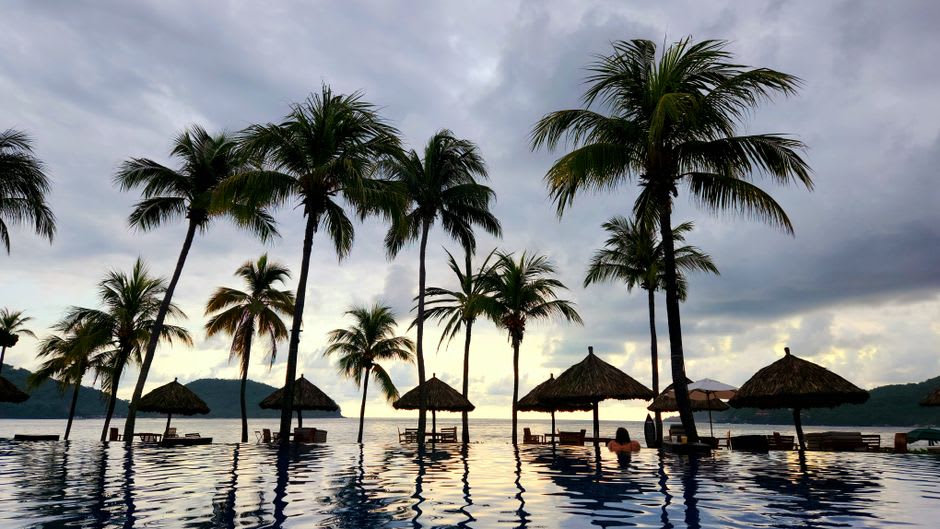
What Seminyak does better than its rowdier neighbor Canggu, honestly, is restraint dressed up as excess. The beach clubs here — the sprawling pool decks angled toward the sunset, the DJ booths that start at golden hour and don’t quietly ask you to leave until well past midnight — are expensive and polished in a way that Canggu’s scrappier scene never quite pulled off. I’m not always a fan of what that costs the place culturally, but I’ll admit that watching the sun drop into the Indian Ocean from a lounge chair with a cocktail in hand, gamelan-inflected lounge music playing somewhere behind me, is a genuinely good way to spend an evening, guilt aside.
What’s left of the fishing village
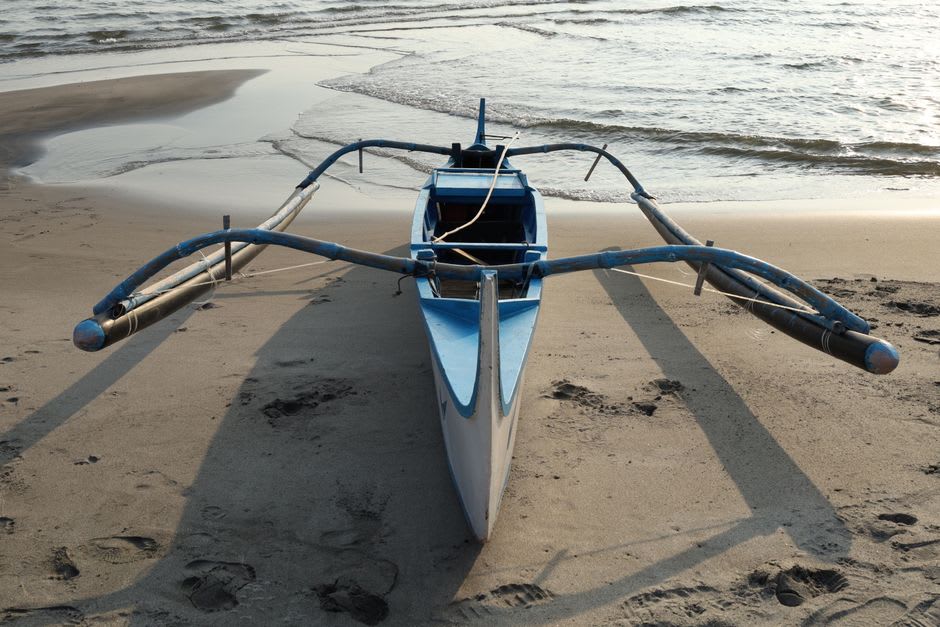
It’s easy to forget, amid the villa compounds and the spa menus, that Seminyak sits on the same coastline that fishing families worked for generations before any of this existed. A handful of jukung — the narrow, brightly painted outrigger canoes still used across Bali — still launch from the northern end of the beach at dawn, well before the sunbed staff arrive to set up for the day. I got up early once, mostly by accident, jet-lagged and unable to sleep, and watched three fishermen haul in a net a hundred meters offshore while the beach clubs behind them sat dark and empty. It felt like watching two different centuries occupy the same sand.
Petitenget temple, at the beach’s northern edge, marks the spot where the 16th-century Javanese priest Dang Hyang Nirartha is said to have left a sacred box (the temple’s name literally means “magic box”) during his travels establishing sea temples across Bali. It still holds ceremonies that draw the local Seminyak community in full traditional dress, a reminder that underneath the infinity pools there’s a Balinese village going about its religious calendar largely undisturbed by the tourism economy built up around it.
When to go: April to October for dry, sunny weather and the best beach club conditions. July and August are peak season and prices spike accordingly — I’d aim for May, June, or September for a calmer, cheaper version of the same sunset.