
Bali's original beach resort, where a reef breaks the swell and the mornings still belong to walkers, not clubbers.
Sanur has a claim that nowhere else on Bali’s south coast can make: it was first. Long before Kuta discovered surfers and Seminyak discovered cocktail bars, Sanur was where Bali’s modern tourism began, anchored by the arrival of the German painter Walter Spies and a wave of Western artists in the 1930s who found in this quiet fishing village the same enchantment that would later pull them to Ubud. The Belgian painter Adrien-Jean Le Mayeur de Merprès settled here permanently, married a celebrated Legong dancer named Ni Polok, and painted the beach and its people for three decades — his house is now a small museum a few steps from the sand, and it remains one of the best places on the island to understand how outsiders first fell for Bali visually, before it became shorthand for anything.
What makes Sanur’s beach different, physically, from the rest of south Bali is the reef. A barrier reef runs close offshore along most of its length, breaking up the swell before it reaches the sand, which means the water stays calm and shallow in a way Kuta’s open surf beach never does. That calm is why Sanur became a hub for outrigger fishing boats rather than surfboards, why the water is safe for kids and slow swimmers, and why the town’s whole rhythm feels domestic rather than performative — this is where a lot of Balinese and long-term expat families actually live, not just visit.
The morning promenade
The best thing to do in Sanur costs nothing: walk the beachfront path at dawn. It runs unbroken for several kilometers along the coast, past fishing boats being readied for the day, joggers, elderly Balinese doing tai chi in loose circles, warungs setting up plastic tables for the first coffee of the morning. Because the beach faces east, Sanur claims the sunrise the way Kuta claims the sunset, and there’s something clarifying about watching the light come up over Nusa Penida’s silhouette across the strait while the rest of the island is still asleep.
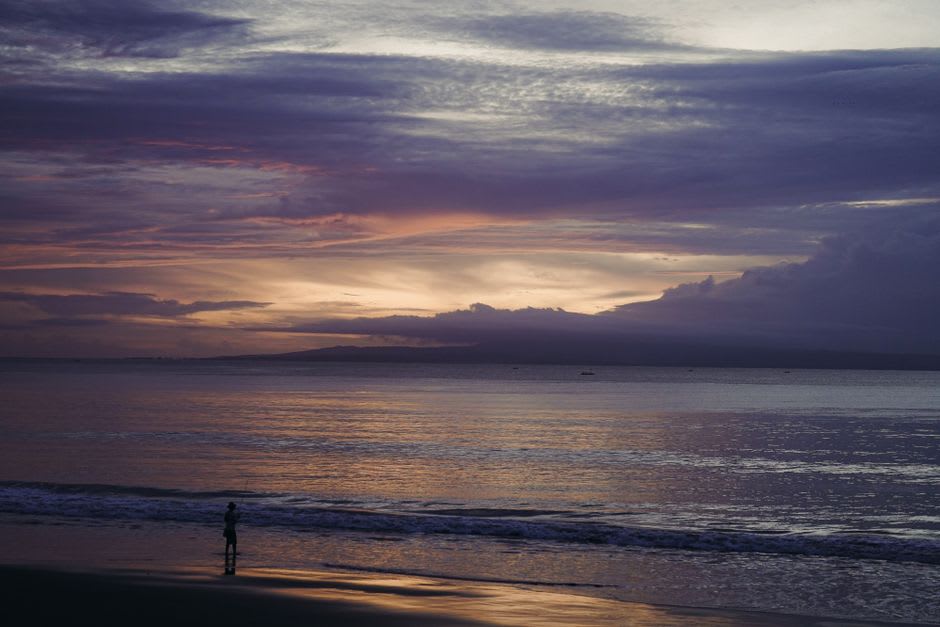
Sanur is also the departure point for the fast boats to Nusa Penida, Nusa Lembongan, and Nusa Ceningan, and the harbor bustles from mid-morning with day-trippers and dive groups heading out to the strait, where the current pulls in cold, nutrient-rich water from deeper in the Indian Ocean — cold enough, at times, to bring mola mola, the ocean sunfish, within range of divers between roughly July and October. It’s an odd juxtaposition: a beach town this unhurried acting as gateway to some of the more adrenaline-driven diving in Indonesia.
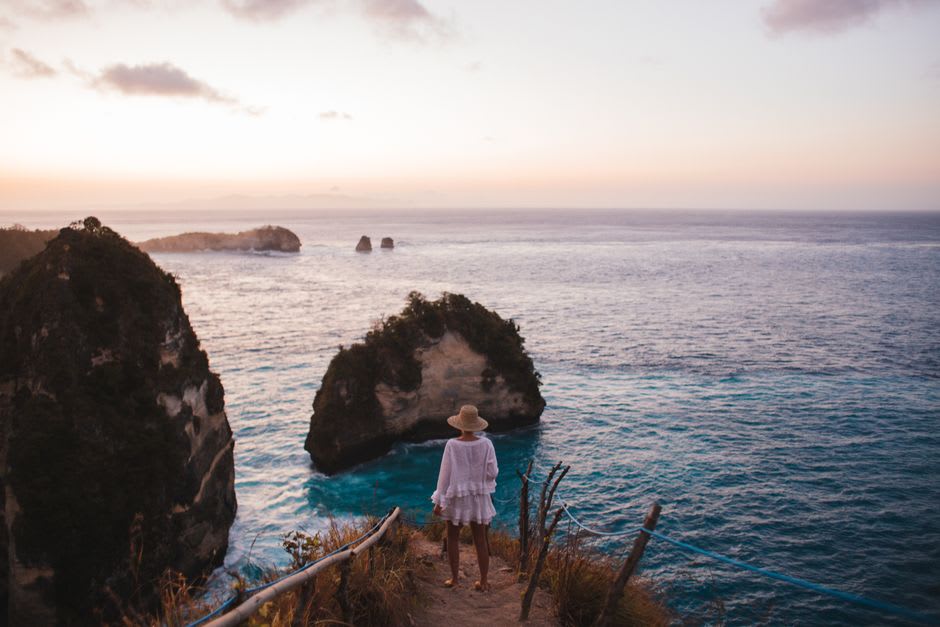
I keep coming back to how unbothered Sanur seems by its own history — it invented Bali tourism in a sense, watched Kuta and then Seminyak and then Canggu each take turns being the island’s loud center of gravity, and just kept doing its own quiet thing: reef-calmed water, an artist’s old studio turned museum, boats heading out to islands most visitors have never heard of. It’s the Bali beach town for people who’ve already done the other ones.
When to go: May to September, dry season, for the clearest mornings on the promenade and the best conditions for the Nusa Penida boat crossing, which gets rougher in the wet months.