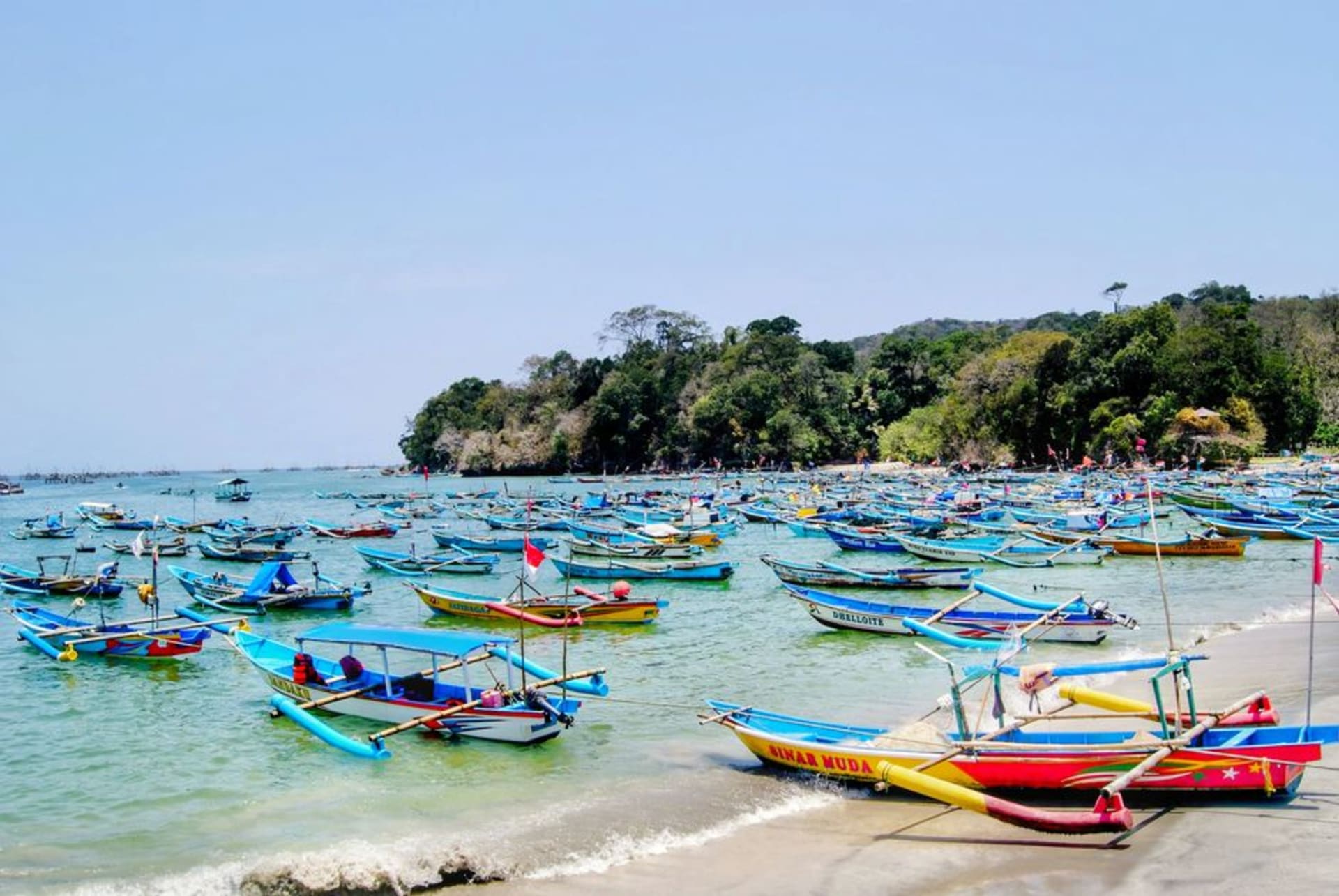
Pangandaran
"Bali's south coast without the deck chairs — just a peninsula, some monkeys, and a very good sunset."
A fishing town on Java's south coast where the beach faces two directions at once, and the sunset side has never learned to be fashionable.
Pangandaran sits on a small peninsula on Java’s southern coast, in West Java, and it does something almost no other beach town in the region manages: it faces both east and west at once. The peninsula juts out into the Indian Ocean, so the eastern beach catches sunrise over open water while the western beach — a short walk across the narrow spit of land — gets a full, unobstructed sunset. I didn’t fully believe this until I watched it happen, walking from one side to the other in under ten minutes, the light doing completely different things depending on which stretch of sand I stood on.
The town itself has been a getaway for West Javanese and Central Javanese travelers for decades, long before international tourism found Bali’s south coast, and it still carries that domestic-holiday character — extended families on rented motorbikes, grilled fish stalls, kids flying kites on the beach at dusk. It’s unpretentious in a way that felt like a relief after busier coastal towns, though a devastating tsunami struck the coast here in 2006, and the memory of it is still present in the warning signage and evacuation routes marked through town — a quiet reminder that this ocean, beautiful as it is, isn’t decorative.
The nature reserve at the peninsula’s tip
At the southern end of the peninsula, Pangandaran Nature Reserve protects a chunk of coastal rainforest that feels wildly out of proportion to the town’s small scale. I walked in expecting a short loop and ended up spending most of a day — the trail cuts through forest thick with monkeys, both long-tailed macaques and the shyer, and much more territorial, black-and-cream Javan langurs, plus monitor lizards that amble across the path with total indifference to hikers. The reserve also holds Goa Lanang and Goa Parat, limestone caves used by Japanese forces as lookout points and storage during the World War II occupation, tunnels cut straight into the coastal rock that you can walk into with a guide and a flashlight.

Green Canyon and the fish market at dawn
A short drive inland, Cukang Taneuh — better known as Green Canyon — cuts a narrow gorge through jungle where a river runs an almost unreal jade-green, fed by underground springs that keep the color constant year-round. You reach it by small motorized canoe up the river, ducking under low rock overhangs and, if you go with a group willing to swim, dropping into pools beneath a small waterfall inside the canyon itself. It’s touristy by Pangandaran standards, which is to say there were maybe a dozen other boats, total.
Back in town, I preferred the mornings at the fish market near the harbor on the eastern beach, where boats come in loaded with the night’s catch and the whole waterfront turns into an open-air auction — squid, red snapper, mackerel changing hands fast and loud before most of the town is even awake. I bought grilled fish for breakfast off a woman fanning coals on the sand, ate it standing up, and watched fishermen mend nets while the tide came in.
When to go: May to September, the dry season, brings the calmest seas and clearest water for the Green Canyon trip; surfers should aim for the same window, when the swell on the western beach is most consistent.