
Nias Island
"The island where boys still leap two-meter stone walls to prove they're men, and the wave breaks exactly like the surf mags promised."
An island that jumps stone walls, rides perfect waves, and still keeps its megalithic villages half-hidden in the hills — Sumatra's strangest, most stubborn outpost.
I flew into Binaka airport expecting a surf trip and left with a completely different island in my head. Nias sits about 125 kilometers off Sumatra’s west coast, closer in spirit to the Mentawais than to the mainland it technically belongs to, and it has spent centuries being one of the most isolated cultures in the archipelago — isolated enough that its megalithic traditions, largely erased elsewhere in Indonesia by Hindu-Buddhist and later Islamic influence, survived here more or less intact into living memory.
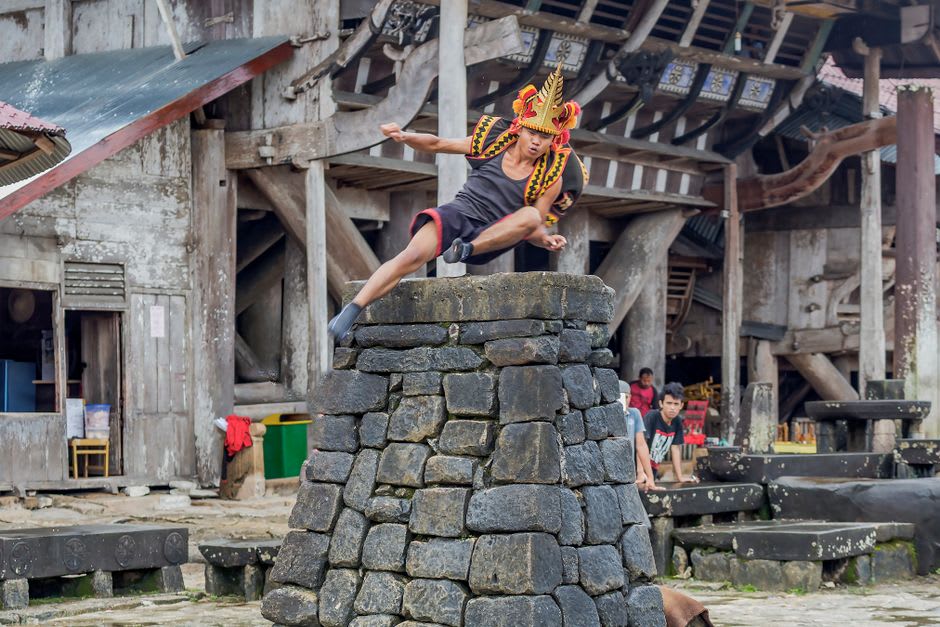
The image everyone knows is the stone jump, or fahombo batu, and I’ll admit I went to Bawömataluo village half-expecting a tourist reenactment. It isn’t one, or wasn’t always — the tradition dates back to when South Nias clans built their villages on hilltops for defense and needed a rite of passage that proved a young man could clear an enemy’s fortifications in a single leap. The stone structure in Bawömataluo stands about two meters tall with a narrow top edge, and watching a teenager sprint the run-up, launch, and clear it clean — landing without so much as brushing the top stone — is one of those moments where you understand a tradition in your stomach rather than your head. The village itself, perched on a ridge with royal houses (omo sebua) built from massive ironwood beams without a single nail, is a UNESCO tentative World Heritage site, and it earned that status honestly: nothing about the construction feels performed for visitors, it just happens to be spectacular.
The wave that started it all
Long before Nias was a name Indonesian tourism boards used, it was a name whispered among surfers. Lagundri Bay and its Sorake Beach produce a right-hand reef break that surf journalists in the 1970s put in the same conversation as Uluwatu and G-Land, and the swell here — funneled straight off the Indian Ocean with nothing to slow it down — is remarkably consistent through the May-to-September season. What struck me wasn’t the wave itself, which is every bit as good as advertised, but how small the scene around it still feels compared to Bali. A string of simple losmen along the bay, a handful of warungs, fishermen mending nets a hundred meters from surfers waiting for sets — it has the unhurried, slightly worn feel of a place that peaked in reputation before it peaked in infrastructure, and I mean that as a compliment.
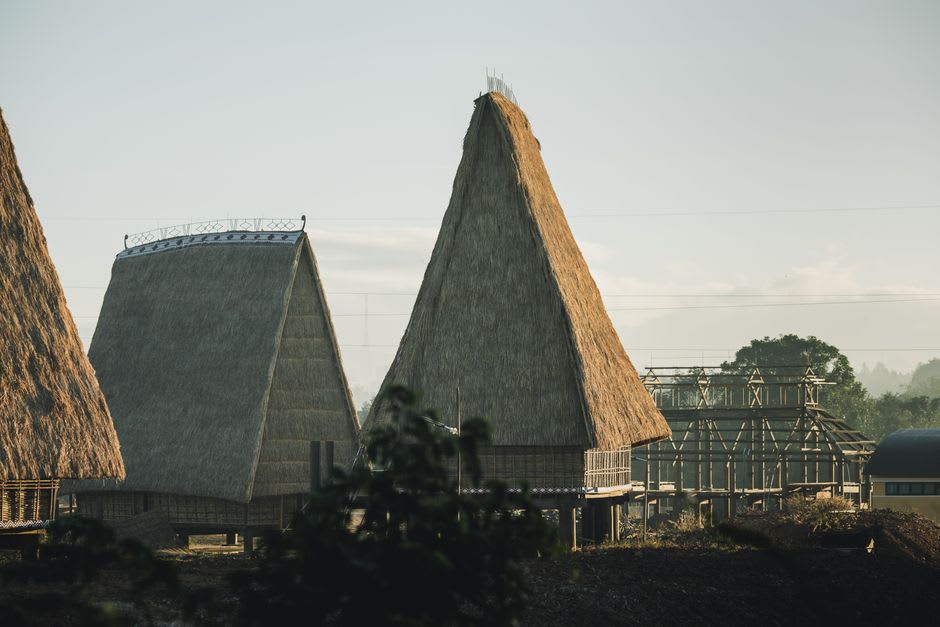
Nias has also been repeatedly, brutally tested by the earth beneath it. The December 2004 tsunami hit the island hard, and just three months later, in March 2005, a magnitude 8.6 earthquake killed hundreds more and leveled entire coastal towns — Nias sits directly on the same subduction zone that produced the Boxing Day disaster. Gunungsitoli, the main town, still shows the seams of that rebuilding: newer concrete alongside older wood, a visible layer of history that nobody’s trying to hide. It gives the island a resilience that’s easy to sense even if you never ask about it directly — people here have rebuilt more than once and kept the traditions that mattered anyway.
When to go: May through September for the best surf swells and driest weather; the shoulder months of April and October offer smaller crowds with still-decent waves if you’re more interested in the villages than the barrels.