Makassar
"I watched men load a wooden ship the same way their grandfathers did, and nobody there thought it was remarkable."
Sulawesi's trading capital, where Dutch cannons still point at a harbor full of wooden schooners that never stopped sailing.
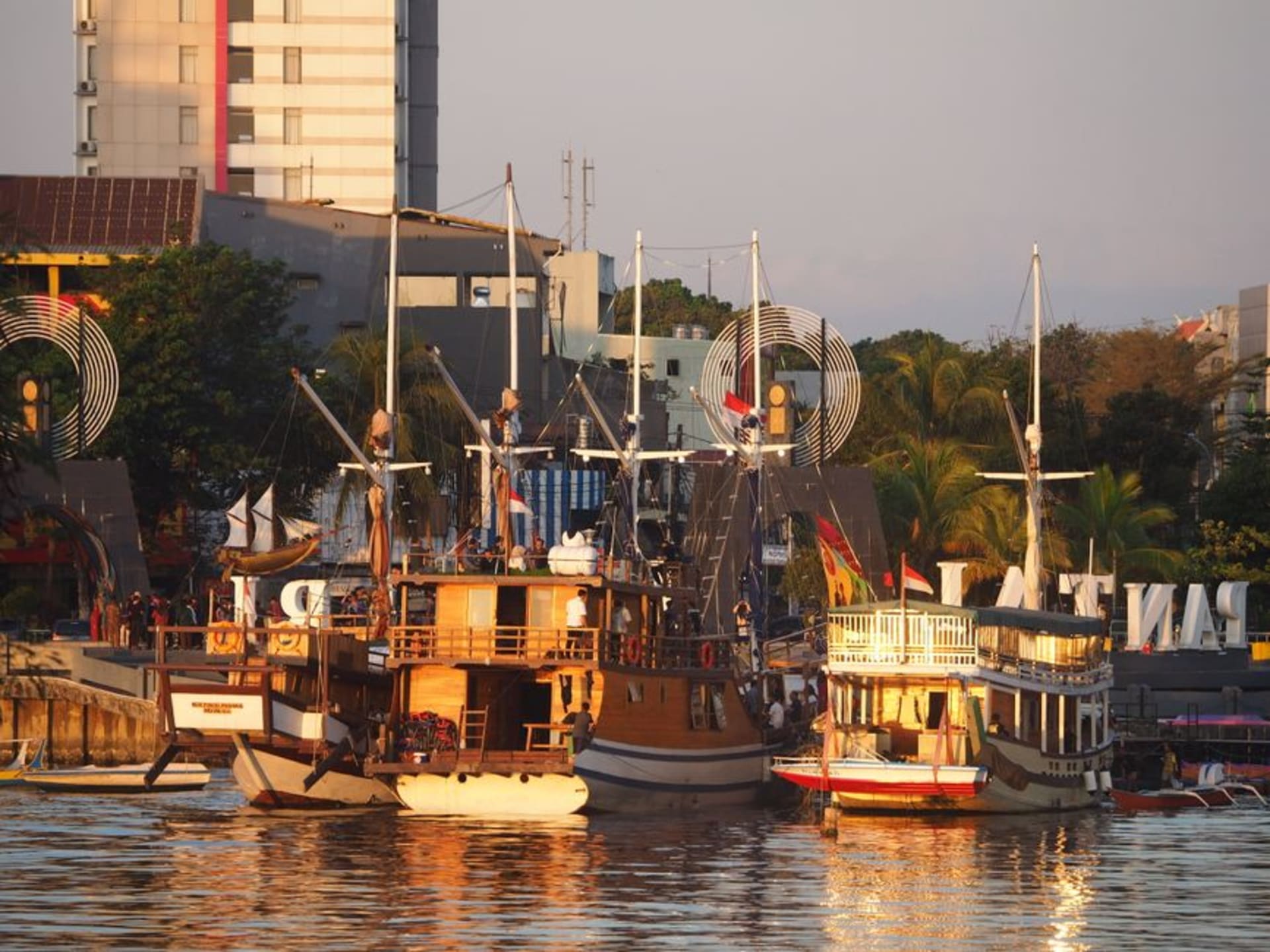
Makassar surprised me by feeling less like a gateway to Sulawesi and more like a destination that happens to also be a gateway. This is a city of well over a million people on the southwestern tip of the island, and its whole identity is built on trade — it has been a port for spices, textiles, and people moving between the archipelago’s islands for well over four centuries, first as the seat of the Gowa-Tallo sultanate, then as a fiercely contested prize for the Dutch, Portuguese, and British, all of whom recognized what the local Bugis and Makassarese seafarers already knew: whoever controlled this harbor controlled the eastern half of the archipelago’s trade.
Fort Rotterdam is where that history sits most visibly. Originally built by the Gowa sultanate in the 16th century and shaped like a turtle facing the sea — a design the sultanate reportedly chose deliberately, since Gowa’s cosmology held turtles sacred — it was seized and rebuilt by the Dutch East India Company after the brutal Bongaya Treaty of 1667, which forced the sultanate to submit and effectively opened the region to Dutch control. The fort’s thick coral-stone walls and Dutch colonial buildings inside now house a museum, and walking its ramparts at sunset, with the Makassar Strait turning gold beyond the walls, you can feel the layered history without a single placard explaining it.
Paotere and the ships that never went obsolete
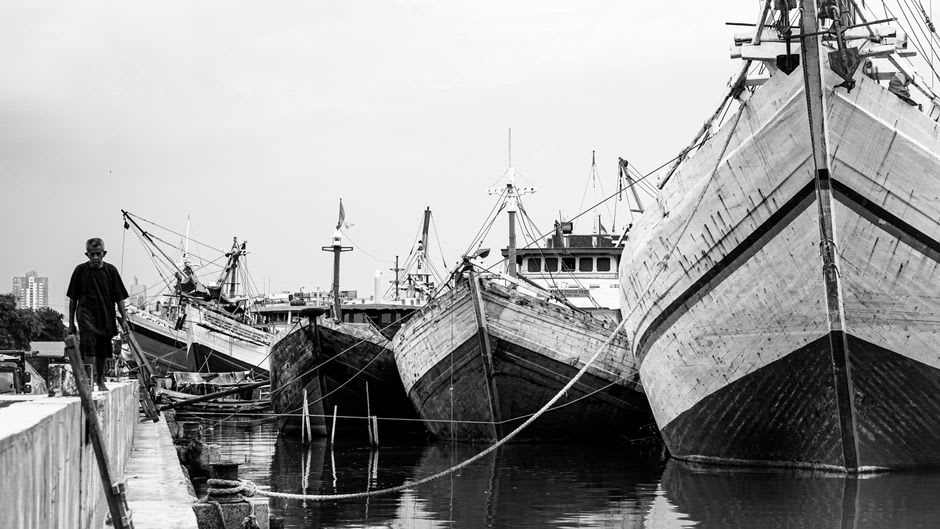
What pulled me in more than the fort, though, was Paotere harbor, a working port a short drive north of downtown where Bugis pinisi schooners still load and unload cargo by hand exactly as they have for generations. The pinisi — a two-masted wooden sailing ship, traditionally built without nails on the island of Tanah Beru in South Sulawesi and recognized by UNESCO as an element of intangible cultural heritage — remains a genuine working vessel here, not a museum piece. I stood on the dock watching a line of men carry sacks of cement up a single wooden plank onto a hull taller than a house, singing something rhythmic to keep pace, and it was obvious this wasn’t staged for anyone. The Bugis are famously among Southeast Asia’s most accomplished maritime traders and navigators, historically sailing as far as northern Australia to trade with Aboriginal communities long before European contact, and Paotere still carries that inheritance in its bones.
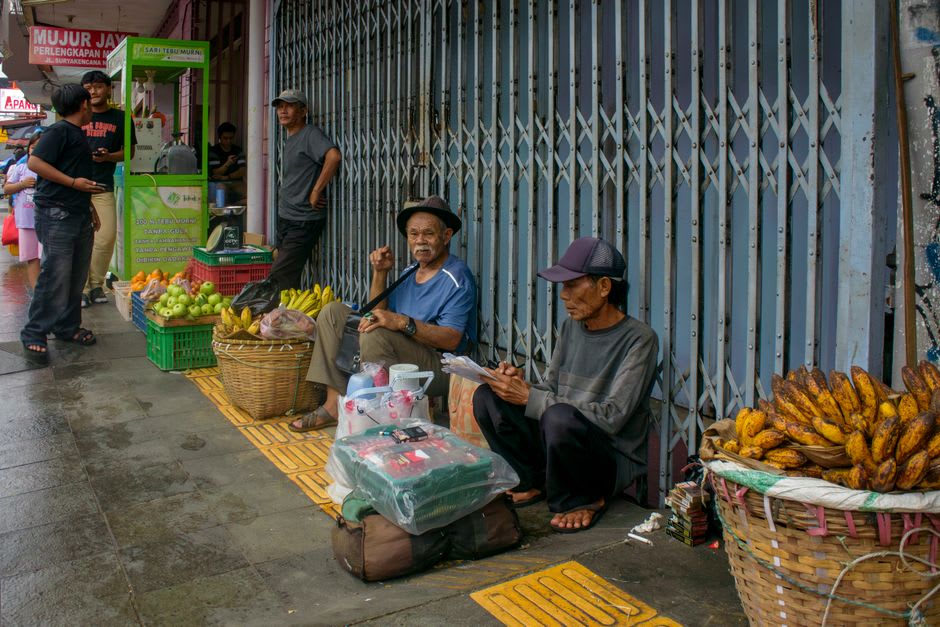
Food in Makassar deserves its own essay. Coto Makassar, a rich beef and offal soup simmered for hours with ground toasted rice and a dense list of spices, is the dish locals will insist you try first, usually eaten with ketupat at a warung that’s been in the same family for decades. Pisang epe, grilled and flattened banana drizzled with palm sugar sauce, is sold along Losari Beach’s waterfront in the evening as the sun drops into the strait, and eating one there while the city’s promenade fills with families and street vendors is as good an introduction to Makassar’s evening rhythm as any.
Makassar rarely makes it onto first-time Indonesia itineraries, overshadowed by Bali and the trekking routes of Tana Toraja further north. But it’s the hinge the rest of Sulawesi swings on, and a couple of days here — fort, harbor, food, that long golden waterfront — gave me a version of Indonesian history that felt lived-in rather than curated.
When to go: May through September is driest and most pleasant for walking the waterfront and Fort Rotterdam; avoid the wettest stretch from December through February, when Losari’s evening crowds thin out considerably.