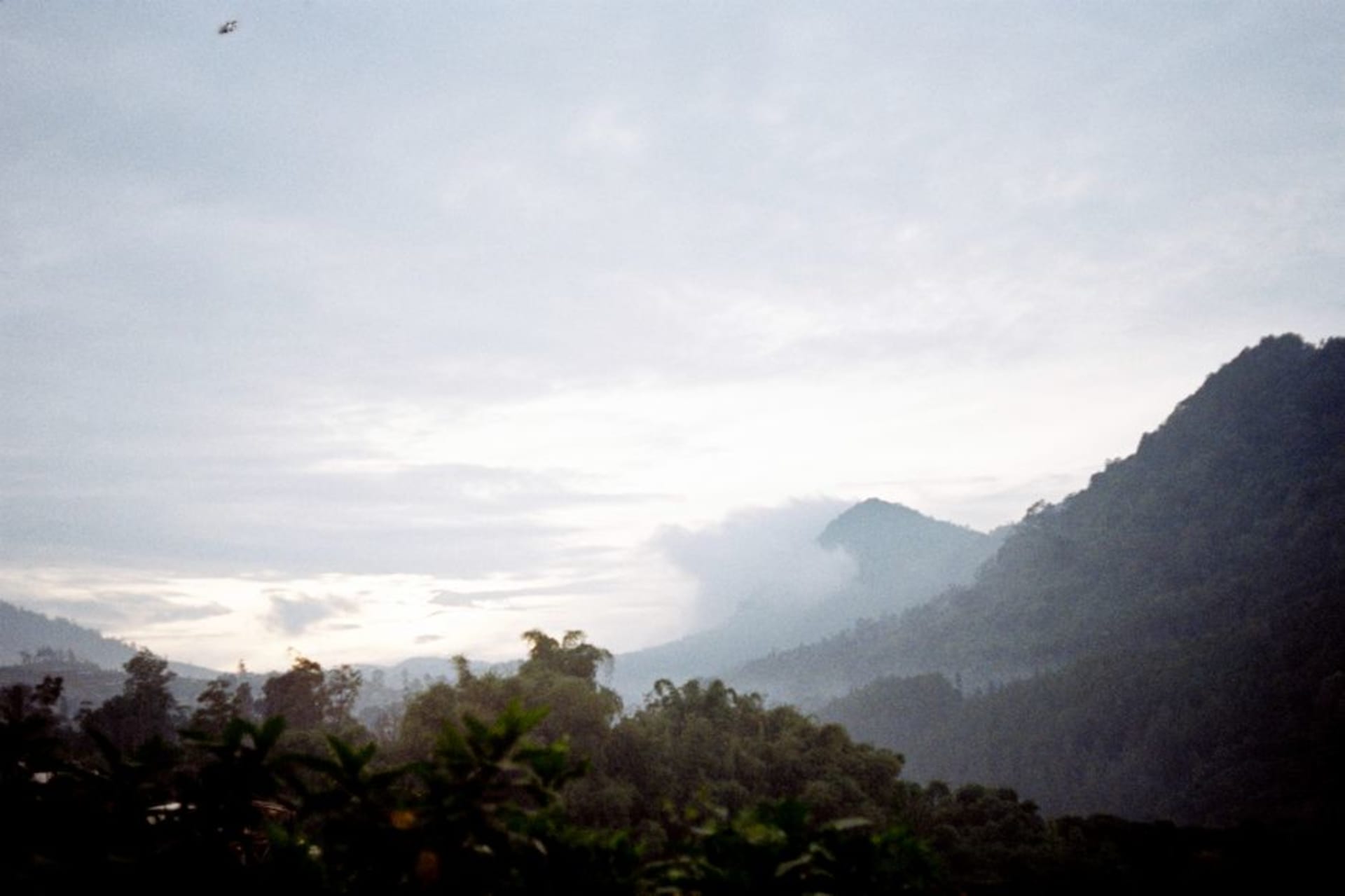
Lembang
"Bandung's weekend lungs — a place people go to remember what cold air feels like."
A highland town above Bandung where the air turns cool, the volcano still breathes sulfur, and every weekend the city comes up to remember what altitude feels like.
I drove up from Bandung on a Friday evening, which turned out to be a mistake — the road to Lembang funnels the entire city’s traffic into a single climbing artery, and what should have been forty minutes took two hours of inching past fruit stalls and strawberry farms lit up in neon. But somewhere past the last roundabout, the windows fogged from the temperature drop, and I understood immediately why generations of Bandung residents have treated this stretch of the Parahyangan highlands as their private escape hatch. Lembang sits at roughly 1,300 meters, cool enough that colonial-era Dutch planters built country villas here in the early twentieth century, the same instinct that gave Bandung itself its nickname of Paris van Java. The hill air still carries that faint eucalyptus sting from the pine forests, and locals wear jackets in the evening the way people twenty minutes downhill never need to.
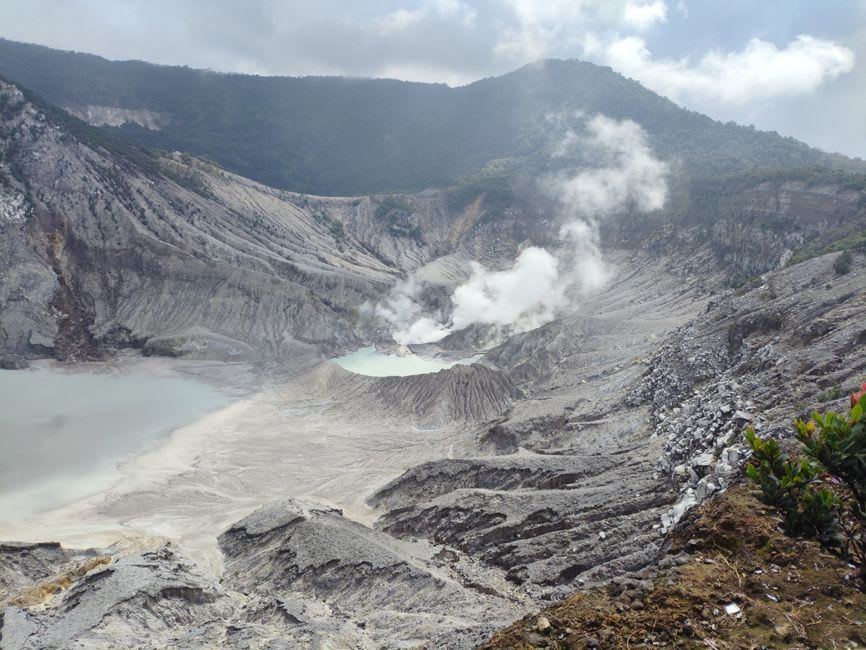
The obvious pull is Tangkuban Perahu, the volcano whose overturned-boat silhouette gives it its name and whose folklore — the legend of Sangkuriang, tricked into failing to marry his own mother before dawn, kicking over the half-built boat in fury — is recited to every busload of schoolchildren that visits. The crater itself, Kawah Ratu, is a walkable rim above a floor stained yellow-white with sulfur deposits, steam hissing from vents that remind you this is an active stratovolcano, not scenery. I went early, before the tour groups, when the crater was still wrapped in cloud that occasionally tore open to show the full scale of the bowl below.
Farms, forests, and the floating market
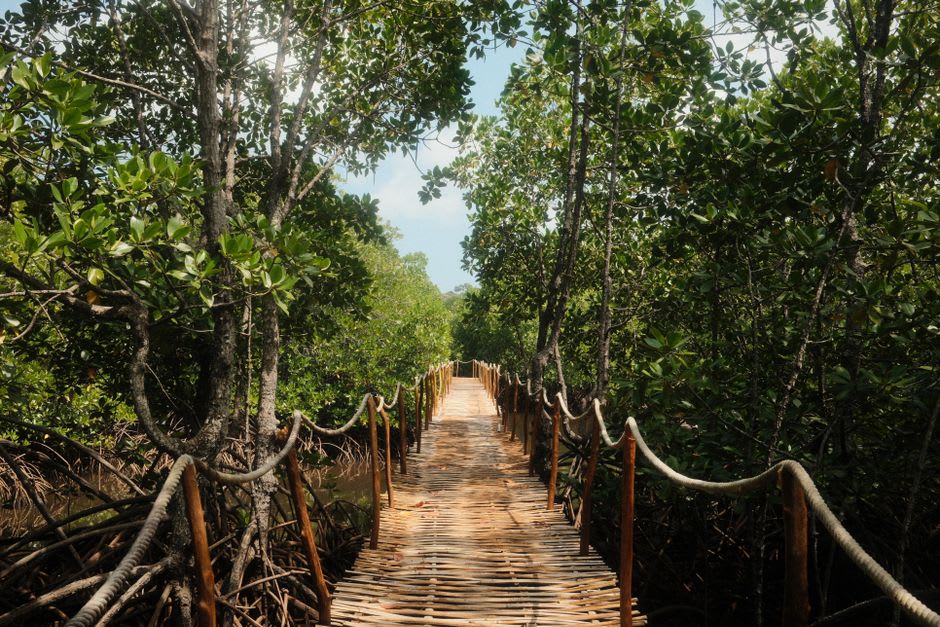
What actually kept me around for three days wasn’t the volcano — it was the layer of agrotourism that has grown up around Lembang’s cool soil. This is strawberry country, and roadside stands sell punnets picked that morning alongside dodol and other West Javanese sweets. Farmhouse Susu Lembang, a De Ranch-style dairy attraction built around a faux-European village, draws Jakarta families by the busload, and I’ll admit I found it more charming than I expected — there’s something disarming about seeing goats in sweaters against a backdrop of actual misty hills. Floating Market Lembang, built around a small lake in Kampung Gede Bagendit, lets you buy food from wooden boats paddled between docks, a format borrowed loosely from the river markets of Kalimantan but reinvented here as a purely West Javanese weekend outing. Nearby, the bamboo forest at Orchid Forest Cikole put me under a canopy that felt closer to the pine-and-bamboo hill stations of the Indian subcontinent than anything I’d associated with tropical Indonesia — a reminder of how much climate variety this archipelago holds within a single island.
Evenings belong to grilled corn sellers and the smell of wood smoke drifting through the pine trees, and I spent one night simply parked at a warung above the valley watching Bandung’s lights spread out below like a second, lower sky. Lembang doesn’t perform for outsiders the way some destinations do — it exists first as a release valve for a crowded metropolis, and visiting it feels like being let in on a very ordinary, very well-loved local habit.
When to go: May to September gives the driest, clearest weather for volcano visibility; weekdays spare you the worst of the Bandung weekend traffic that clogs the road up.