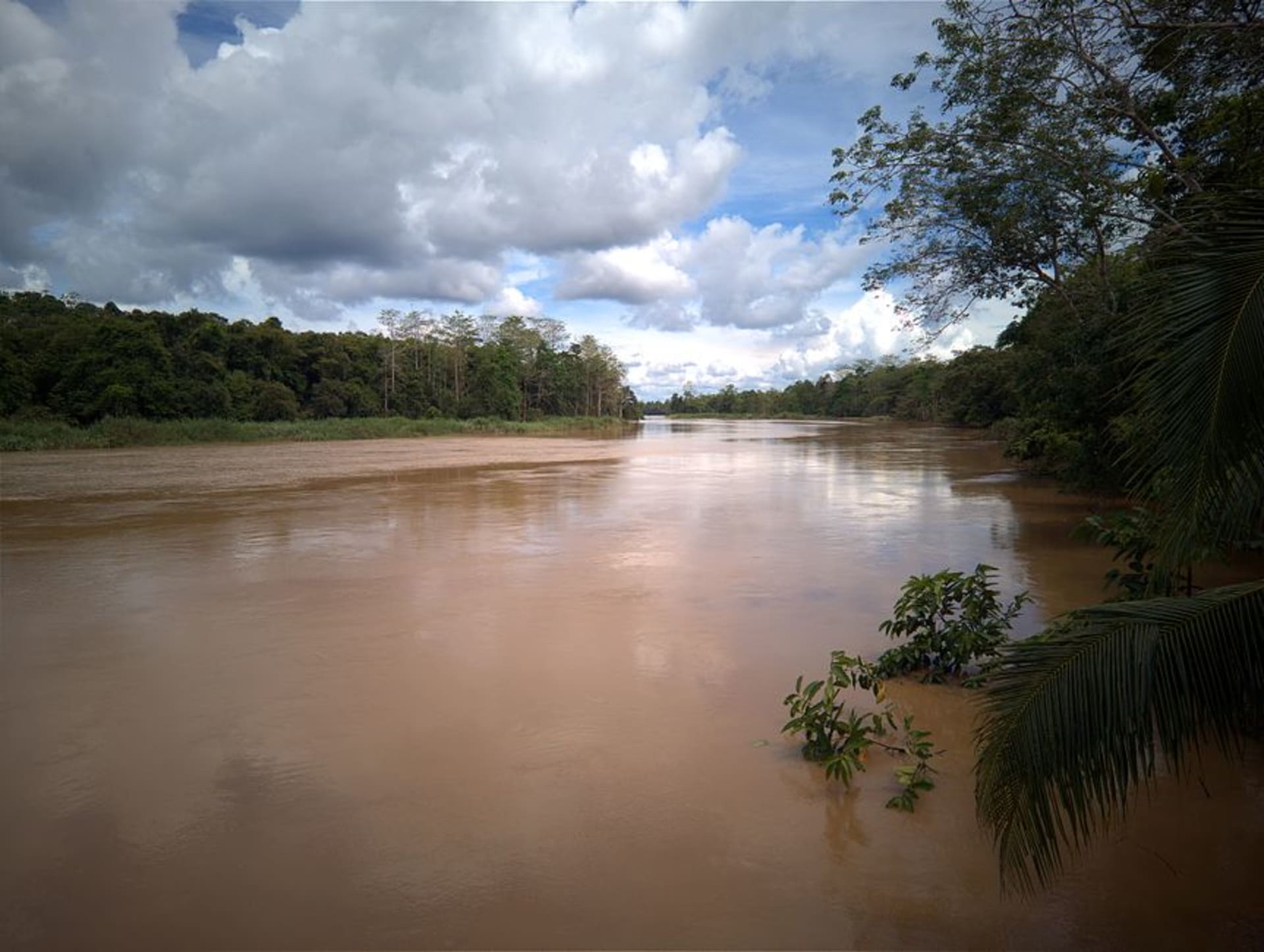
Kutai National Park
"The forest that has to fight for its own borders every year, and mostly wins."
The lowland forest everyone forgets exists — coal mines on one border, orangutans and orchids somehow surviving on the other.
Kutai National Park sits in an odd, uncomfortable spot on the map of East Kalimantan — squeezed between the coal-mining boomtown of Sangatta and the industrial reach of Bontang, with a highway literally bisecting the park itself. I went in expecting the compromised, half-degraded forest that geography seemed to promise, and found something more complicated: a genuinely important stretch of lowland dipterocarp rainforest, one of the last of its kind at this elevation on Borneo, that has been logged, burned, and squeezed by settlement for decades and has stubbornly refused to disappear.
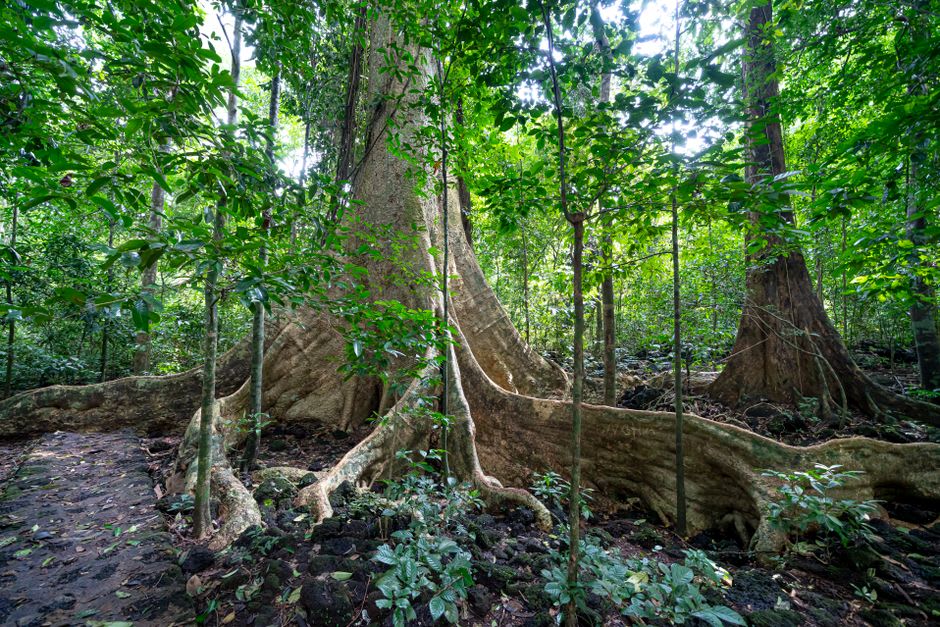
Established in 1982 and covering roughly 200,000 hectares, Kutai is one of the few remaining habitats for wild orangutans living in true lowland forest rather than the swampier terrain of places like Tanjung Puting. That distinction matters more than it sounds — lowland dipterocarp forest, dominated by towering hardwood trees that can reach over 60 meters and only flower and fruit in synchronized, unpredictable cycles called mast events, supports an entirely different ecology, and much of Borneo’s version of it outside protected areas has already been converted to plantation. What’s left inside Kutai’s boundaries is a genuine relic, and it shows in the canopy: trees old enough that their trunks are wider than I could reach around, buttressed roots taller than a person, a quiet up top broken by the occasional crash of a hornbill or gibbon moving through.
Prevab and Mentoko, the forest’s working heart
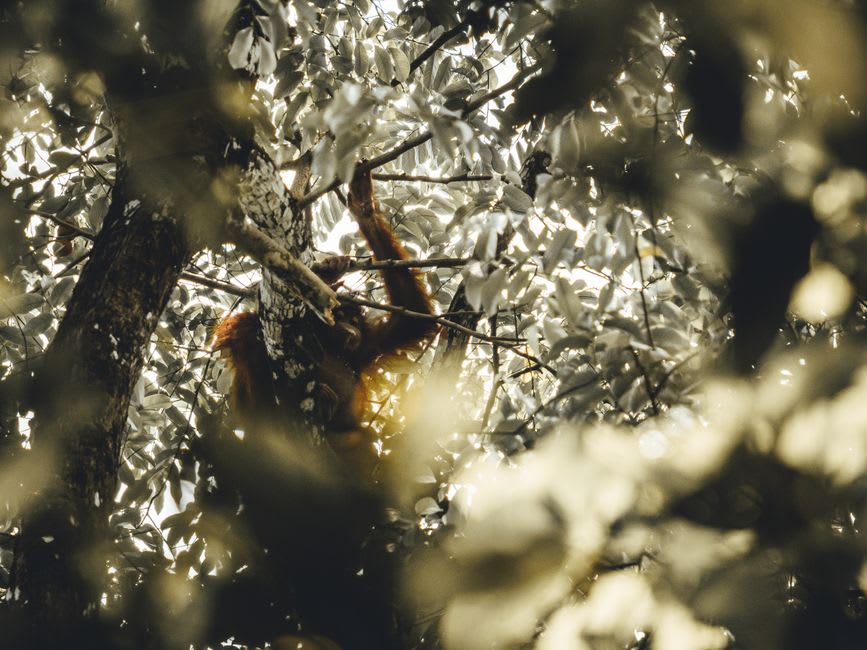
Most visits center on Prevab, a research and guard post that also functions as the park’s main access point, and the nearby Mentoko area, where a long-running orangutan research station has tracked individuals for decades. Guides here — often former loggers or hunters retrained into conservation work, a quietly remarkable transition in itself — know individual animals by name and habit, pointing out nests built fresh the night before in the fork of a tree, thirty, forty feet up, abandoned by morning because orangutans rarely sleep in the same spot twice. I watched one female work through a strangler fig for the better part of an hour, entirely unbothered by us, which felt like the whole point.
Kutai is also home to Borneo’s black orchid, Coelogyne pandurata, a genuinely rare, greenish-black bloom that grows on tree trunks in humid pockets of the forest and has become something of an unofficial park symbol — I never actually found one in flower, which locals told me is fairly typical; the plant blooms unpredictably and briefly. What I did find, walking the Mentoko trail at dawn, were proboscis monkeys moving through the mangrove fringe near the Sangatta River, red leaf monkeys crashing overhead, and a stillness that felt earned given how hard this particular patch of forest has had to fight to still be standing, hemmed in by coal concessions and periodic encroachment fires that have shrunk the park’s effective forest cover significantly since the 1980s.
There’s an honesty to visiting Kutai that I didn’t feel in more polished parks. You’re not shielded from the pressures the forest faces — you drive past mining infrastructure to get there, you hear the difference between primary forest and regrowth on a five-minute walk. But that friction made the intact parts feel more precious, not less.
When to go: The dry season from June through September offers the most reliable trail access and wildlife activity; try to avoid the heavy rains of December through February, when Prevab’s access roads can become difficult to pass.