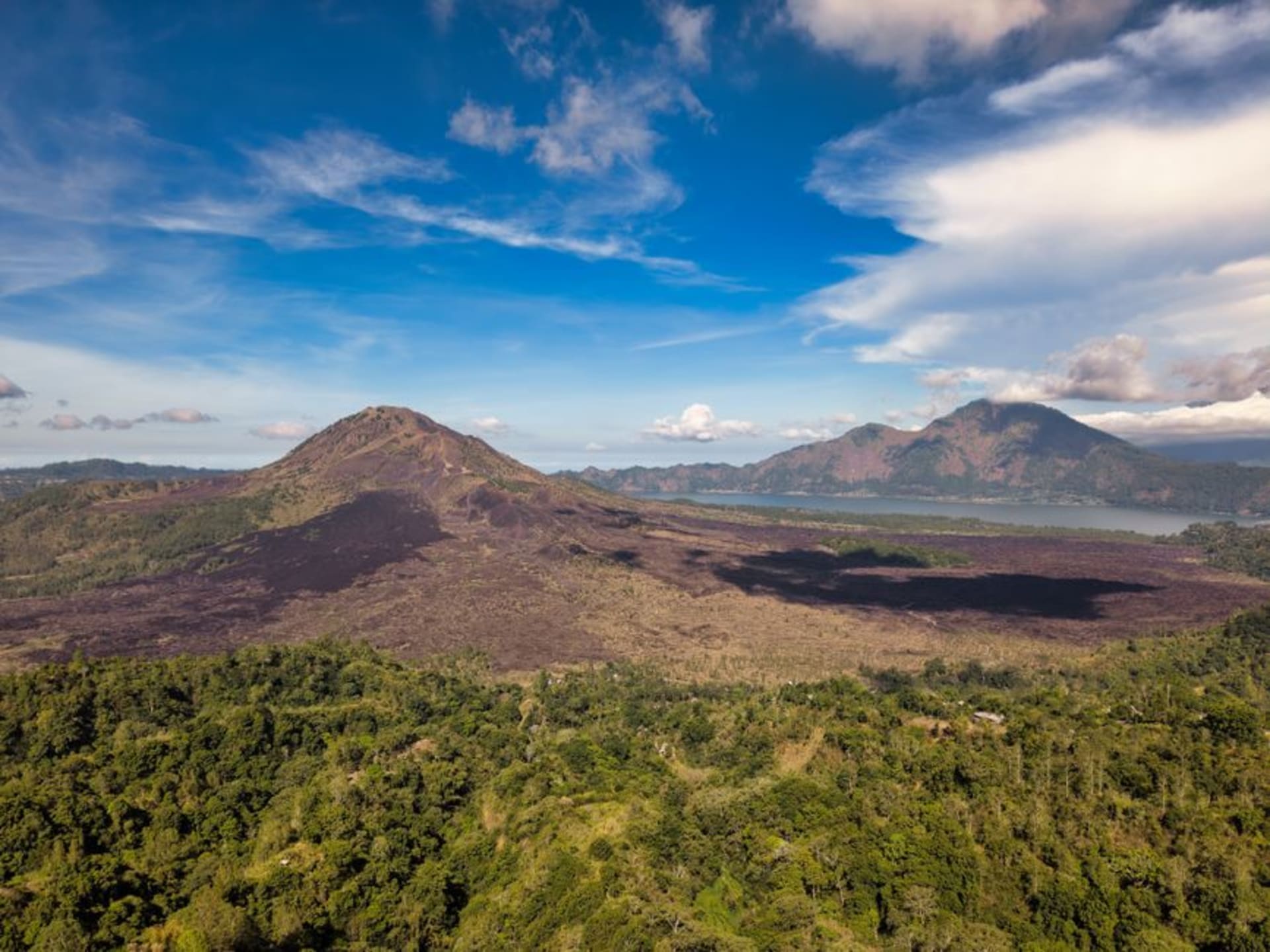
A rim of cold air and black lava where Bali stops pretending to be a beach and shows you its volcano instead.
I drove up to Kintamani expecting a viewpoint and got a change of climate instead. The road climbs out of the rice-terrace haze of central Bali, past Tegallalang’s tourist-choked paddies, and just keeps climbing, until the air thins and cools and the vegetation changes from tropical density to something sparser, almost alpine. By the time I reached the caldera rim, I’d pulled on the fleece I’d been carrying uselessly through three weeks of Balinese heat. That temperature drop is the first clue that Kintamani sits inside something enormous: a volcanic caldera roughly 13.8 kilometers across, formed by an eruption so massive — around 20,000 years ago — that it’s one of the largest known volcanic events on the planet.
Mount Batur, the still-active cone rising from the caldera floor, has erupted more than twenty times since the 19th century, most recently in 2000. It doesn’t look angry from the rim — it looks almost gentle, a symmetrical dark mound sitting beside the sapphire crescent of Lake Batur, Bali’s largest lake and the source of much of the island’s irrigation water, feeding an ancient subak system that farmers still manage through temple-based cooperatives. Locals talk about the mountain the way you’d talk about a difficult relative: respected, occasionally feared, never fully trusted. The 1926 eruption buried the original village of Batur under lava, sparing only the temple, Pura Ulun Danu Batur — an event villagers still cite as proof that the resident goddess, Dewi Danu, chose to protect her own sanctuary. The temple was rebuilt on the crater rim and remains one of Bali’s nine directional temples, a genuinely important pilgrimage site rather than a photo op, even though most visitors treat it as one.
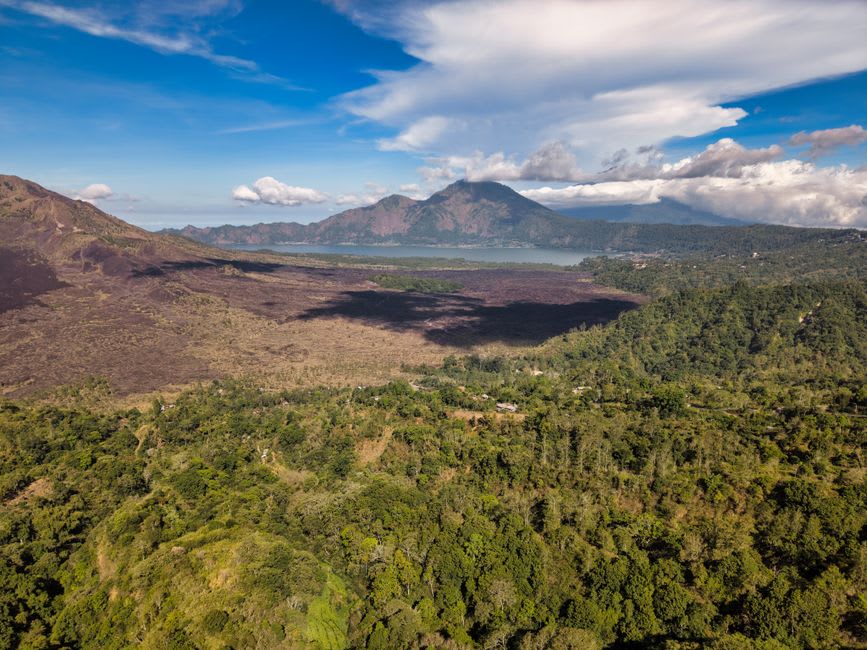
The sunrise trek up Batur has become something of a pilgrimage circuit of its own — headlamp lines snaking up the black scree in the pre-dawn dark, guides carrying thermoses of coffee brewed over the volcano’s own residual heat, boiled eggs cooked in steam vents near the summit. I’ll admit I found the crowds at the top faintly absurd, forty people jostling for the same photo of a sunrise that doesn’t care who’s watching it. What stayed with me more was the walk down, when the crowd thinned and I could actually look at the terrain: fields of hardened lava from the last major flow, black and cracked and utterly barren against the green of the older, more forgiving slopes nearby.
The villages the tourists skip
Kintamani isn’t just the viewpoint — it’s a whole highland district, and the villages scattered across the caldera rim are where the place gets interesting beyond the postcard. Trunyan, reachable only by boat across the lake, is home to the Bali Aga — the “original Balinese,” descendants of the island’s pre-Majapahit inhabitants who never fully absorbed the Hindu-Javanese culture that reshaped the rest of the island in the 14th and 15th centuries. Their cemetery is unlike anything else I saw in Indonesia: bodies are laid out under a sacred taru menyan tree rather than cremated, and the tree’s fragrance is said to neutralize the smell of decomposition. It’s not a place to gawk — boatmen will take you if asked respectfully, but treat it as the sacred site it is, not a curiosity stop.
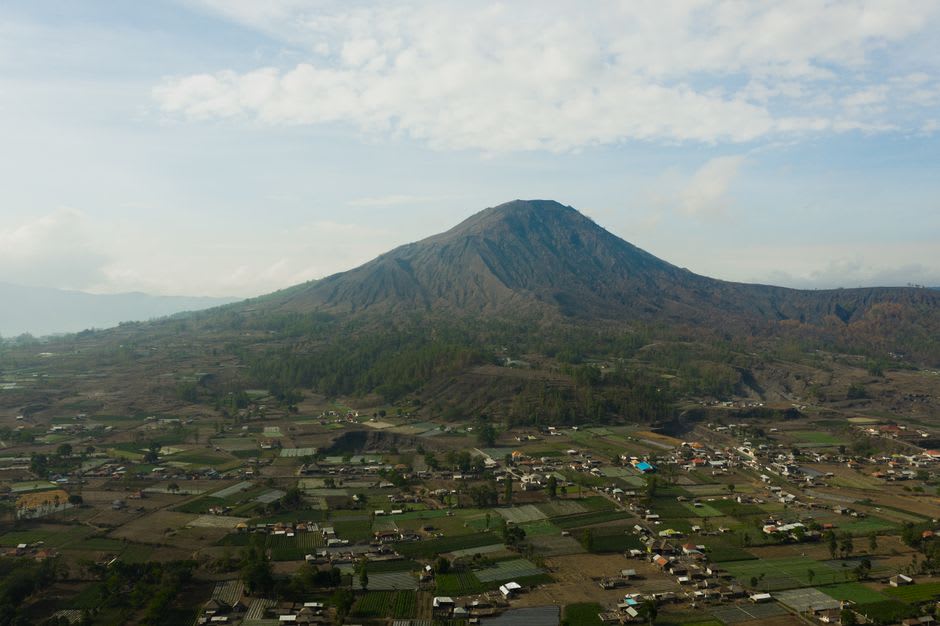
The agriculture up here is its own reward. Volcanic soil is famously fertile, and Kintamani’s slopes produce citrus — the Kintamani orange, a small, sweet, thin-skinned variety sold in nets along the roadside — along with coffee. This is the heart of Bali’s arabica coffee region, grown at elevation under the volcanic ash that makes the beans distinctive. I stopped at a small family-run plot where the owner walked me through raw cherries to roasted beans in about twenty minutes, no ceremony, no upsell, just genuine pride in what the mountain lets them grow.
When to go: April through October for dry, clear skies — cloud cover from the wet season can swallow the whole caldera view. Sunrise treks require a 2am–3am start regardless of season; bring warm layers, since the rim sits at roughly 1,500 meters and mornings can dip into the low teens Celsius.