Harau Valley
"Yosemite, if Yosemite were farmed by Minangkabau grandmothers and nobody had told the rest of the world."
A green canyon in West Sumatra where sheer granite walls drop straight into rice paddies, and nobody outside Indonesia seems to know it exists.
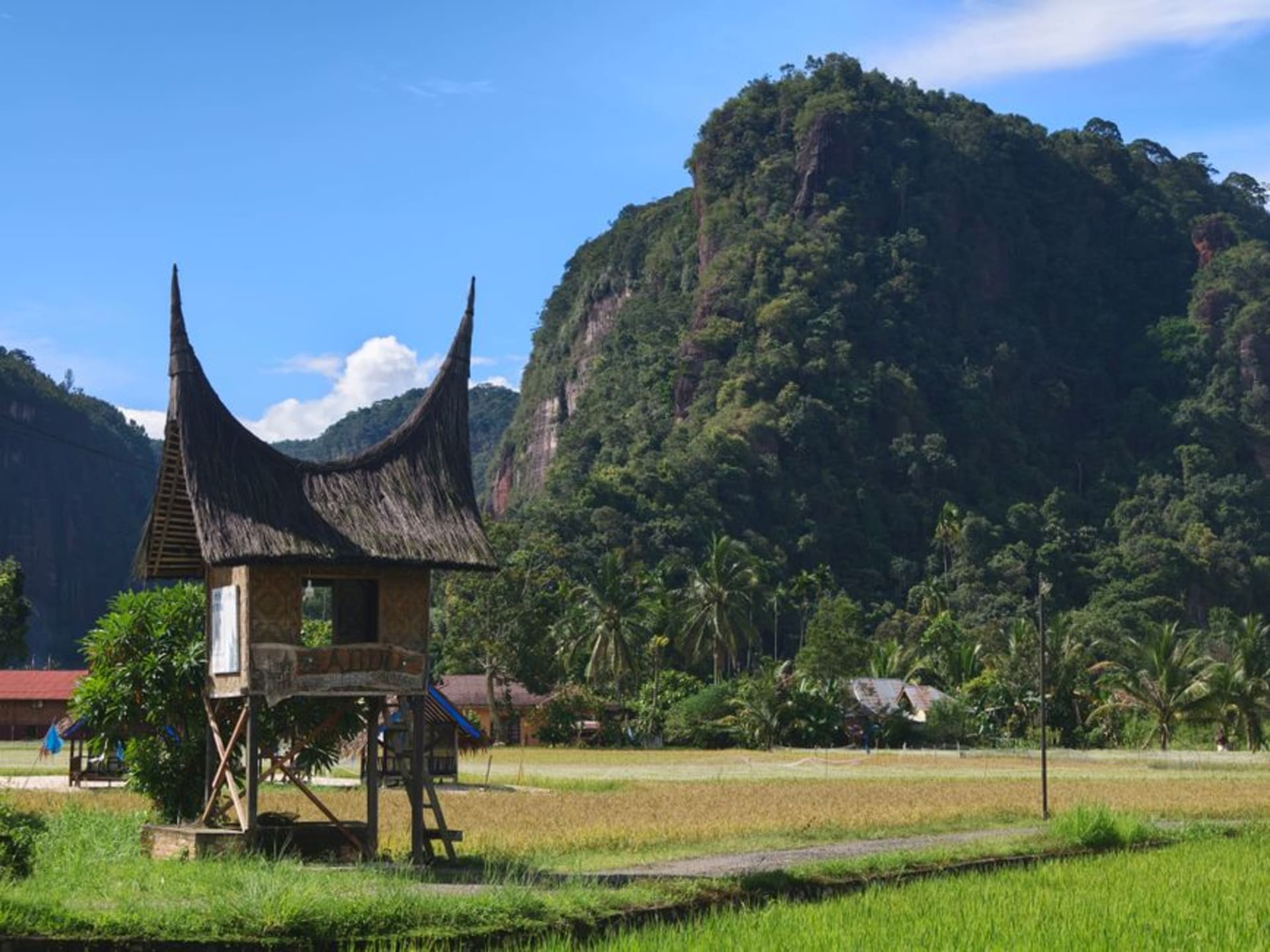
I kept doing the math wrong in Harau Valley. My eyes told me the cliffs were maybe eighty meters high, but then a truck would pass on the road below and register as a speck, and I’d have to recalibrate — these walls are closer to three hundred meters in places, sheer granite and basalt rearing up out of a valley floor so flat and so green it looks laid out with a ruler. Locals call it the Grand Canyon of Sumatra, and for once the comparison undersells the difference: Harau isn’t a dry gash in the earth, it’s a canyon that someone has been quietly farming for a thousand years, terrace by terrace, without ever thinking to advertise it.
The valley sits in the Lima Puluh Kota regency of West Sumatra, a couple of hours from Bukittinggi, and it is Minangkabau country through and through — which means the rice fields are worked communally, the land passes down through the maternal line, and the roofs of the houses at the valley’s edges curve up at the corners like buffalo horns, a shape called gonjong that shows up on every traditional Minangkabau structure I saw in the region. I stayed in a homestay run by a family who’d farmed the same plot for three generations, and in the early morning I watched the woman of the house wade out into the paddy with a woven basket, moving through mist that hadn’t yet burned off the cliff faces, while roosters somewhere behind me argued about whose turn it was to announce the day.
Waterfalls and the walls that hold them
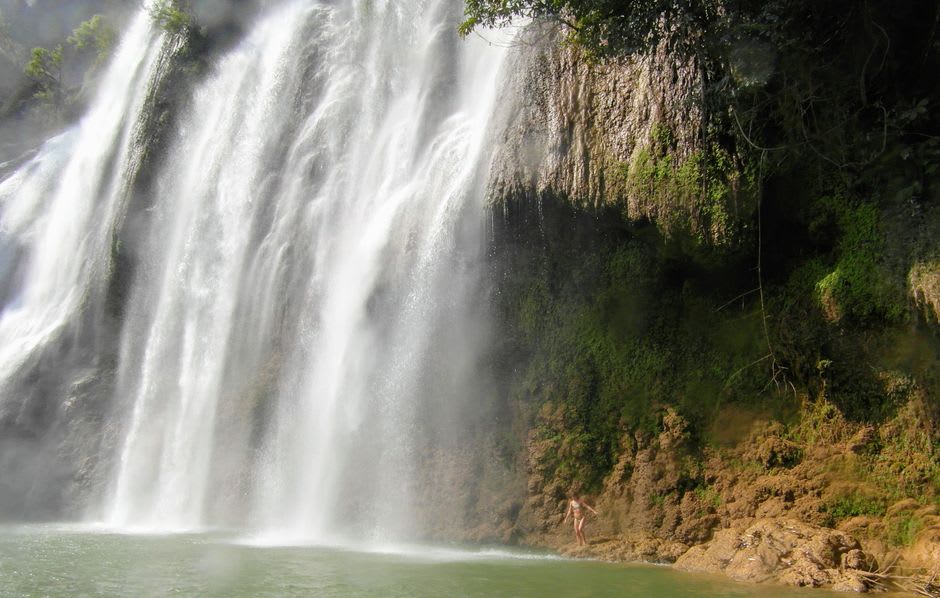
Two waterfalls anchor the valley — Sarasah Bunta and Sarasah Aka Barayun — both dropping from the lip of the escarpment into pools cool enough to make you gasp. I went to Sarasah Bunta in the late afternoon, when the light had dropped low enough to catch the spray and throw a faint rainbow across the rock, and had the place to myself except for two teenage boys who’d ridden out on a single motorbike and were taking turns doing cannonballs off a boulder. There’s a rock-climbing scene here too, low-key and mostly local — the granite is solid enough that a handful of routes have been bolted into the cliff face near Sarasah Bunta, though you’ll need to ask around in the village to find someone who can point you to them, since there’s no formal outfit running it.
What stayed with me longest wasn’t the cliffs, though — it was how ordinary the extraordinary was to everyone living there. I asked my homestay host if she ever got tired of the view. She looked at me like I’d asked if she got tired of breathing, then laughed and said the cliffs were good for one thing above all: they kept the wind off the rice. That’s Harau’s whole character in a sentence. A landscape dramatic enough to anchor a national park, treated by the people who actually live inside it as infrastructure.
The whole area is protected as part of the Harau Nature Reserve, and there’s a network of caves too — some used historically as Japanese defensive tunnels during the occupation, cool black mouths in the rock that the local kids treat as a dare more than a destination. I didn’t go in. I’d come for the light on the cliffs at dusk, and I got exactly that: the granite turning from gray to rose to a deep bruised purple while the calls to prayer drifted up from two directions at once, echoing off rock walls that have been listening to this valley’s daily rhythms for longer than anyone can measure.
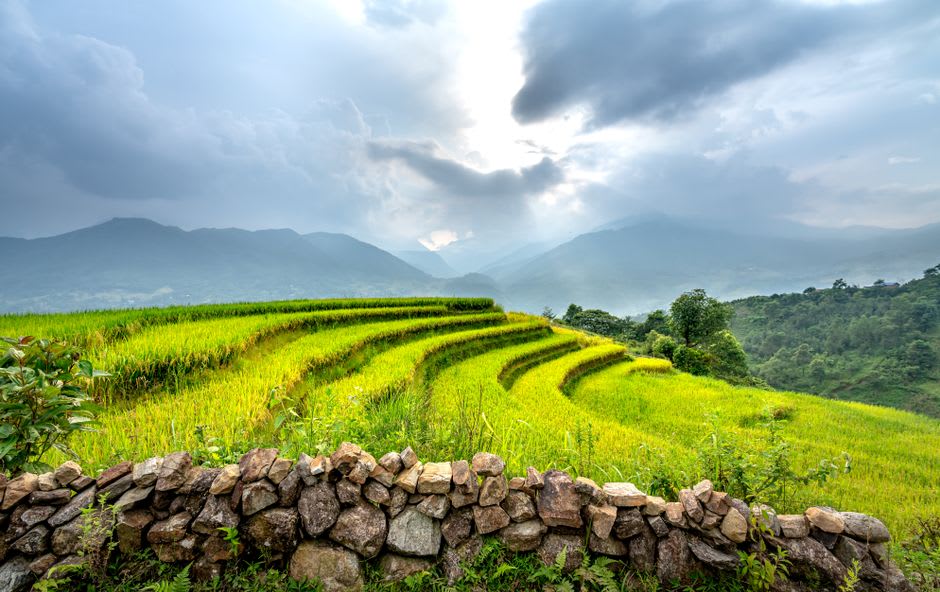
When to go: May through September for the driest weather and clearest cliff views; the rice terraces are at their most vivid green shortly after planting, typically a few weeks into the wet season around October–November.