Gili Meno
"The island where nothing happens, and that turns out to be the entire point."
The smallest, sleepiest of the three Gili Islands — no cars, no motorbikes, and a lake full of sacred turtles at its center.
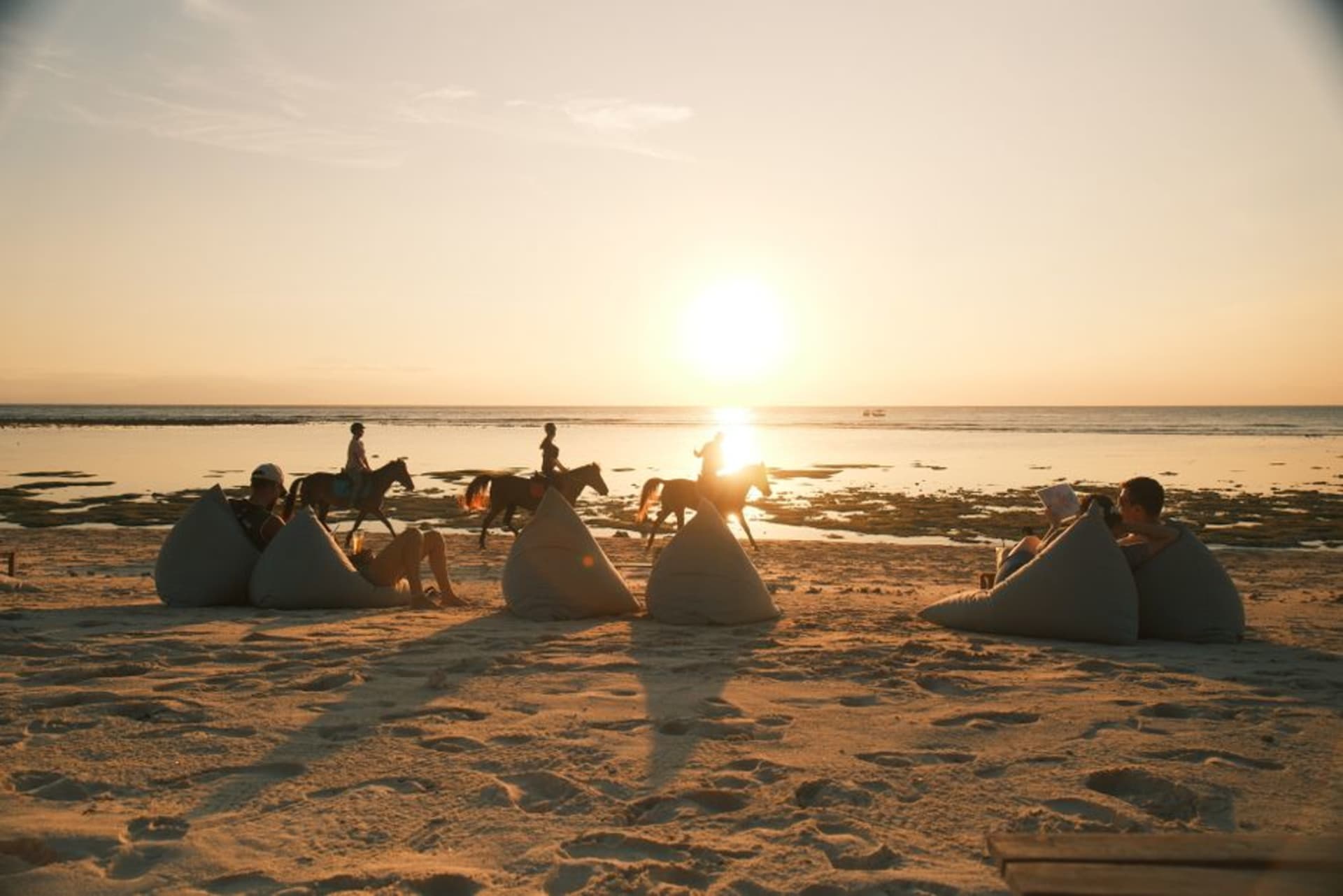
I went to Gili Meno expecting boredom and found something closer to relief. Of the three Gili Islands off Lombok’s northwest coast — Trawangan, Air, and Meno — Trawangan gets the nightlife crowd, Air sits comfortably in between, and Meno gets almost nobody, which is exactly why I stayed four extra nights. There are no motorized vehicles anywhere on the island, a rule shared across all three Gilis, so the only traffic is horse-drawn cidomo carts and bicycles wobbling over sandy paths. You can walk the entire coastline in under two hours, and I did it twice in one afternoon just to feel the scale of the place settle into my legs.
The island’s interior holds a genuine oddity: a brackish saltwater lake, Danau Meno, ringed by coconut palms and populated by fruit bats that hang in the trees by the hundreds at dusk, screeching awake as the light drops. Locals consider the lake somewhat haunted, and after watching a black cloud of bats lift off the canopy at once, I understood the instinct. It’s not on any postcard, but it’s the thing I think about most when I remember Meno — that and the eerie quiet of walking past it alone near sunset.
The turtle sanctuary and the reef
Gili Meno’s real claim to fame is conservation. A small turtle sanctuary on the island’s east side rears hatchlings from eggs collected around the Gilis, releasing them once they’re large enough to have a fighting chance against predators. I paid a token donation to see the tanks — nothing fancy, just concrete pools with turtles of varying ages cycling through — but knowing the release program has meaningfully boosted green and hawksbill turtle numbers in the surrounding reef made the snorkeling that followed feel different. I swam out from the northeast shore near Meno Wall and drifted alongside a hawksbill grazing on soft coral for a good ten minutes, close enough to see the individual scutes on its shell, before it lost interest in me and disappeared into deeper water.

There’s also an underwater sculpture installation off the island, part of a broader Gili artificial reef project meant to encourage coral growth on submerged frames — human figures and geometric shapes slowly disappearing under algae and polyps. It’s strange and a little melancholy to snorkel through, like visiting ruins that are being built rather than lost.
Sunset side, sunrise side
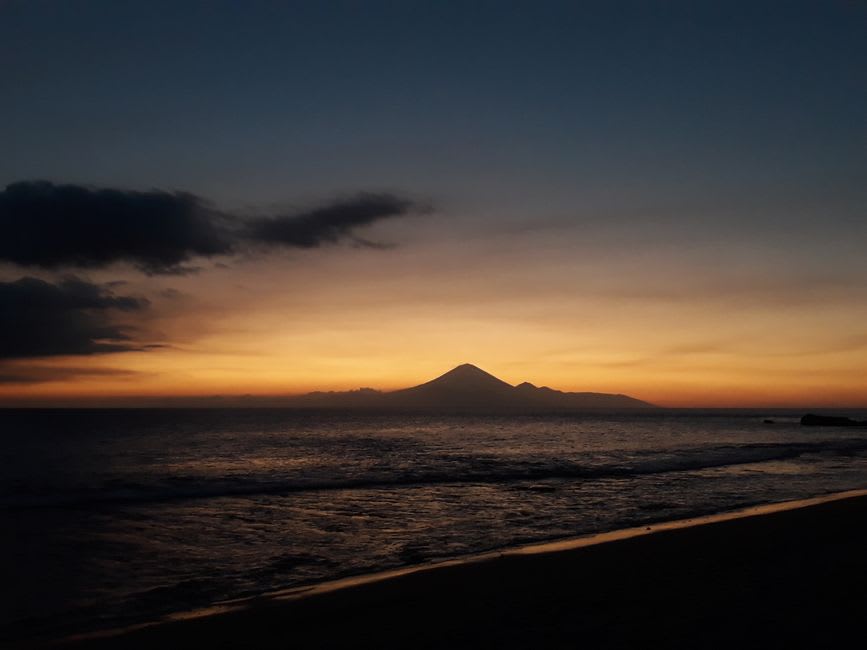
Because Meno runs roughly north-south, you get a genuine choice of where to watch the sky change. The west coast faces Bali’s Mount Agung across the strait, and sunset there turns the volcano into a black paper cutout against orange and violet — I sat on the sand with a warm Bintang more evenings than I’ll admit and never got tired of it. The east coast, quieter still, faces Lombok’s own volcanic silhouette, Rinjani, and catches the early light instead.
Accommodation on Meno is deliberately limited — a scattering of simple guesthouses and a couple of higher-end eco-resorts, nothing resembling the strip of bars on Trawangan. Electricity can still be spotty depending on where you stay, which felt like an inconvenience for about a day and then like the whole reason to be there. Boats from Bangsal harbor on Lombok, or the fast boats direct from Bali’s Padang Bai and Serangan ports, are the only way in — there’s no airport, obviously, and that’s the last barrier keeping the island this quiet.
When to go: May through September for the driest weather and calmest boat crossings; visibility for snorkeling is best from April to November before the wet season stirs up the water.