Garut
"The valley where seven volcanoes decided to keep watch over a lake full of ghosts."
A valley ringed by volcanoes where hot springs, dodol candy, and a lake full of legend have kept Bandung's tourists coming for over a century.
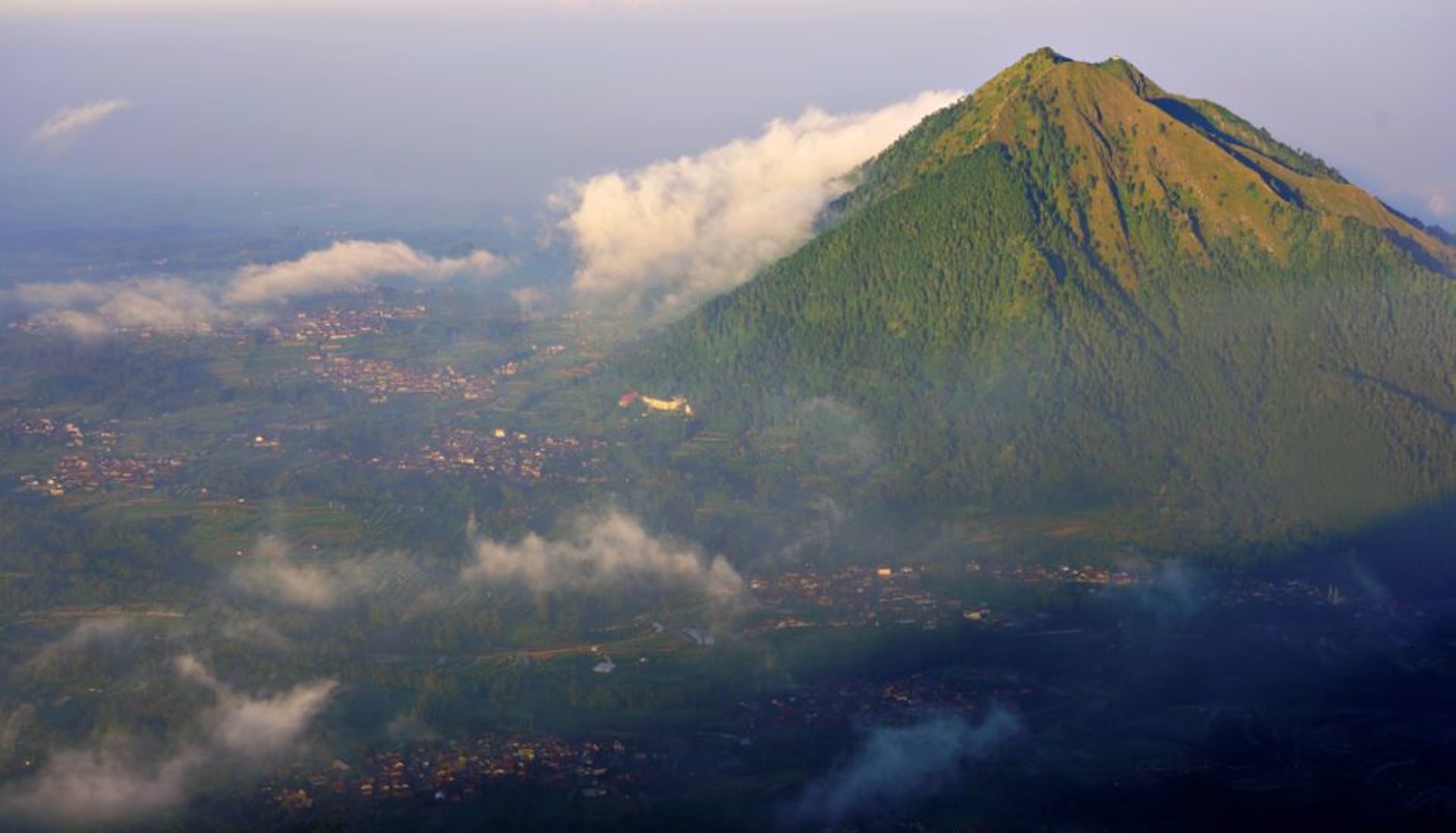
Garut sits in a bowl. That’s the first thing you register as the road drops out of the hills south of Bandung — the town is ringed almost completely by volcanic cones, Papandayan and Guntur and Cikuray among them, close enough that on a clear morning they seem to lean in over the rooftops. The Dutch called this the “Switzerland of Java” in the colonial era, a comparison that gets thrown around too liberally across the archipelago’s highlands but that actually earns itself here — the combination of cool air, terraced fields, and mountain walls genuinely does something to the light.
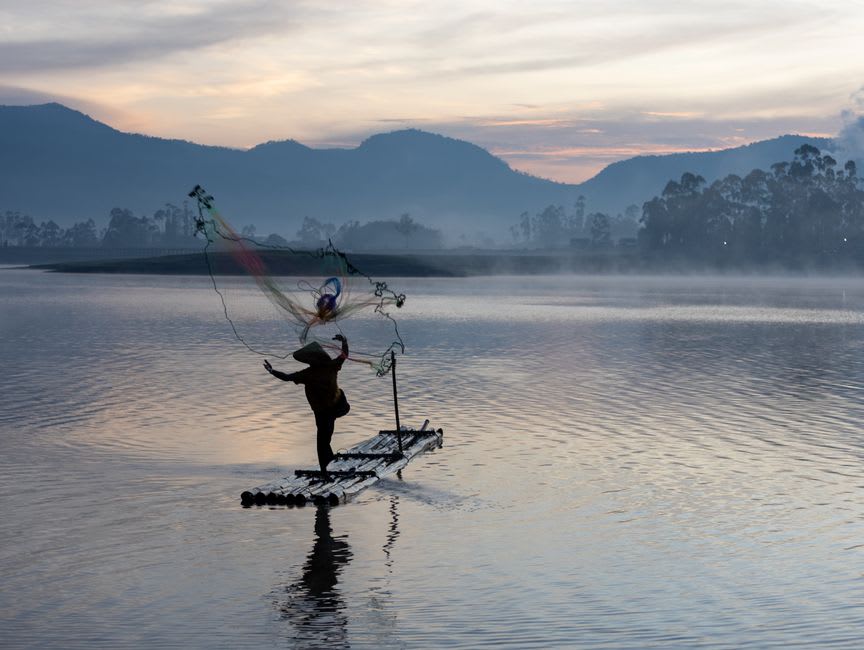
I came for Situ Bagendit, a lake just outside town that carries one of West Java’s most retold folktales: the story of Nyai Endit, a wealthy but miserly woman whose refusal to share her harvest with a starving beggar supposedly brought a flood that swallowed her entire estate and left only the lake behind. Local guides tell it with total conviction, and whether or not you buy the myth, the lake itself — ringed by paddy fields, worked by small wooden rafts — has a stillness that makes the story feel plausible before breakfast and absurd by noon. I rented a raft for the equivalent of pocket change and let a teenager pole me across water the color of weak tea while egrets picked through the shallows.
Hot water and hard candy
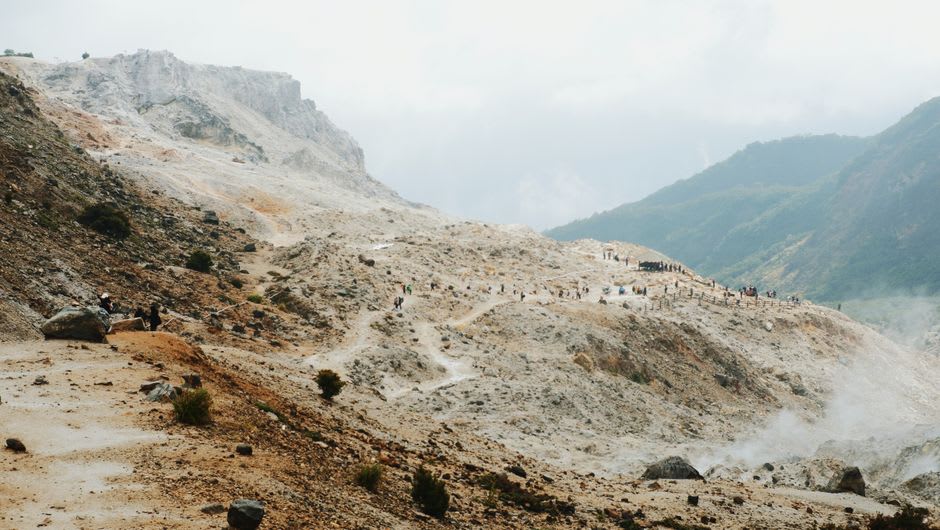
Garut’s other claim to fame is thermal — the region sits on enough geothermal activity that hot spring resorts have operated here since Dutch times, most famously at Cipanas, a neighborhood essentially built around sulfurous mineral pools fed straight from the mountain. I soaked until my fingers pruned, watched steam rise off the pools into cold morning air, and understood why this became a honeymoon and weekend-retreat staple for generations of West Javanese families long before “wellness tourism” was a phrase anyone used. Mount Papandayan itself, a short drive further, lets you walk directly into an active crater field — boardwalks over cracked, steaming earth, the smell of sulfur thick enough to taste, and beyond the crater rim a genuinely strange dead forest of blackened tree trunks left by a 2002 eruption, followed a short hike later by Tegal Alun, a highland meadow of dwarf edelweiss that blooms in the dry season.
And then there’s dodol — the sticky, chewy palm-sugar candy that Garut has manufactured and exported across Indonesia for decades, sold in small wooden boxes from shopfronts that have clearly been doing this since before I was born. I bought more than I needed, mostly because the woman selling it insisted on feeding me three different flavors before I’d said a word, a small transaction that felt like the whole town’s hospitality compressed into a single roadside stall.
When to go: June to September for the driest trails on Papandayan and clearest volcano views; the dwarf edelweiss at Tegal Alun blooms roughly April through August.