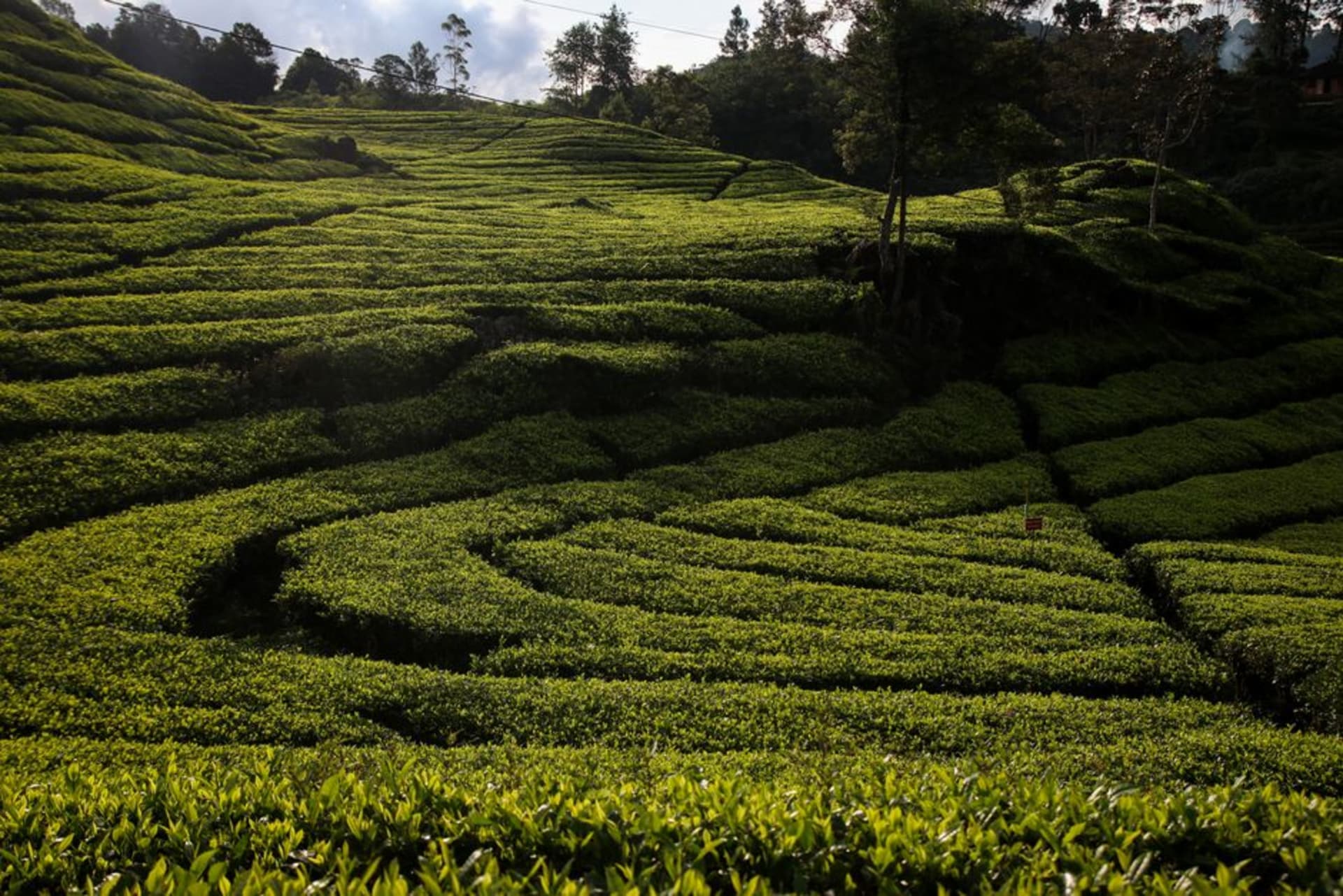
A highland tumble of tea gardens and sulfur lakes south of Bandung, where the air smells of rain and rotten eggs in equal measure.
The road to Ciwidey climbs out of Bandung in long, patient switchbacks, and somewhere around the 1,000-meter mark the air changes — thinner, cooler, carrying that particular highland-West-Java smell of wet clay and eucalyptus. I’d been told to expect tea plantations and I got them, endless corrugated green terraces cut into the hillsides, pickers with woven baskets strapped to their backs moving through the rows with a rhythm that looked less like labor and more like choreography. The Rancabali estate, one of the oldest tea concerns in the region, still processes leaf using methods that trace back to Dutch plantation agriculture from the 1870s, when the colonial government decided the volcanic soil of the Priangan highlands was too good for tea to ignore.
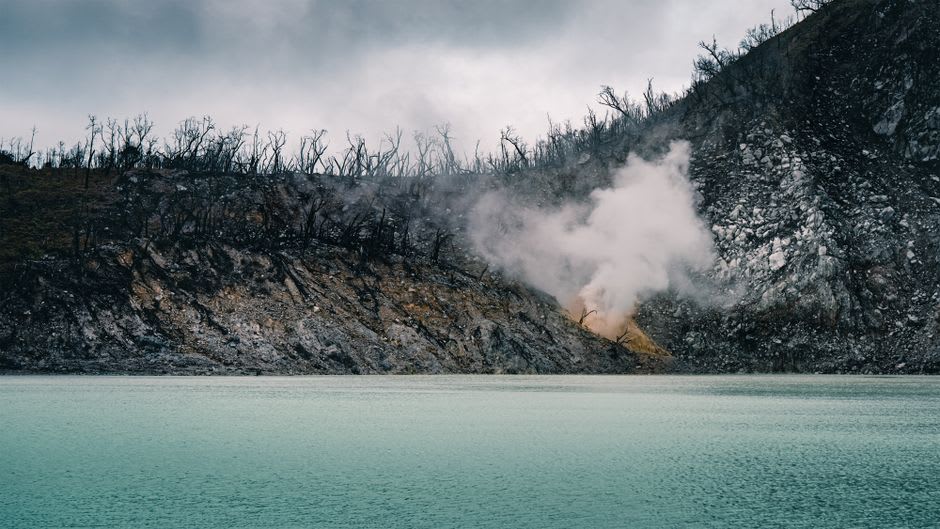
But Ciwidey’s real party trick is Kawah Putih — the White Crater — a volcanic lake inside the caldera of Gunung Patuha that shifts color depending on sulfur concentration and light, somewhere between turquoise, milky green, and a flat chalky white that makes the whole basin look like it’s been dusted with ash. The smell hits before the view does, sharp and mineral, and locals will tell you the old Sundanese belief that birds refused to fly over the crater because it was cursed — patuha roughly translates to “old,” and the name stuck to the mountain long before science explained the sulfur.
The cold side of West Java
What surprised me most was how cold it gets. Bandung already sits at altitude, and Ciwidey sits higher still, enough that locals wear jackets in the morning and the strawberry farms around Rancabali thrive on temperatures that would wilt a Java lowland crop. Roadside stalls sell strawberries by the kilo, along with fresh milk and a locally distinctive purple sweet potato, and it’s easy to spend an afternoon just grazing your way down the mountain road, stopping wherever the fruit looks good.
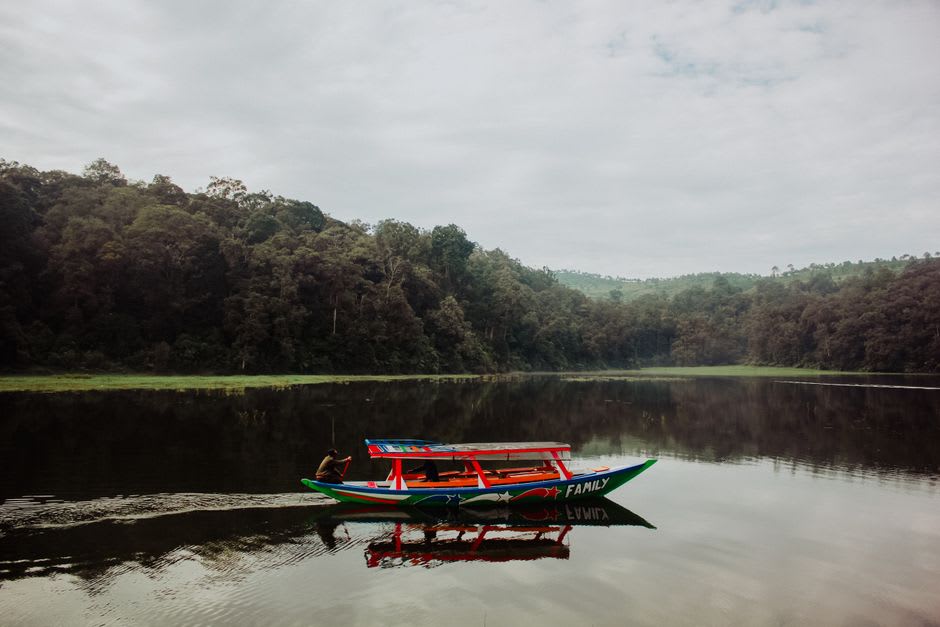
Situ Patenggang, a natural lake a short drive past the crater, gives the area its softer counterpoint — pine forest reflected in still water, wooden rafts for hire, couples posing at Batu Cinta, the “love rock” tied to a local legend about a prince and princess separated and reunited here. It’s touristy in the gentle, low-key way that Indonesian domestic tourism tends to be: family groups, instant noodles cooked lakeside, karaoke drifting faintly from a rented gazebo. I liked it more than I expected to.
What stays with me about Ciwidey is the contrast built into a single day trip — sulfur and pine, heat and cold, geology violent enough to have reshaped the landscape sitting a twenty-minute drive from tea rows planted with almost obsessive orderliness. West Java does this well: it never asks you to choose between drama and calm.
When to go: June to September for the driest, clearest weather and the best crater visibility; arrive at Kawah Putih before 9am, both to beat the tour buses from Bandung and because the sulfur fumes thicken as the day warms.