Candidasa
"The town that mined its own sand away, then spent thirty years learning that lesson so the rest of us wouldn't have to."
A coastline that lost its beach to bad planning decades ago and quietly rebuilt itself into somewhere better.
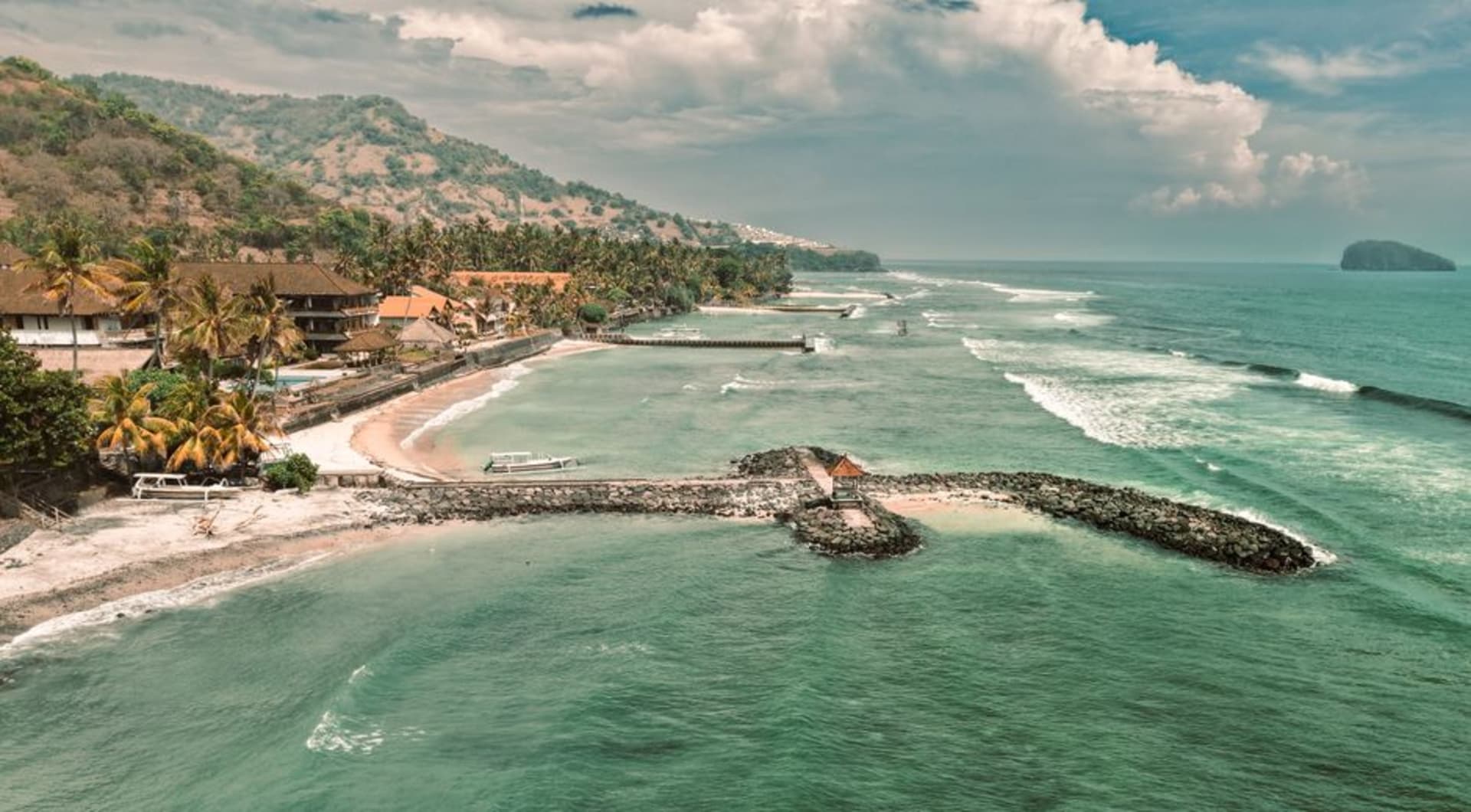
There’s a cautionary tale built into Candidasa’s geography that I only learned after I’d already fallen for the place. In the 1970s and 80s, coral was harvested offshore for lime production and building material, stripping away the natural reef barrier that had protected the coast for centuries. Without the reef to break the waves, the sea simply took the beach — most of Candidasa’s original sandy shoreline eroded away within a couple of decades, replaced by concrete sea walls and rock groynes that still line parts of the coast today. It’s a quietly devastating case study in what happens when you dismantle an ecosystem without understanding what it was doing for you, and it’s part of why Candidasa, unlike Bali’s south coast, never became a beach-club-and-DJ kind of destination. There simply wasn’t the beach to build one on.
What grew instead is something I find more interesting: a low-rise, unhurried stretch of coast on the road to Amed and the east, dotted with small hotels, family-run guesthouses, and restaurants that spill onto covered terraces facing a sea that, despite everything, remains genuinely beautiful — a deep, shifting blue framed by the silhouette of Nusa Penida across the strait. A patch of sand has returned in front of a few properties as sediment slowly redistributes, and the lagoon just east of the main strip, filled with lotus flowers and framed by coconut palms, is one of those unplanned, unphotographed-to-death scenes that makes you stop the motorbike for no reason other than it’s lovely.
Tenganan and the double ikat
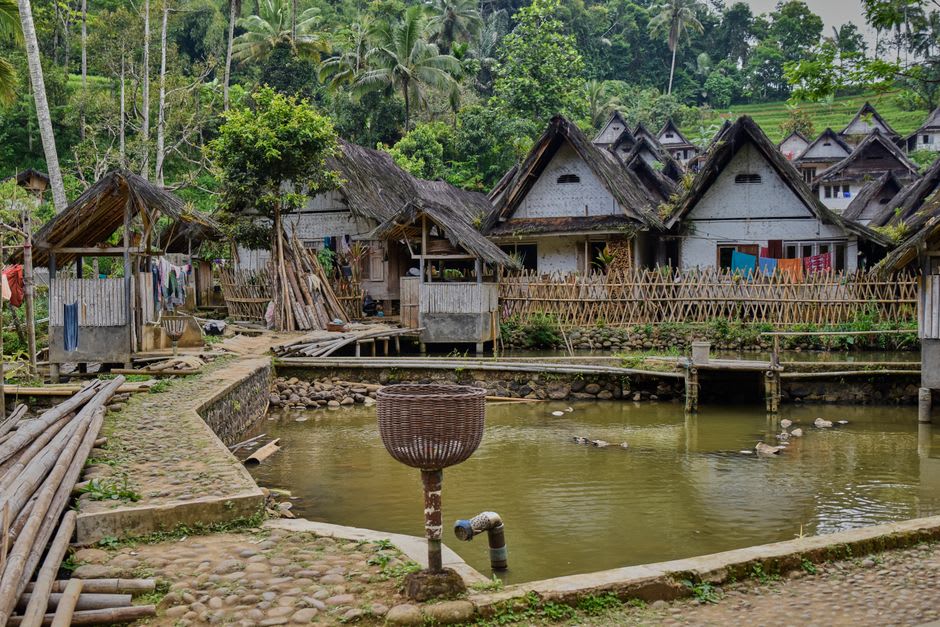
The real cultural weight in this area isn’t on the coast at all — it’s a fifteen-minute drive inland to Tenganan Pegringsingan, one of the last surviving Bali Aga villages, home to the pre-Hindu Balinese communities whose customs and architecture predate the Majapahit influence that reshaped much of the island. Tenganan is walled and laid out on a strict north-south axis, its longhouses arranged around a central ceremonial avenue, and the village has resisted much of the change that swept through the rest of Bali. It’s famous for geringsing, the double ikat weaving technique — a method where both warp and weft threads are individually dyed before weaving, requiring such precision that a single cloth can take years to complete. Geringsing is found in only a handful of places worldwide, and Tenganan is the sole Balinese village where it’s still made using traditional methods, using natural dyes and patterns believed to hold protective, even medicinal properties.
I spent an afternoon there talking with a weaver who showed me a piece she’d been working on for over a year, the pattern only half resolved, the natural indigo and morinda-root reds still building up in layers she described almost like seasons. It put the coastal erosion story in a different light for me — one part of this region lost something through impatience and extraction, while fifteen minutes away, a community has spent generations proving that some things are worth doing at a pace that refuses to be rushed.
When to go: May to September for the driest, calmest seas and best snorkeling around the offshore coral patches. Visit Tenganan on a weekday morning if you want the ceremonial avenue closer to empty.