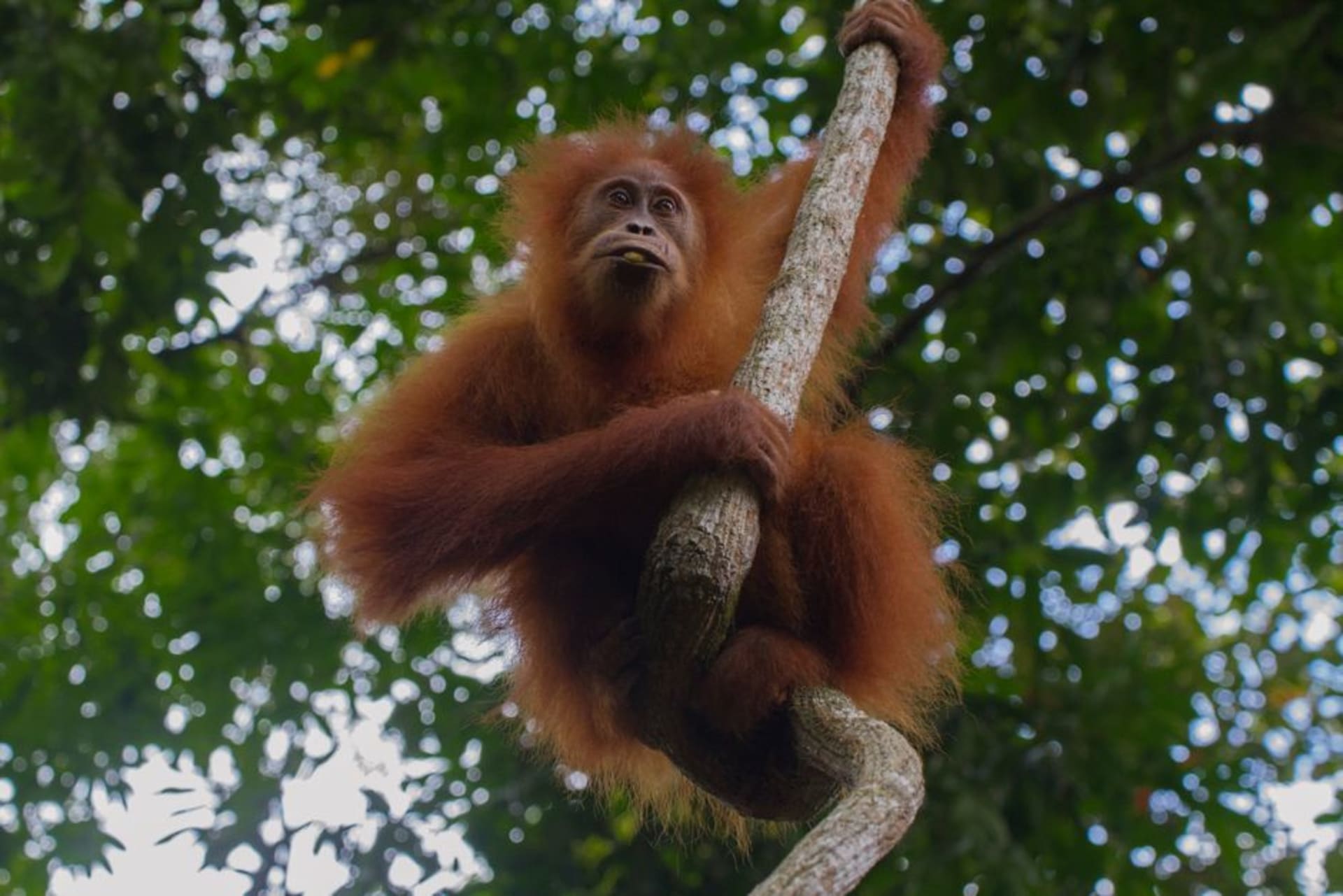
Bukit Lawang
"You don't find the orangutans in Bukit Lawang. You just get quiet enough that they decide to be found."
A river village on the edge of the Gunung Leuser rainforest where orangutans still swing through the canopy and the Bohorok River decides how your afternoon goes.
The road into Bukit Lawang from Medan takes about three hours if the trucks cooperate, and I remember the last stretch most clearly — the palm oil plantations that dominate so much of North Sumatra’s lowlands finally giving way to something older, taller, greener. Bukit Lawang sits right at that seam, a small village strung along the Bohorok River at the eastern edge of Gunung Leuser National Park, one of the last places on earth where Sumatran orangutans still live wild in significant numbers.
The village exists in its current form because of a rehabilitation center established here in 1973, when conservationists began releasing orphaned and confiscated orangutans back into the forest after they’d been kept illegally as pets or displaced by logging. The feeding station closed to daily public viewing years ago as the rehabilitated population became more self-sufficient, but its legacy is why Bukit Lawang remains one of the only places in the world where trekking into the jungle gives you a real chance — not a guarantee, never a guarantee — of standing beneath a wild orangutan as it strips bark from a branch twenty meters above your head. I spent two days on a guided trek with a Batak guide who’d grown up in the area, and it was on the second morning, soaked through from an overnight downpour, that we came across a mother and juvenile moving unhurried through the canopy, utterly indifferent to us. My guide went quiet in a way he hadn’t for the previous six hours, and I understood that even after years of doing this, it still meant something to him.
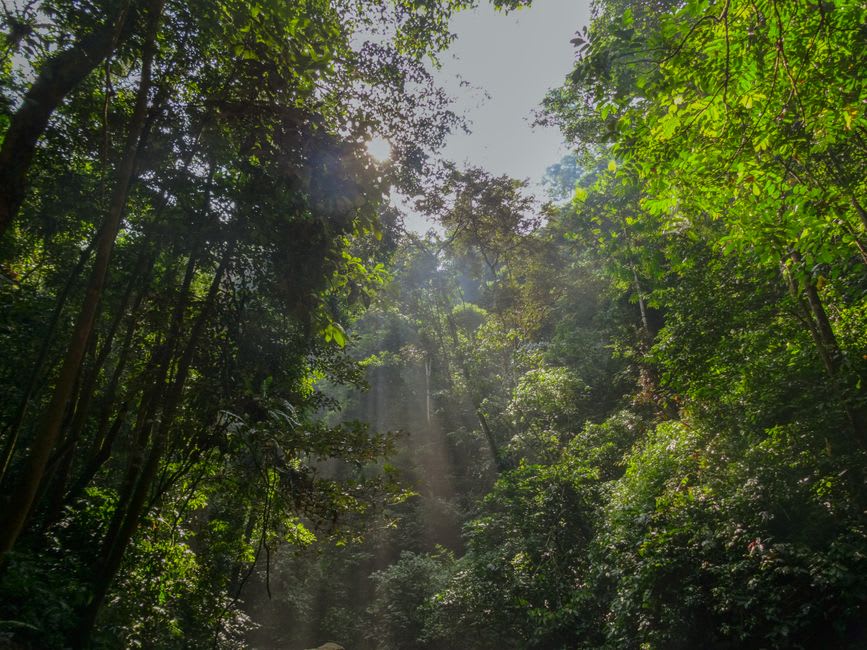
The river is the village’s spine
Everything in Bukit Lawang orients around the Bohorok. Guesthouses and warungs line its banks on wooden stilts, connected by a swaying suspension bridge that floods took out entirely in a devastating 2003 flash flood — a disaster caused in part by illegal logging upstream that stripped the hillsides of the root systems that once held the water back. The village rebuilt, and the tragedy left a quiet but persistent awareness here of what the forest actually does for the people living beside it, beyond scenery. In the afternoons, after the heat sets in, everyone ends up tubing down the river on truck inner tubes, bumping over small rapids past kids swimming off the rocks and women washing clothes at the bank — it’s unglamorous and completely joyful, and it’s the version of Bukit Lawang that has nothing to do with orangutans at all.
Gunung Leuser itself is part of the Tropical Rainforest Heritage of Sumatra, a UNESCO World Heritage Site shared with Kerinci Seblat and Bukit Barisan Selatan further south, and it’s one of only two places remaining on earth — alongside a pocket of Borneo — where orangutans, tigers, rhinos, and elephants all still coexist in the wild, though sightings of anything besides orangutans and the occasional Thomas leaf monkey are rare for casual visitors. That rarity is sort of the point. This is a fragment of what used to cover most of Sumatra, held onto by a combination of national park status, local advocacy, and villages like Bukit Lawang that found a way to make the forest worth more standing than cleared.

When to go: May to September is the driest window, which matters enormously for trekking conditions and river levels; the wet season brings frequent afternoon downpours and a higher risk of leeches, though the forest is arguably even more alive.