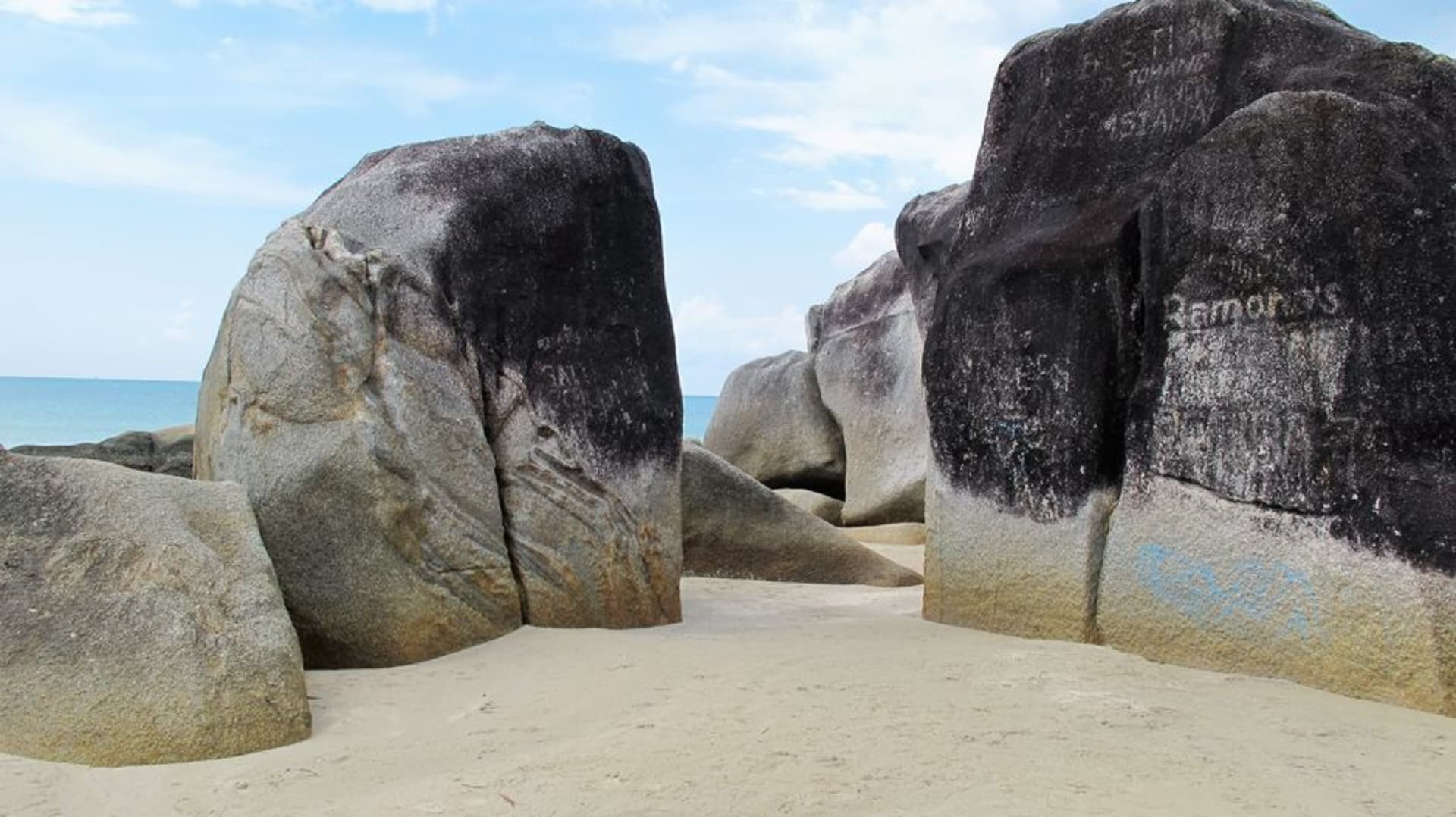
Granite boulders the size of houses, tin-mining scars turned turquoise lakes, and a slow island rhythm that has nothing to do with Bali.
Belitung sits in the Java Sea between Sumatra and Kalimantan, close enough to both that it’s often left off maps entirely, an afterthought island in a country with seventeen thousand of them. I went because of a novel — Andrea Hirata’s Laskar Pelangi (The Rainbow Troops), set on Belitung and beloved across Indonesia, turned this quiet tin-mining backwater into a minor pilgrimage site for domestic tourists. I stayed because of the granite.
The boulders are the thing. Tanjung Tinggi and Tanjung Kelayang, the island’s signature beaches, are studded with enormous rounded granite formations, some the size of small houses, stacked and balanced against each other in ways that look deliberate but are pure geology — the same granite batholith that runs beneath much of western Indonesia, exposed here by millions of years of erosion. I climbed onto one at Tanjung Tinggi at low tide and just sat, watching the water go through every shade of green and blue that exists, the sand so fine and white it squeaked underfoot. It’s the kind of beach that photographs well but somehow undersells itself in photographs, because the scale of the rocks doesn’t translate to a screen.
What tin mining left behind
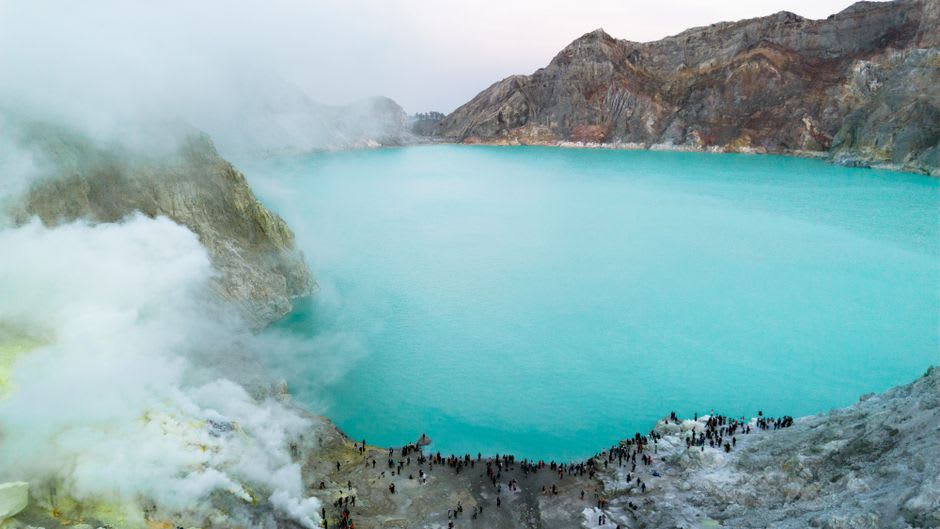
Belitung’s other defining feature is less photogenic in theory and more haunting in person: the kaolin and tin mining pits. For over a century, this island supplied a huge share of the world’s tin, and the open-pit mines carved into its interior have, decades after abandonment, filled with rainwater and turned an almost unnaturally vivid turquoise, ringed by stark white kaolin clay banks. Danau Kaolin, just outside the capital Tanjungpandan, looks like a lunar lake — beautiful and slightly unsettling once you know it’s an industrial wound the landscape simply grew over. Locals now go there for sunset selfies, which is its own strange commentary on how quickly extraction sites get repurposed as scenery.
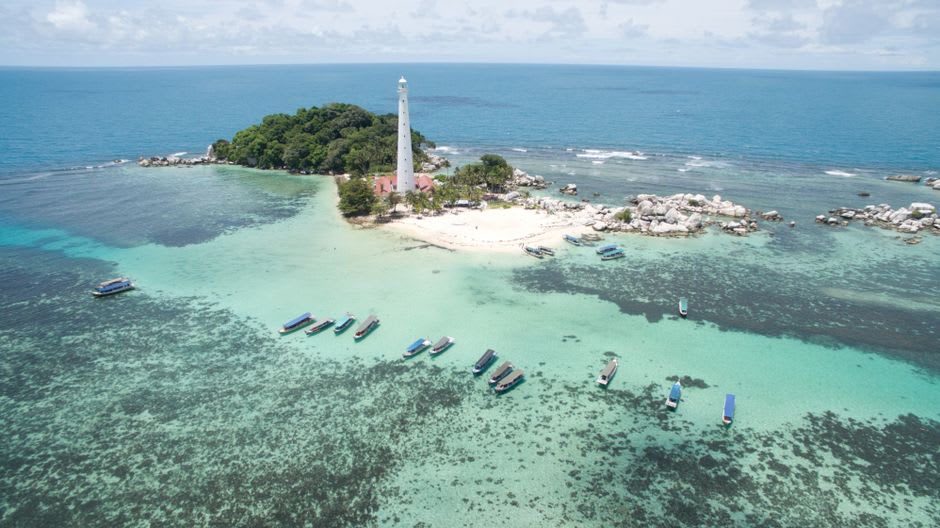
Offshore, the small islands scattered around Tanjung Kelayang — Lengkuas with its 19th-century Dutch-built lighthouse still standing sentinel over the strait, Kepayang, Batu Berlayar — make for an easy day of island-hopping by small boat, snorkeling over patchy reef between boulder-ringed coves. I climbed the Lengkuas lighthouse’s narrow iron staircase for a view over an archipelago of granite islands scattered across water so clear you could count fish shadows from sixty meters up.
Belitung’s food carries its own Malay-Chinese heritage, a legacy of the Hakka Chinese laborers brought in during the colonial tin boom. Gangan, a tangy yellow fish soup, and mie Belitung, a sweet-savory noodle dish topped with prawn crackers, are both distinct enough from mainland Indonesian cooking that I ate them at every opportunity, trying to pin down exactly what made them taste like nowhere else I’d been.
When to go: April through October, Indonesia’s dry season, for calm seas and the clearest water for island-hopping; the granite beaches are stunning year-round but boat trips get rougher and less reliable during the November–March monsoon.