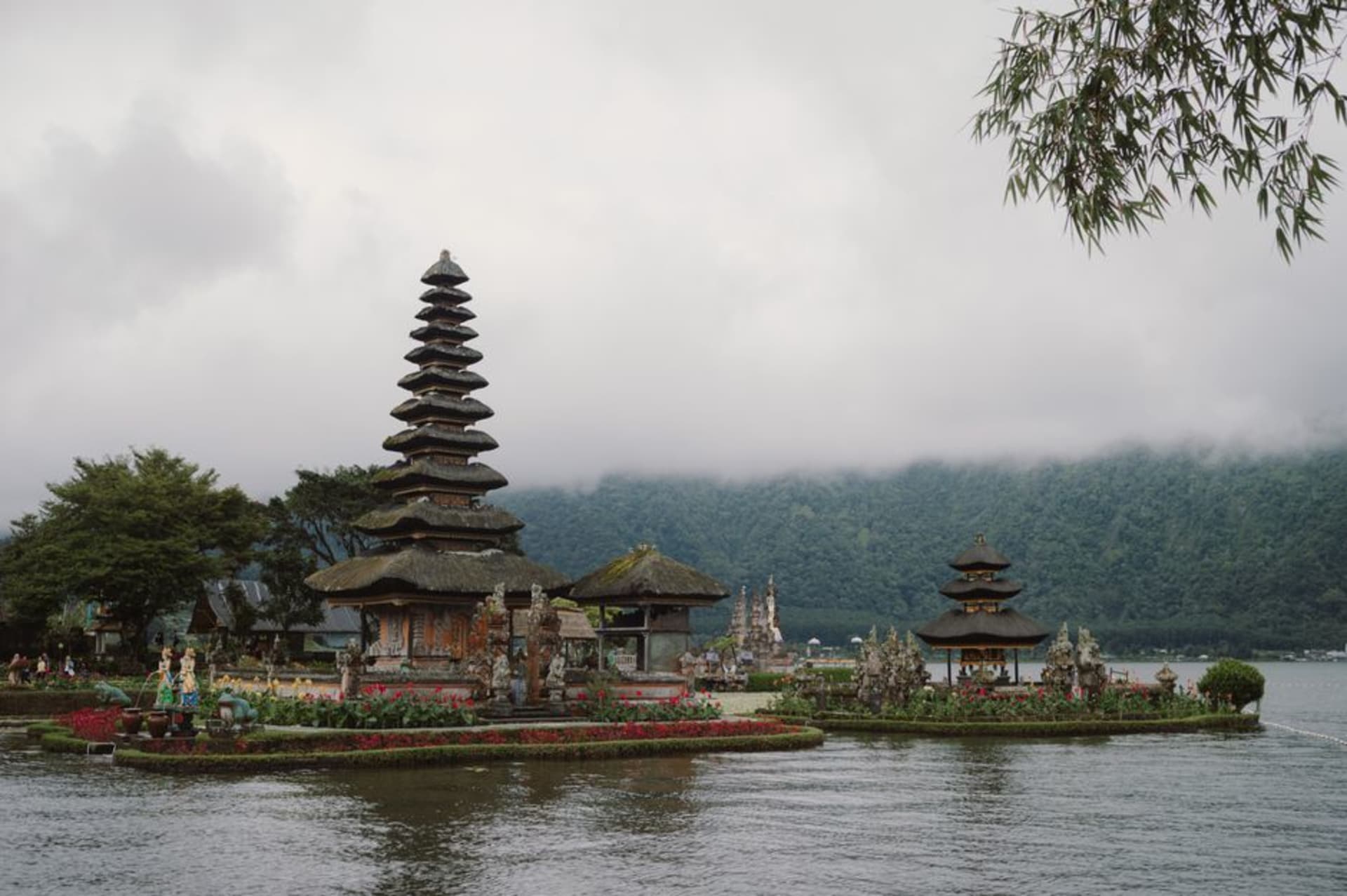
Bali's misty highland garden, where a floating temple and a strawberry farm somehow make perfect sense together.
Bedugul sits in Bali’s central highlands, up around 1,200 to 1,400 meters, where the humid heat of the coast gives way to something closer to a temperate garden — mist rolling off the caldera lakes, market stalls stacked with strawberries and passionfruit, and a chill in the air that catches most visitors off guard. It’s a short drive from Ubud, maybe ninety minutes north through winding roads that climb past terraced fields into pine forest, but the shift in climate and atmosphere makes it feel like a different island entirely.
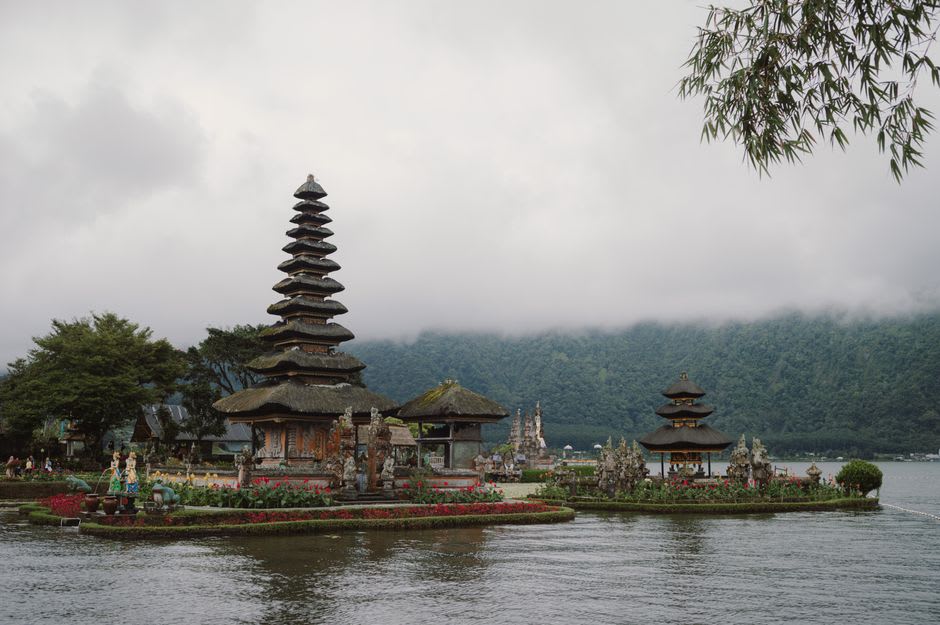
The image everyone comes for is Pura Ulun Danu Bratan, the water temple that appears to float on Lake Bratan when the lake level and light cooperate — its tiered meru roofs mirrored in the still water, mist sometimes settling low enough to obscure the far shore entirely. It’s on Bali’s ten-thousand-rupiah note, which tells you something about how central it is to the island’s self-image, and it was built in 1633 by the king of Mengwi, dedicated to Dewi Danu, the goddess of lakes and water. That dedication isn’t incidental — Lake Bratan is one of the primary water sources feeding the subak irrigation system across central Bali, so the temple functions as a genuine working shrine to agricultural survival, not a stage set. I went at opening time, before the tour buses arrived from the south, and had maybe twenty minutes where the only sound was birdsong and a groundskeeper sweeping petals off the temple steps.
The garden and the market
Just above the lake sits the Bali Botanic Garden, established in 1959 and covering over 150 hectares of highland forest — Indonesia’s largest botanical garden, with collections of orchids, ferns, and highland flora spread across trails that wind through genuinely old-growth forest canopy. It’s the kind of place that rewards slow walking rather than a checklist, and on a weekday I had entire stretches of trail to myself, the air thick with the smell of wet earth and pine resin, a combination I never once encountered anywhere else on this tropical island.
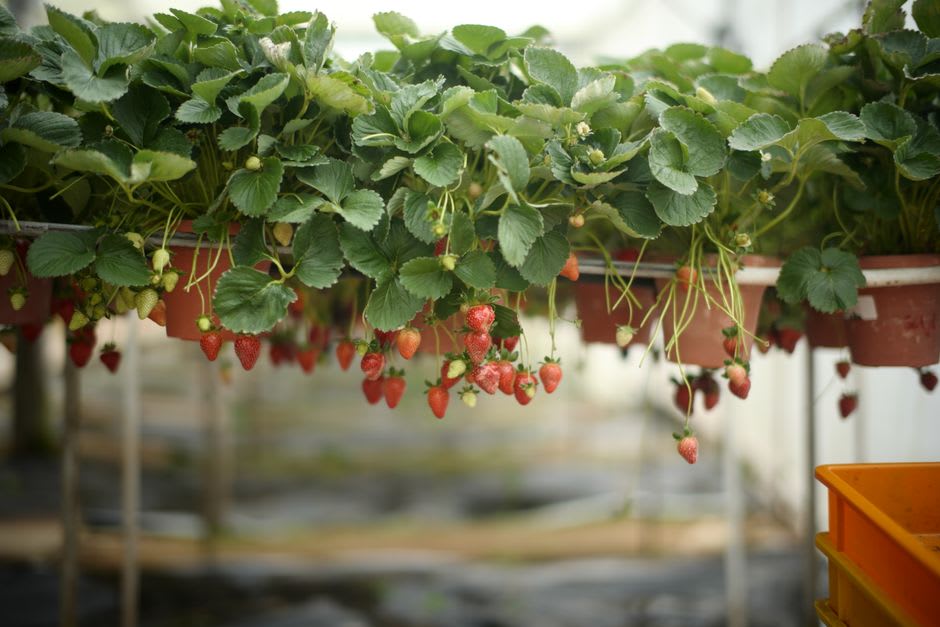
The Candikuning market, right by the lake, does something similar for the senses in a different register — stalls piled with produce that simply doesn’t grow at sea level: strawberries, passionfruit, oranges, and rows of temperate vegetables grown on the volcanic slopes nearby. Bedugul is also Bali’s main flower-growing region, and the market’s flower section, thick with marigolds destined for temple offerings across the island, is worth wandering even if you’re not buying.
Nearby, Lake Buyan and Lake Tamblingan sit in a separate, wilder caldera, reachable by a short trek through forest that still shelters some of Bali’s remaining wild monkey troops and, allegedly, the occasional civet. Unlike Bratan, they see almost no tour traffic, and paddling across Tamblingan at dawn in a small dugout canoe, fishermen setting nets in the mist, was one of the quietest, most unphotographed mornings I had anywhere in Bali — no temple, no crowd, just water and forest and cold hands around a cup of highland coffee.
When to go: April to October for clearer skies and the best chance of that mirror-still reflection at Ulun Danu Bratan. Bring a jacket regardless of season — Bedugul is cool year-round, and mornings can be genuinely cold by Bali standards.