Banjarmasin
"I set an alarm for 4:30am for a market that doesn't have walls, and it was the best decision of the trip."
A city of canals in South Kalimantan where the real market opens on the river before dawn, and half the town seems to live afloat.
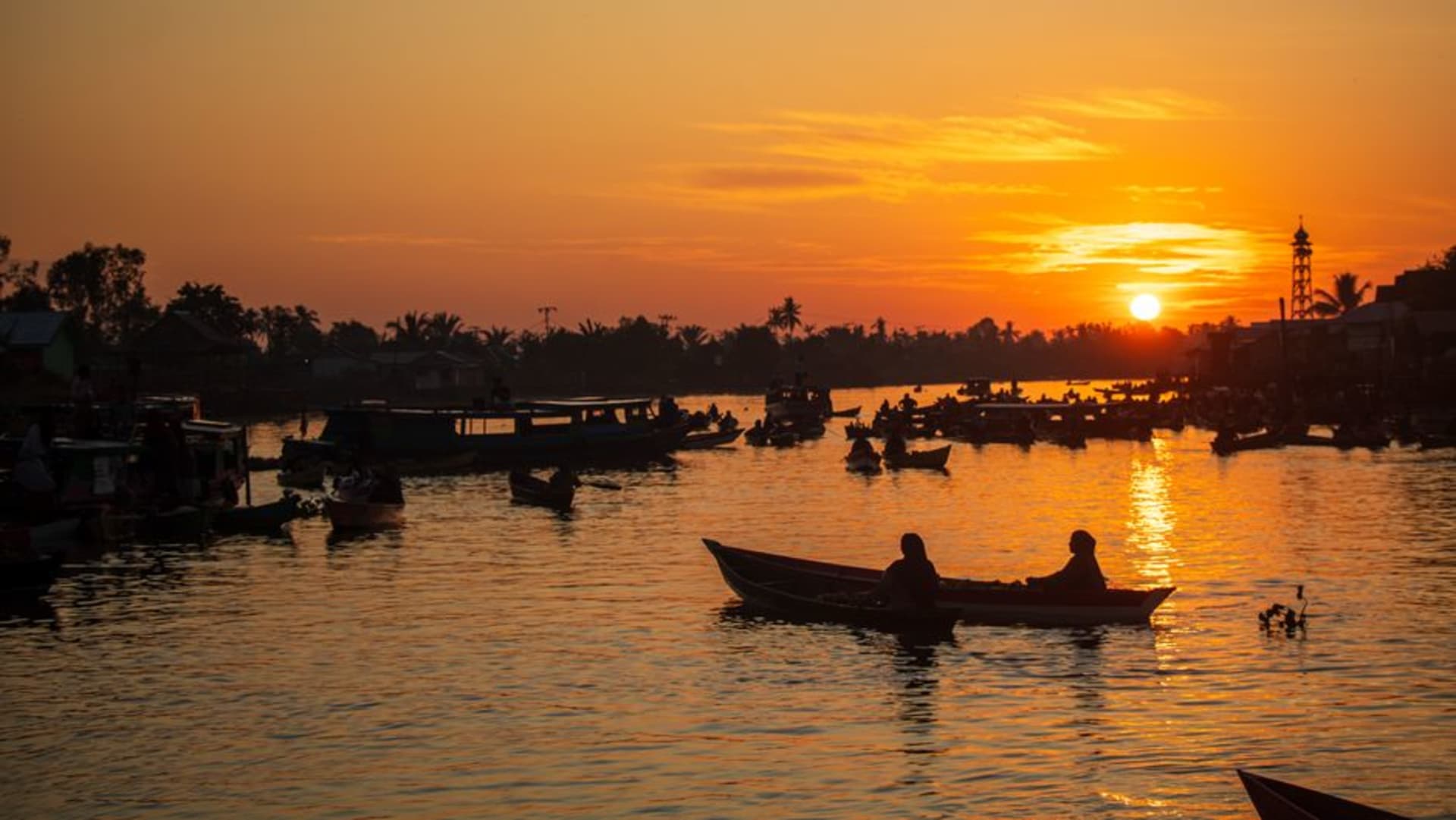
Nobody warns you how early you need to wake up for Lok Baintan. I’d been told the floating market started “in the morning,” which in most of Indonesia means a reasonable hour, so I nearly missed it entirely — the real trading happens between about 5:30 and 7am, before the heat and the tour boats arrive, and by 8 the whole thing is already winding down. I got a klotok, one of the small wooden motorboats that work as river taxis, and headed out from Banjarmasin in the dark, the Martapura River slowly turning from black to pewter to gold as dozens of jukung — narrow paddled canoes, mostly rowed by women in wide tanggui sun hats — converged from side channels, hulls stacked with rambutan, water spinach, dried fish, and enormous mounds of local fruit I couldn’t name, trading boat to boat without ever touching land.
Banjarmasin sits low, threaded through by the Barito and Martapura rivers and a network of smaller canals that earned it the nickname “the Venice of Kalimantan” — a comparison the city wears more honestly than most places that claim it, because commerce here genuinely still happens on the water rather than beside it. The city was built by the Banjar people, an ethnic group with roots in an old Islamic sultanate that controlled trade across southern Borneo for centuries, and much of the old town is still organized around stilt houses lining the riverbanks, called rumah lanting when they float directly on pontoons and rise and fall with the water level through the seasons.
Diamonds, satay, and a floor that moves
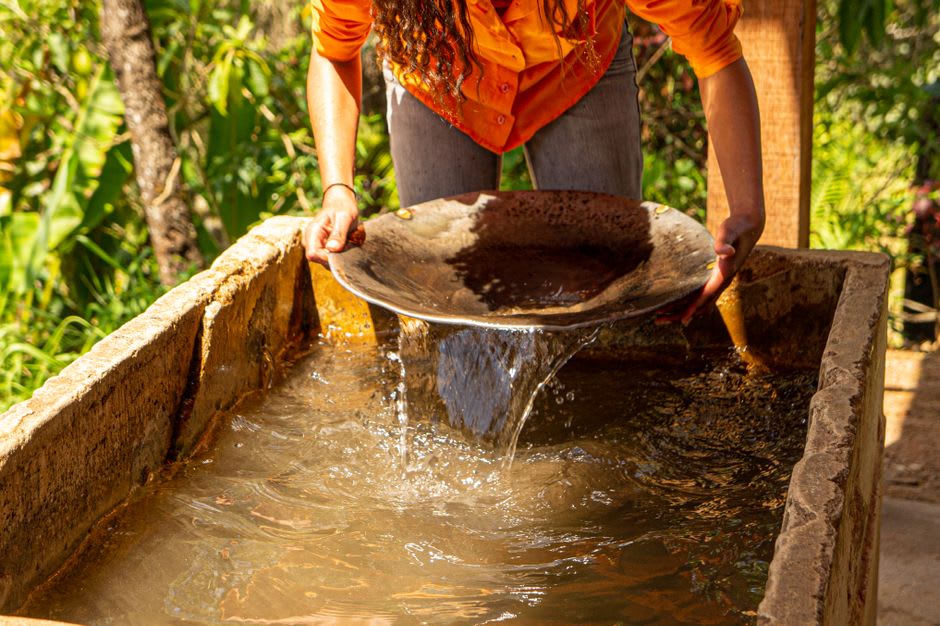
Inland from the city, the town of Martapura has been a diamond-mining center for generations — Kalimantan diamonds have a long-standing local reputation, and the traditional mining method still practiced in places nearby involves teams working waist-deep in muddy pits with hand tools and sluices, a method that looks almost unchanged from photographs a century old. I visited a mine on a day trip and watched miners sift gravel by hand for hours, the finds small and hard-won, then walked through Martapura’s gemstone market where uncut and polished stones changed hands at a scale and speed that made clear this wasn’t tourist theater — it was the same trade that’s sustained the town since well before Dutch colonial administrators started keeping records of it.
Back in the city, I ate soto banjar, the region’s signature soup — a clear, fragrant chicken broth thickened faintly with hard-boiled egg and local spices, served with rice cakes called ketupat, completely different in character from the coconut-heavy sotos of Java. I had it at a warung on stilts a few meters from the water, close enough that I watched a family paddle a jukung past mid-meal, loaded with what looked like an entire harvest of green chilies headed to the market downstream.

What struck me most, though, wasn’t any single sight but the rhythm of the place — how completely the river dictates the day. Fishermen and traders were finishing their business by the time most of the city was having breakfast. Kids swam and washed clothes off the same jetties where women sold vegetables an hour earlier. A city built by and for a river doesn’t announce itself the way a monument does; you have to show up at the hour it’s actually alive, which in Banjarmasin’s case means getting out of bed while it’s still dark and trusting that the effort will make sense once the sun comes up over the water.
When to go: Year-round, since the floating markets run daily, but the dry season from May to September keeps river levels more predictable and mining trips to Martapura easier to reach; always go before 7am for the markets themselves.