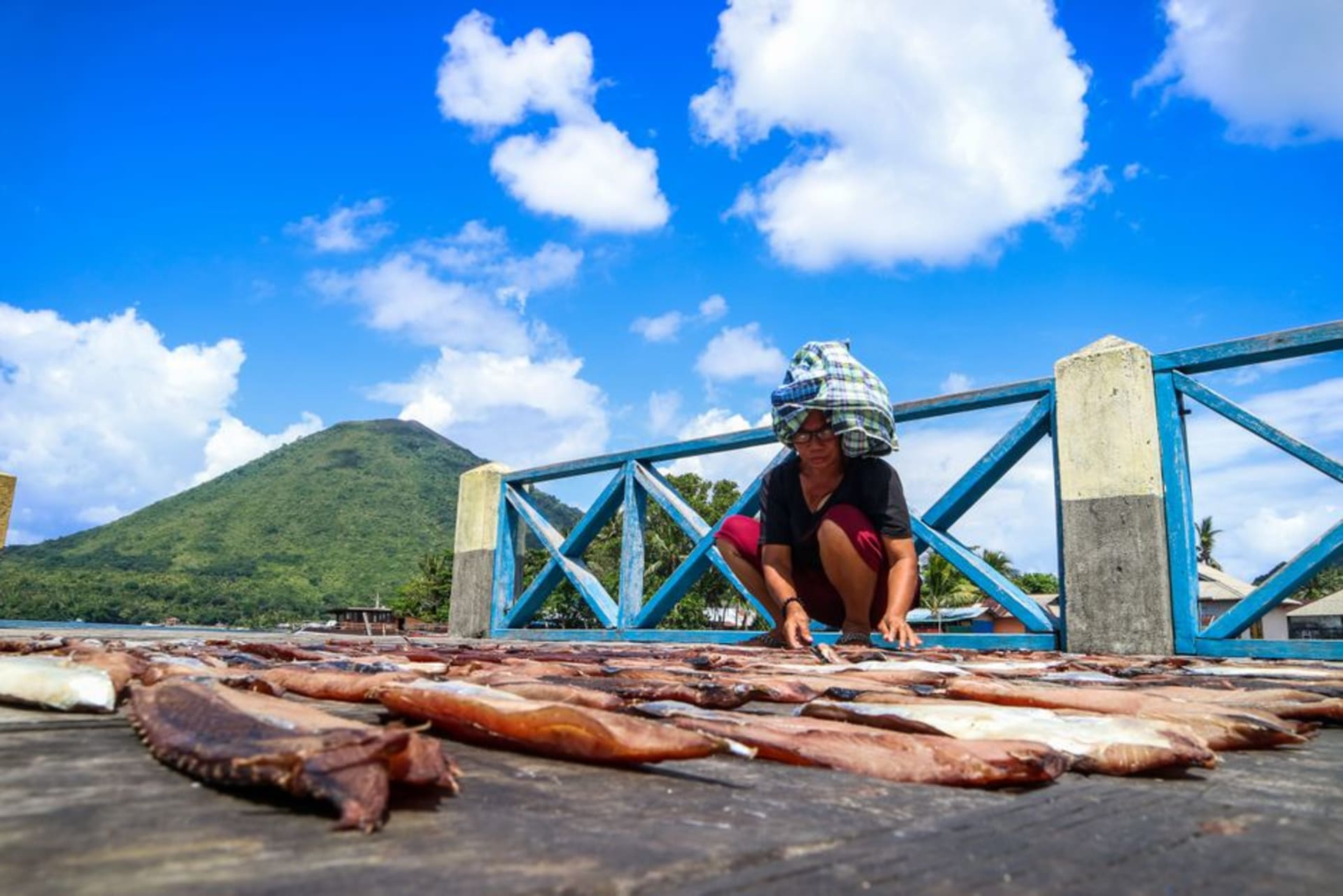
A ten-island archipelago in the middle of the Banda Sea that once justified wars over a single spice — and today justifies the eleven-hour boat ride for the reef alone.
I’ll admit I went to the Bandas for the wrong reason first and the right reason second. The wrong reason was nutmeg trivia — the fact that in 1667 the Dutch traded the entire island of Run, one of the ten Banda Islands, to the English in exchange for a small Dutch trading post in North America called New Amsterdam. You know it now as Manhattan. That single sentence got me on a series of increasingly small boats out of Ambon, first a Pelni ferry and then a wooden charter, watching the water change from working-harbor brown to the kind of clear you associate with aquarium glass. The right reason arrived the moment I stepped off the boat in Banda Neira and saw Gunung Api — the still-active volcano that forms half the harbor’s silhouette — steaming gently over a townscape of crumbling Dutch colonial mansions, their walls the color of old bone.
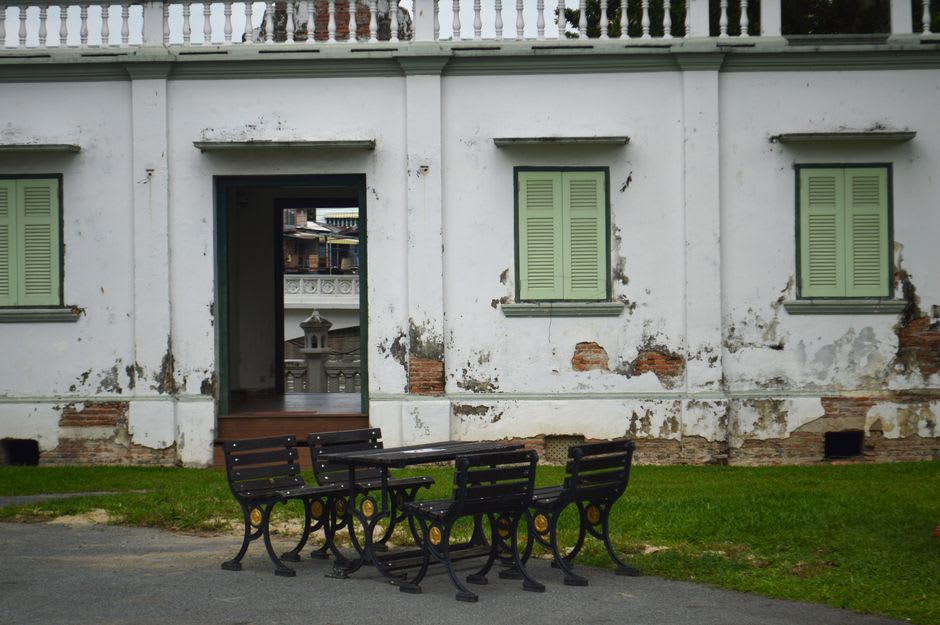
The nutmeg trade is the whole reason any of this exists. Until the nineteenth century, the Banda Islands were the world’s only source of nutmeg and mace, and European powers fought actual wars over these ten specks of volcanic rock. The Dutch East India Company, in one of the uglier chapters of colonial history, massacred or enslaved most of the indigenous Bandanese population in 1621 to secure a monopoly, then imported forced labor to run nutmeg plantations called perkeniers. What’s left is a strange, melancholy beauty: Fort Belgica, a pentagonal seventeenth-century fortress on a hill above town, still garrisoned by nothing but wind and the occasional goat; old perkenier mansions with their high ceilings and rotting shutters, some inhabited, some collapsing quietly into the nutmeg groves that made their owners rich. Sukarno and Hatta, Indonesia’s founding fathers, were exiled here by the Dutch in the 1930s, and you can visit the house where Sukarno lived under house arrest, tutoring the local kids and, by most accounts, falling for a local woman before politics called him back.
What the volcano protects
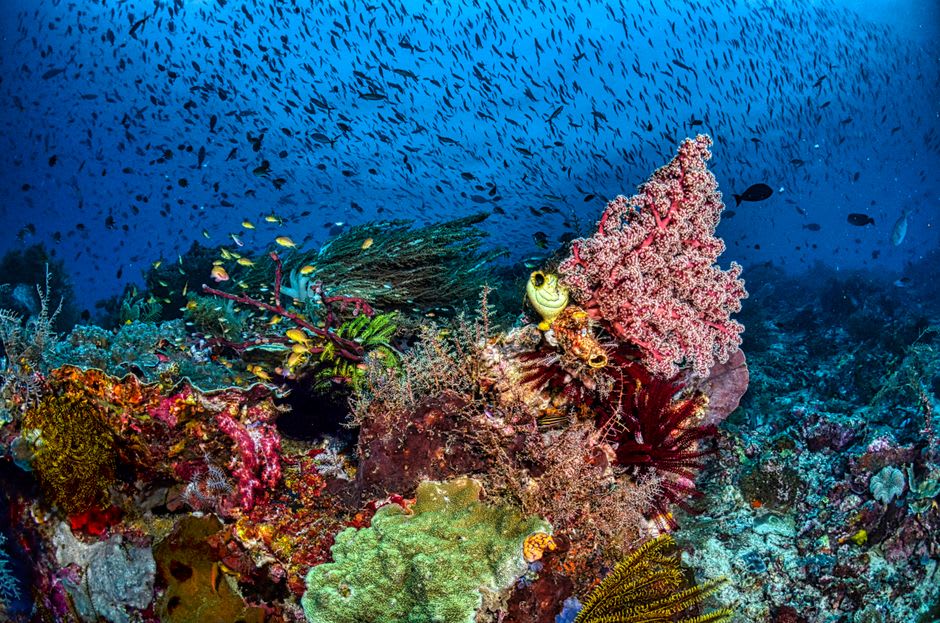
Gunung Api is why the diving here ranks among the best in Indonesia, if not the world. The volcano’s last major eruption, in 1988, sent lava into the sea, and the resulting slopes drop into water so rich with soft coral and reef fish that a snorkel and a five-minute swim from any beach gets you fish life that people fly to the Coral Triangle specifically to see. I spent one long afternoon drifting over a wall off Pulau Hatta with hammerhead sharks passing beneath me at a depth I could still see clearly, and another morning just sitting on the black sand at the base of the volcano watching local fishermen paddle out in narrow wooden boats exactly as their grandfathers did, nutmeg trees visible on the slope behind them.
Life on Banda Neira moves at the pace of a place that peaked economically three centuries ago and has been quietly, gracefully declining ever since — which, from a traveler’s perspective, is its own kind of gift. There’s one main street, a market that sells more nutmeg products than any human needs (nutmeg syrup, nutmeg jam, candied nutmeg flesh, which tastes better than it sounds), and a handful of guesthouses run by families who’ll tell you which mansion belonged to which perkenier and which ghost supposedly still walks Fort Belgica’s ramparts at night. Getting here is the whole filter — no bridges, no airport runway long enough for anything but small propeller planes on an irregular schedule, and most visitors still arrive by boat. That difficulty is precisely what has kept it from becoming the next Gili Islands.
When to go: October to April is the calm season, with the best underwater visibility from roughly October to March before the wetter months bring rougher seas; whatever window you pick, check current flight and boat schedules to Banda Neira since service is genuinely irregular.