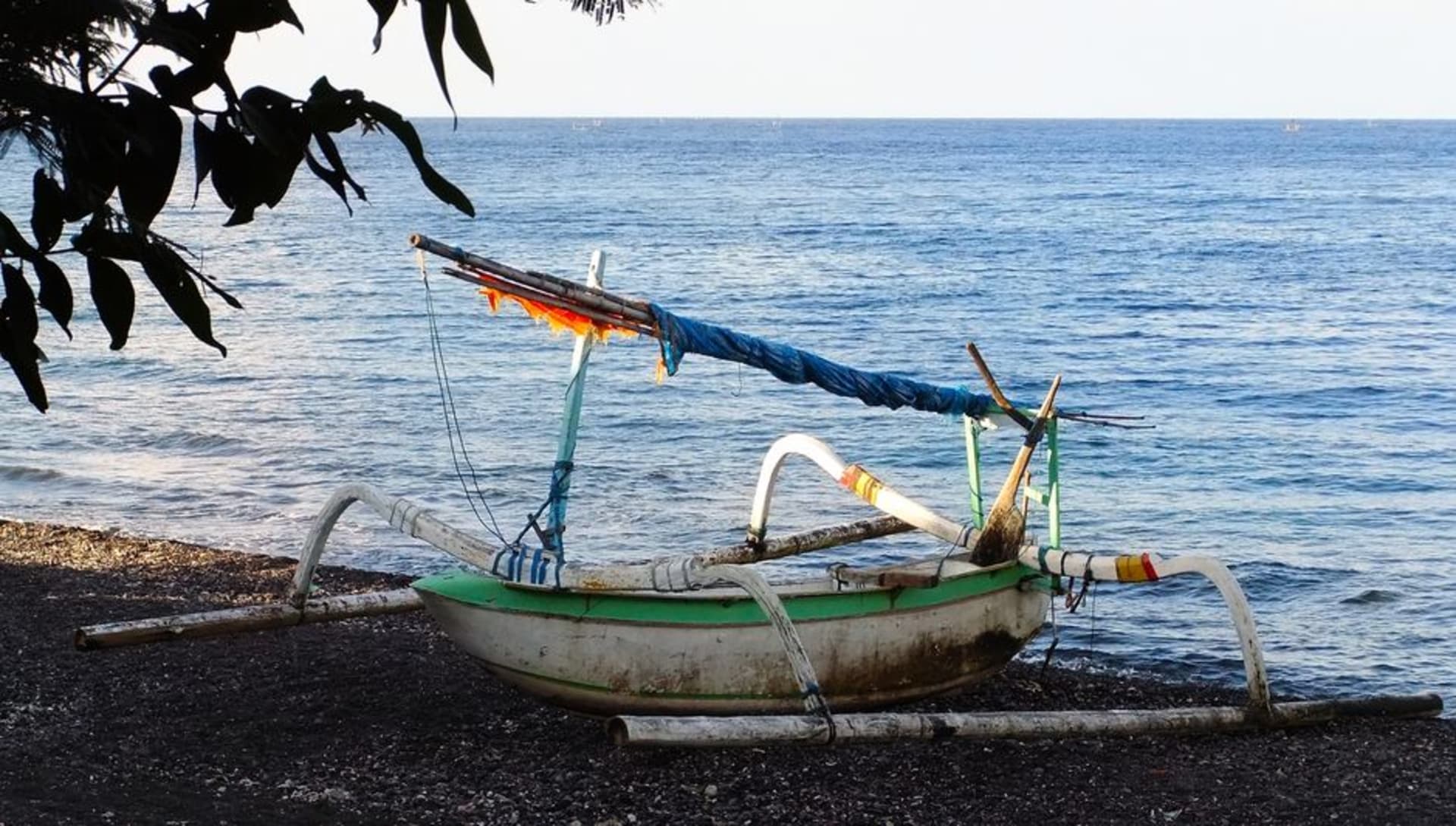
A string of black-sand fishing villages on Bali's dry east coast, where jukung outriggers still outnumber tourists at dawn.
Amed isn’t one village, it’s seven or eight strung along Bali’s northeast coast like beads on a wire — Jemeluk, Bunutan, Lipah, Selang, Aas — and the whole stretch shares a personality that feels almost defiantly unhurried compared to the south of the island. This is Karangasem regency, in the rain shadow of Gunung Agung, Bali’s highest and most sacred volcano, and that shadow is why the land here is dry and scrubby, cactus and frangipani instead of rice terraces. It also means the coast never had the agricultural wealth that built up Ubud or the tourist infrastructure that built up Seminyak. Amed stayed a fishing coast, and largely still is.
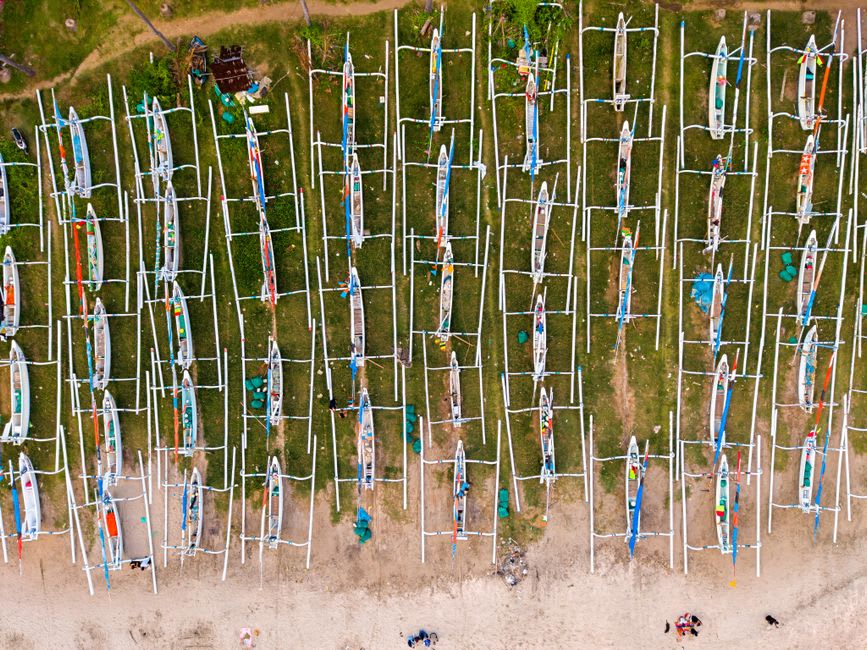
You see it first thing in the morning, before the light gets hard: dozens of jukung, the narrow twin-outrigger canoes that are basically unchanged in design from centuries of Balinese boatbuilding, pulled up on black volcanic sand or heading out past the reef with a single fisherman balanced at the stern. Salt has been harvested along this coast for generations too, using a traditional method where seawater is filtered through black sand and boiled down in coconut-wood troughs — you can still find a handful of families doing it the old way in Amed and neighboring Kusamba, though rising labor costs and cheap commercial salt have pushed it toward disappearing.
Below the waterline
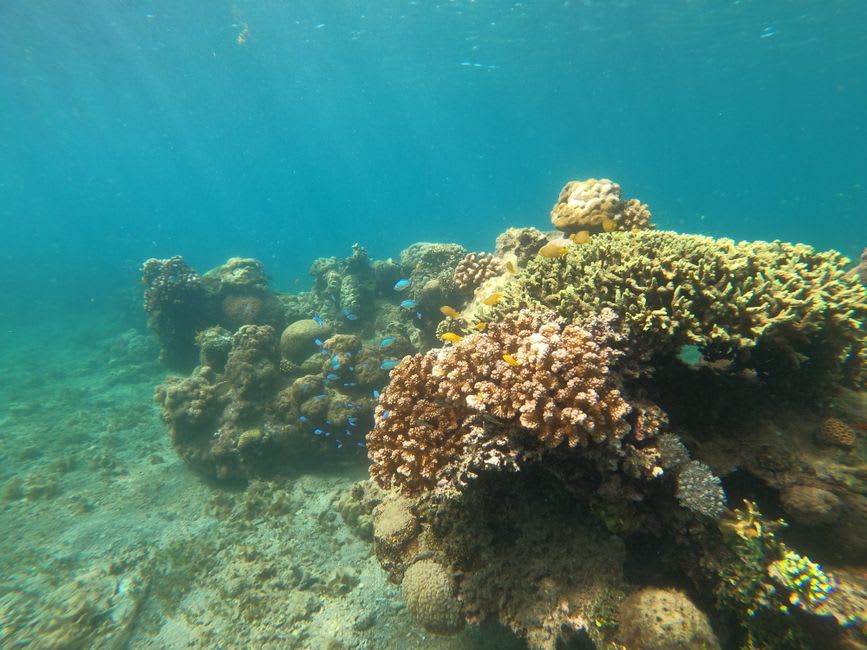
The coast’s second life is underwater. The reefs here are healthier than almost anywhere else easily reached on Bali, partly because the currents are gentler than the famous dive sites further north and partly because Amed simply never got developed hard enough to wreck them. The main draw a short boat ride away is the USAT Liberty wreck at Tulamben — a US Army cargo ship torpedoed by a Japanese submarine in 1942, beached, then pushed fully underwater by the eruption of Gunung Agung in 1963. It now sits encrusted in coral at depths shallow enough for open-water divers, and it’s one of the most accessible wreck dives on earth.
I’m not a serious diver, so I spent most of my time snorkeling straight off the beach at Jemeluk Bay, where the reef starts absurdly close to shore — parrotfish, clouds of anthias, the occasional turtle grazing on seagrass, all visible within a few strokes of the sand. In the evenings, Gunung Agung sometimes shows itself fully, no clouds, a near-perfect cone rising over the bay, and it’s easy to understand why Balinese Hindus consider it the axis of their cosmology, the mountain where the gods reside.
What I didn’t expect was how quiet it stayed even at what should have been peak hours. A handful of warungs, a few dive shops, fishermen mending nets in the shade — Amed asks nothing of you except to slow down to its pace, which after the traffic of the south felt like the entire point of coming to Bali in the first place.
When to go: April to October for calm seas and the best visibility for snorkeling and diving; this stretch of coast is dry most of the year, so it’s a reliable choice even outside Bali’s official dry season.